Featured
RISC-V Evolution: From Early Computing to Tomorrow's Tech Promise
Learn why teams still lose half their development time to test and fix, and what changes when you get real visibility into the target.
RISC-V Evolution: From Early Computing to Tomorrow's Tech Promise
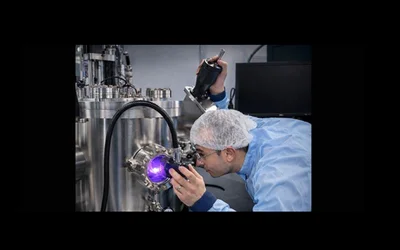
Researchers have developed a method that can reveal the location of errors in quantum computers, making them up to ten times easier to correct. This will significantly accelerate progress towards large-scale quantum computers capable of tackling the world’s most challenging computational problems, the researchers said.
A Comprehensive Introduction to Flying Probe Test, its Essential Components, Advantages, Limitations, and Application Cases
A single point of failure is any part whose failure stops the whole system. Learn how engineers find SPOFs with FMEA and fault trees, quantify them with reliability math, and remove them with N+1, 2N, failover, quorum, and voting designs, and why common cause failures can still defeat redundancy.
24 minutes read.
20 minutes read.
21 minutes read.
16 minutes read.
23 minutes read.
19 minutes read.


Higher Education
Work together. Create smart machines. Serve society. University of Michigan’s Robotics Institute aims to create a collaborative c...
40 Posts

Test and Measurement equipment
Keysight Technologies, Inc. (NYSE: KEYS) is a leading technology company th...
11 Posts
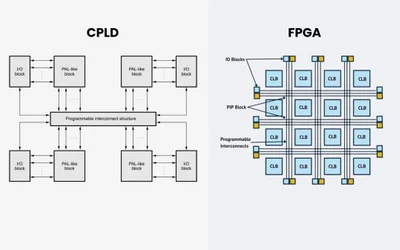
This article presents a comprehensive technical analysis of CPLD vs FPGA, focusing on their architectural distinctions, performance metrics, design flows, and implementation methodologies.
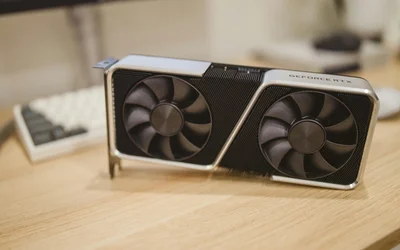
CUDA Cores and Tensor Cores are specialized units within NVIDIA GPUs; the former are designed for a wide range of general GPU tasks, while the latter are specifically optimized to accelerate AI and deep learning through efficient matrix operations.
Discover the critical role of in-circuit testing in modern engineering, exploring its foundational principles, technological advancements, and real-world applications.
Measured in milliseconds, the response time to a tap on a smartphone’s screen might not be a “show stopping” issue, but a delay between an action and its reaction in the mobile gaming industry can make an important difference.
Researchers have developed a new kind of nanoelectronic device that could dramatically cut the energy consumed by artificial intelligence (AI) hardware by mimicking the human brain.
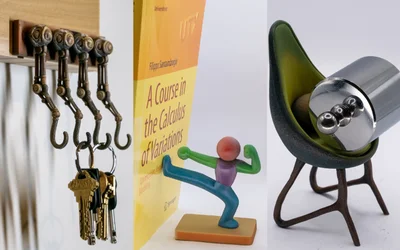
To help generative AI models create durable, real-world accessories and decor, the PhysiOpt system runs physics simulations and makes subtle tweaks to its 3D blueprints.
AI-occupational therapy team leverages novel vision-language models to detect cognitive errors
RISC-V Evolution: From Early Computing to Tomorrow's Tech Promise

7 minutes read
Researchers have developed a method that can reveal the location of errors in quantum computers, making them up to ten times easier to correct. This will significantly accelerate progress towards large-scale quantum computers capable of tackling the world’s most challenging computational problems, the researchers said.
A Comprehensive Introduction to Flying Probe Test, its Essential Components, Advantages, Limitations, and Application Cases
In the rapidly evolving landscape of IoT, battery life is paramount for device sustainability. We dissect the challenges and strategies for battery longevity of LPWAN IoT devices. Explore battery profiling and optimization for extended device life and reduced costs.

FPGAs are reconfigurable hardware used for parallel, high-speed processing, while microcontrollers are fixed-architecture chips designed for sequential, control-oriented tasks. FPGAs offer flexibility and performance MCUs provide low power, ease of use, and cost-efficiency.
Article 6 of Bringing Intelligence to the Edge Series: The utilization of edge AI facilitates advanced system optimization, predictive maintenance, and improved anomaly detection, greatly advancing technological capabilities across varied fields.
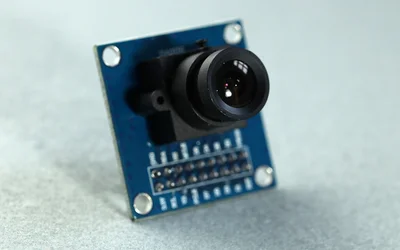
Low-power computer vision provides a new opportunity to gain a practical understanding of the world through data collection and vision in remote areas.
Article 4 of Bringing Intelligence to the Edge Series: AI is proving to be a more precise and time-efficient tool in processing the big data crunch by recognizing patterns and noticing inconsistencies in real-time.
In the ever-evolving world of processor architectures, the showdown between RISC-V and ARM sparks fervent competition. With their distinct histories, these two giants are redefining computing power and igniting discussions on openness, customization, and innovation in microprocessors.
Article 3 of Bringing Intelligence to the Edge Series: Balancing the critical metrics of accuracy, power consumption, latency, and memory requirements is key to unlocking the potential of Tiny Machine Learning (TinyML) in low-power microcontrollers and edge computing.
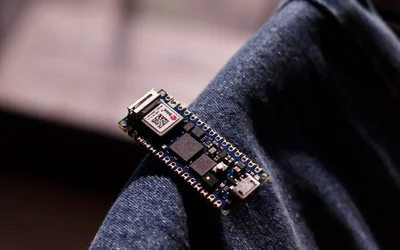
Article #4 of Spotlight on Innovations in Edge Computing and Machine Learning: Discover the integration of TinyML and wearable tech as we delve into a project that detects falls in real-time, potentially saving lives in our aging population.
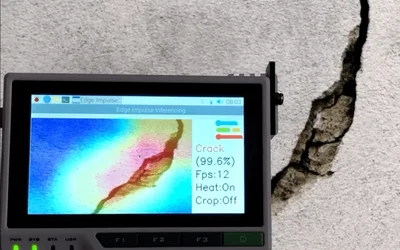
Article #3 of Spotlight on Innovations in Edge Computing and Machine Learning: A computer vision system that detects and localizes the surface cracks in concrete structures for predictive maintenance.

16 minutes read
A Comprehensive Guide to Understanding Factors, Challenges, Limitations, and Real-World Applications for Optimized Communication Speed and Reliability
Article 2 of Bringing Intelligence to the Edge Series: Advancements in AI and embedded vision technologies are revolutionizing various industries, enabling real-time decision-making, enhancing security, and facilitating automation in various applications.
Article 1 of Bringing Intelligence to the Edge Series: With the introduction of AI, IoT devices can become more intelligent and less reliant on external systems— but not without trade-offs in performance and cost. Understanding how to make that decision is key.