Featured
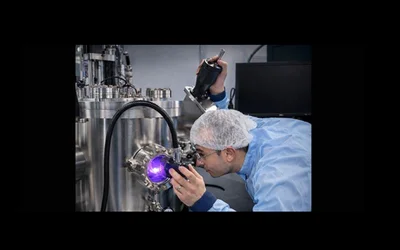
The Novo Nordisk Foundation provides a huge grant for the development of Denmark’s first quantum computer. DTU participates in the project, which is headed by the Niels Bohr Institute at the University of Copenhagen.
Learn why teams still lose half their development time to test and fix, and what changes when you get real visibility into the target.
The Novo Nordisk Foundation provides a huge grant for the development of Denmark’s first quantum computer. DTU participates in the project, which is headed by the Niels Bohr Institute at the University of Copenhagen.
Article #1 of the "Why Edge?" Series. Edge AI presents a multitude of benefits for security across industry.
The start-up QuiX Quantum will develop prototype photonic quantum computers over the next four years.
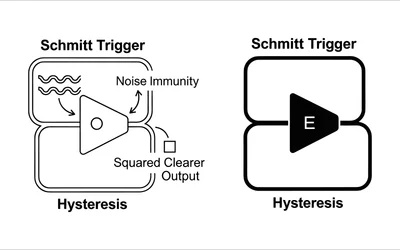
A Schmitt trigger is a comparator circuit with built-in hysteresis that uses two switching thresholds to eliminate noise and ensure stable output transitions. It is widely used for signal conditioning, waveform shaping, and robust digital and analog circuit design.
15 minutes read.
16 minutes read.
25 minutes read.
16 minutes read.
20 minutes read.
11 minutes read.


Higher Education
Work together. Create smart machines. Serve society. University of Michigan’s Robotics Institute aims to create a collaborative c...
40 Posts

Test and Measurement equipment
Keysight Technologies, Inc. (NYSE: KEYS) is a leading technology company th...
11 Posts
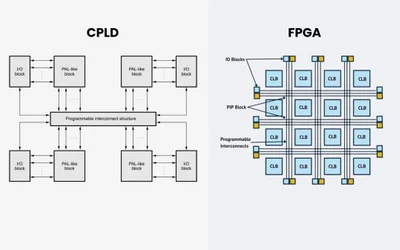
This article presents a comprehensive technical analysis of CPLD vs FPGA, focusing on their architectural distinctions, performance metrics, design flows, and implementation methodologies.
CUDA Cores and Tensor Cores are specialized units within NVIDIA GPUs; the former are designed for a wide range of general GPU tasks, while the latter are specifically optimized to accelerate AI and deep learning through efficient matrix operations.
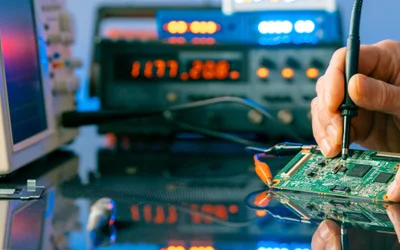
Discover the critical role of in-circuit testing in modern engineering, exploring its foundational principles, technological advancements, and real-world applications.
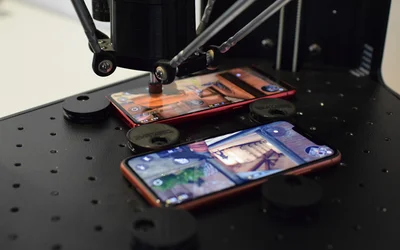
Measured in milliseconds, the response time to a tap on a smartphone’s screen might not be a “show stopping” issue, but a delay between an action and its reaction in the mobile gaming industry can make an important difference.
Researchers have developed a new kind of nanoelectronic device that could dramatically cut the energy consumed by artificial intelligence (AI) hardware by mimicking the human brain.
To help generative AI models create durable, real-world accessories and decor, the PhysiOpt system runs physics simulations and makes subtle tweaks to its 3D blueprints.
AI-occupational therapy team leverages novel vision-language models to detect cognitive errors
The Novo Nordisk Foundation provides a huge grant for the development of Denmark’s first quantum computer. DTU participates in the project, which is headed by the Niels Bohr Institute at the University of Copenhagen.

2 minutes read
Article #1 of the "Why Edge?" Series. Edge AI presents a multitude of benefits for security across industry.
The start-up QuiX Quantum will develop prototype photonic quantum computers over the next four years.

3 minutes read
Digital twins, edge processing, and addressing bias are at the center of AI research and development.
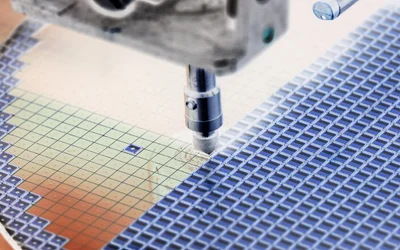
Chips and wafers are the integral components of a semiconductor device. Find out the differences between chip wafers and chips and understand their role in semiconductor manufacturing.
Article #6 Altair Startup Series. Startups play a key role in moving towards innovative circular and sustainable engineering practices.
Engineers can further their sustainability focus during design and development
Computer simulation methods from NIST help speed up the search for carbon capture materials.
PhotonFirst develops and manufactures photonics sensing technologies to measure temperature, strain, pressure, shape and acceleration in objects ranging from buildings to airplanes to medical devices.

4 minutes read
Flightmare is an open-source simulator for quadrotors that moves away from rigid paradigms and proposes a flexible modular structure that empowers the users or automated algorithms to fine-tune the simulator to the task at hand.
Measured in milliseconds, the response time to a tap on a smartphone’s screen might not be a “show stopping” issue, but a delay between an action and its reaction in the mobile gaming industry can make an important difference.

3 minutes read
Article #3 Simulation Education Series. How simulation software assisted the engineers designing rugged, all-terrain mobility solutions.
Article #4 Altair Startup Series. Simulation is helping startups set the direction of the e-mobility industry.
This student article explains a dynamic model developed based on modified Hill’s model using MATLAB, which can predict biomethane production with time series.
ETH Zurich researchers have discovered a serious security vulnerability in computer hardware. The vulnerability, called "Retbleed," affects microprocessors from market leaders Intel and AMD. All commercially available operating systems worldwide that use these processors are affected.

5 minutes read