Featured

Researchers show how collecting fewer, higher-quality data points can speed simulation algorithms and produce better results.

Learn why teams still lose half their development time to test and fix, and what changes when you get real visibility into the target.
Researchers show how collecting fewer, higher-quality data points can speed simulation algorithms and produce better results.
How xDS Turns Static Deep Learning Deployments into Resilient, Dynamic Systems
Memory safety, a key concept in software development, addresses how an application handles memory operations, such as reading, writing, allocation, and deallocation.
A single point of failure is any part whose failure stops the whole system. Learn how engineers find SPOFs with FMEA and fault trees, quantify them with reliability math, and remove them with N+1, 2N, failover, quorum, and voting designs, and why common cause failures can still defeat redundancy.
24 minutes read.
20 minutes read.
21 minutes read.
16 minutes read.
23 minutes read.
19 minutes read.


Higher Education
Work together. Create smart machines. Serve society. University of Michigan’s Robotics Institute aims to create a collaborative c...
40 Posts

Test and Measurement equipment
Keysight Technologies, Inc. (NYSE: KEYS) is a leading technology company th...
11 Posts
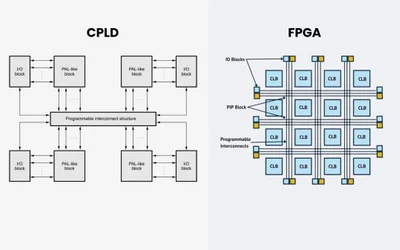
This article presents a comprehensive technical analysis of CPLD vs FPGA, focusing on their architectural distinctions, performance metrics, design flows, and implementation methodologies.
CUDA Cores and Tensor Cores are specialized units within NVIDIA GPUs; the former are designed for a wide range of general GPU tasks, while the latter are specifically optimized to accelerate AI and deep learning through efficient matrix operations.
Discover the critical role of in-circuit testing in modern engineering, exploring its foundational principles, technological advancements, and real-world applications.
Measured in milliseconds, the response time to a tap on a smartphone’s screen might not be a “show stopping” issue, but a delay between an action and its reaction in the mobile gaming industry can make an important difference.
Researchers have developed a new kind of nanoelectronic device that could dramatically cut the energy consumed by artificial intelligence (AI) hardware by mimicking the human brain.
To help generative AI models create durable, real-world accessories and decor, the PhysiOpt system runs physics simulations and makes subtle tweaks to its 3D blueprints.
AI-occupational therapy team leverages novel vision-language models to detect cognitive errors
Researchers show how collecting fewer, higher-quality data points can speed simulation algorithms and produce better results.

3 minutes read
How xDS Turns Static Deep Learning Deployments into Resilient, Dynamic Systems
Memory safety, a key concept in software development, addresses how an application handles memory operations, such as reading, writing, allocation, and deallocation.
In this episode, we explore groundbreaking research from Princeton University where scientists have developed ultracompact cameras utilizing metasurfaces—engineered materials that manipulate light in novel ways.

14 minutes read
A team of international researchers led by EPFL developed a multilingual benchmark to determine Large Language Models ability to grasp cultural context.
Unpacking the architectural advancements, performance gains, and practical considerations of the latest PCIe generations for technical professionals.
The concept, cool yet maybe a little creepy, is known as mind uploading.

4 minutes read
An international team of scientists was first to demonstrate that halide perovskites can serve as a base for nonlinear on-chip optical components. As an example, they can be used to build ultrafast optical chips and transistors, and, potentially, other integrated optical systems.

3 minutes read
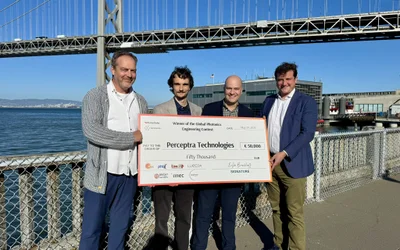
The winner of the Global Photonics Engineering Contest, Perceptra from San Francisco, is setting a new benchmark for real-time molecular monitoring.
A Review of Presentations from CDFAM Computational Design Symposium Series, Past and Future

8 minutes read
With a novel simulation method, robots can guess the weight, softness, and other physical properties of an object just by picking it up.
Teams that are looking at alternative programming languages have two options today: Ada and Rust. Both languages raise the bar in terms of safety and security
Lack of process efficiency is a serious problem in engineering. It causes additional costs and cripples innovation. In this article series, we explore ways of automating engineering tasks that yield business results.

8 minutes read
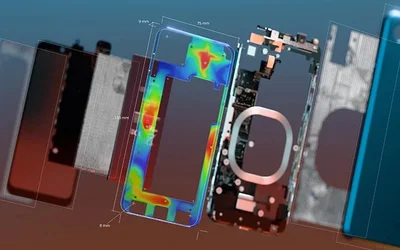
Explore the innovations that are already helping companies across various industries streamline their processes, reduce time-to-market, and make better-informed design decisions at Altair's global, virtual event Simulate at the Speed of Design, May 15th.
Iron-rich hematite, commonly found in rocks and soil, turns out to have magnetic properties that make it a promising material for ultrafast next-generation computing.

3 minutes read