Featured
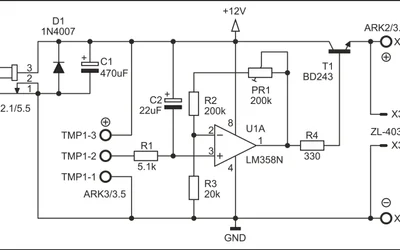
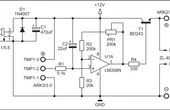
Master the language of electronics by learning to interpret schematic diagrams, from basic symbols and conventions to complex circuit analysis.
Learn why teams still lose half their development time to test and fix, and what changes when you get real visibility into the target.
Master the language of electronics by learning to interpret schematic diagrams, from basic symbols and conventions to complex circuit analysis.
The Silicon Photomultiplier (SiPM) is transforming optical sensing and LiDAR technology by providing high photon detection efficiency, low noise, and fast response times, enabling greater accuracy and resolution in applications such as autonomous navigation, environmental mapping, and 3D imaging.
EPFL researchers have developed the first AI model of language in the brain that captures both how neurons are arranged and how they function.
A single point of failure is any part whose failure stops the whole system. Learn how engineers find SPOFs with FMEA and fault trees, quantify them with reliability math, and remove them with N+1, 2N, failover, quorum, and voting designs, and why common cause failures can still defeat redundancy.
24 minutes read.
20 minutes read.
21 minutes read.
16 minutes read.
23 minutes read.
19 minutes read.


Higher Education
Work together. Create smart machines. Serve society. University of Michigan’s Robotics Institute aims to create a collaborative c...
40 Posts

Test and Measurement equipment
Keysight Technologies, Inc. (NYSE: KEYS) is a leading technology company th...
11 Posts
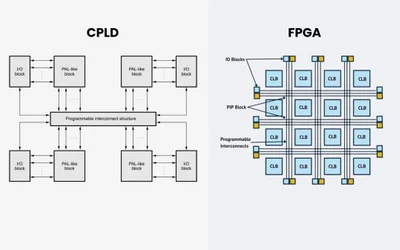
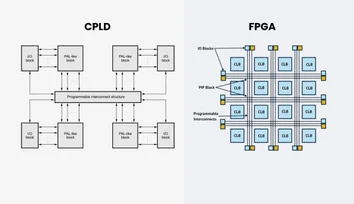
This article presents a comprehensive technical analysis of CPLD vs FPGA, focusing on their architectural distinctions, performance metrics, design flows, and implementation methodologies.
CUDA Cores and Tensor Cores are specialized units within NVIDIA GPUs; the former are designed for a wide range of general GPU tasks, while the latter are specifically optimized to accelerate AI and deep learning through efficient matrix operations.
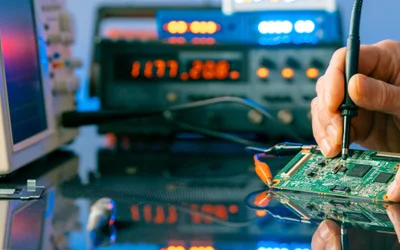
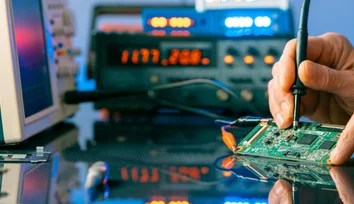
Discover the critical role of in-circuit testing in modern engineering, exploring its foundational principles, technological advancements, and real-world applications.
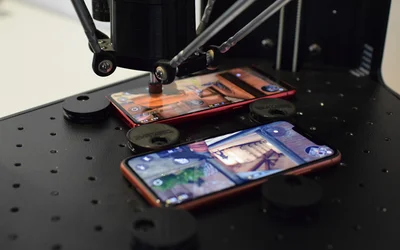
Measured in milliseconds, the response time to a tap on a smartphone’s screen might not be a “show stopping” issue, but a delay between an action and its reaction in the mobile gaming industry can make an important difference.
Researchers have developed a new kind of nanoelectronic device that could dramatically cut the energy consumed by artificial intelligence (AI) hardware by mimicking the human brain.
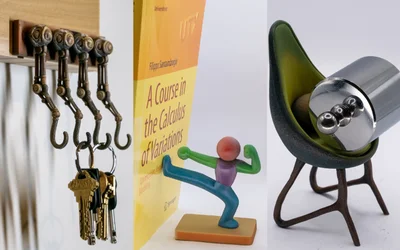
To help generative AI models create durable, real-world accessories and decor, the PhysiOpt system runs physics simulations and makes subtle tweaks to its 3D blueprints.
AI-occupational therapy team leverages novel vision-language models to detect cognitive errors
Master the language of electronics by learning to interpret schematic diagrams, from basic symbols and conventions to complex circuit analysis.
The Silicon Photomultiplier (SiPM) is transforming optical sensing and LiDAR technology by providing high photon detection efficiency, low noise, and fast response times, enabling greater accuracy and resolution in applications such as autonomous navigation, environmental mapping, and 3D imaging.
EPFL researchers have developed the first AI model of language in the brain that captures both how neurons are arranged and how they function.

3 minutes read
ETH Zurich researchers have developed a method that makes AI responses increasingly reliable. Their algorithm specifically selects data relevant to the question. In addition, even AI models up to 40 times smaller achieve the same output performance as the best large AI models.

4 minutes read
With help from recent gifts, the Stanford Wearable Electronics Initiative eWEAR-X is supercharging its efforts to transform researchers inspiration into reality by augmenting the Ideation and Prototyping Lab and providing seed funding for members of the university community.

4 minutes read
In this episode, we explore how organ-on-a-chip technology is advancing our understanding of cancer behavior.

10 minutes read
What’s particularly exciting is not just that Gen AI can write code – it’s that it’s beginning to understand context, reduce time spent on boilerplate, and support developers where they work best: in the flow of creation.

3 minutes read
Join Altair's global virtual event on May 15, 2025, and discover how to design faster, smarter, and more sustainably. Keynotes, live demos, expert insights - all in one day.
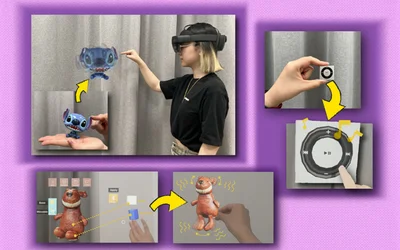
“InteRecon” enables users to capture items in a mobile app and reconstruct their interactive features in mixed reality. The tool could assist in education, medical environments, museums, and more.
EPFL researchers developed a ground-breaking new tool to help build safer AI.
4 minutes read
Researchers have advanced a decades-old challenge in the field of organic semiconductors, opening new possibilities for the future of electronics.

3 minutes read
Researchers develop first-of-its-kind optical sensor that can simultaneously measure wavelength, polarization

3 minutes read
Imagine a world where devices respond instantly to your voice commands without relying on cloud processing—that's now possible with keyword spotting. Read more to discover how it is revolutionizing voice-enabled technology.

4 minutes read
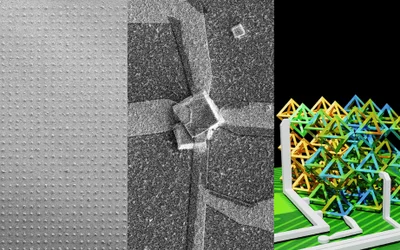
These miniature scaffolds for 3D circuits are designed to assemble themselves.

3 minutes read
A nuclear engineering graduate student is researching how generative artificial intelligence can speed up nuclear science research.

4 minutes read