Featured

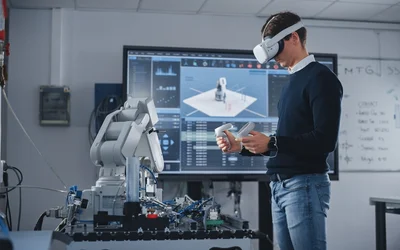
A new 3D simulation tool developed by ETH and SLF researchers now allows for significantly more accurate predictions of complex alpine mass movements, supporting alpine risk management.
Learn why teams still lose half their development time to test and fix, and what changes when you get real visibility into the target.
A new 3D simulation tool developed by ETH and SLF researchers now allows for significantly more accurate predictions of complex alpine mass movements, supporting alpine risk management.
How do MOSFETs work? This article provides an in-depth exploration of their internal structure, electrical characteristics, operation modes, real-world use cases, and the latest technological advancements and trends for 2025!
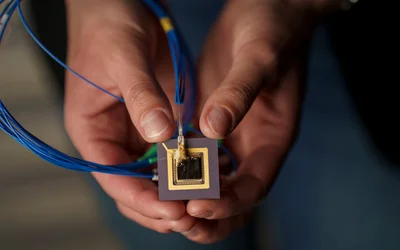
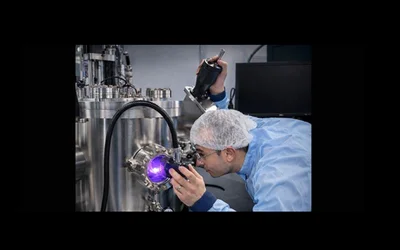
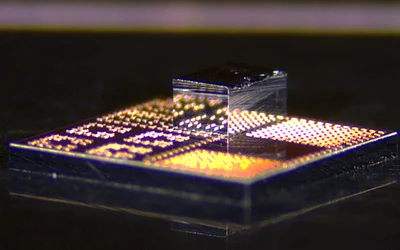
PhD candidate Sabrina Corsetti builds photonic devices that manipulate light to enable previously unimaginable applications, like pocket-sized 3D printers.
A single point of failure is any part whose failure stops the whole system. Learn how engineers find SPOFs with FMEA and fault trees, quantify them with reliability math, and remove them with N+1, 2N, failover, quorum, and voting designs, and why common cause failures can still defeat redundancy.
24 minutes read.
20 minutes read.
21 minutes read.
16 minutes read.
23 minutes read.
19 minutes read.


Higher Education
Work together. Create smart machines. Serve society. University of Michigan’s Robotics Institute aims to create a collaborative c...
40 Posts

Test and Measurement equipment
Keysight Technologies, Inc. (NYSE: KEYS) is a leading technology company th...
11 Posts
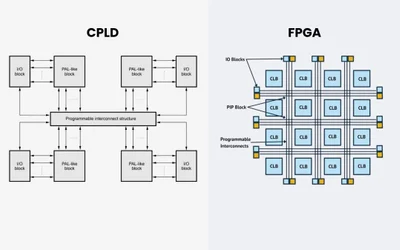
This article presents a comprehensive technical analysis of CPLD vs FPGA, focusing on their architectural distinctions, performance metrics, design flows, and implementation methodologies.
CUDA Cores and Tensor Cores are specialized units within NVIDIA GPUs; the former are designed for a wide range of general GPU tasks, while the latter are specifically optimized to accelerate AI and deep learning through efficient matrix operations.
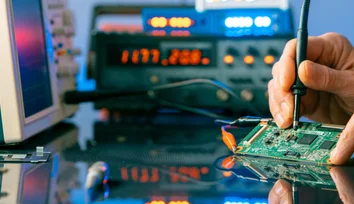
Discover the critical role of in-circuit testing in modern engineering, exploring its foundational principles, technological advancements, and real-world applications.
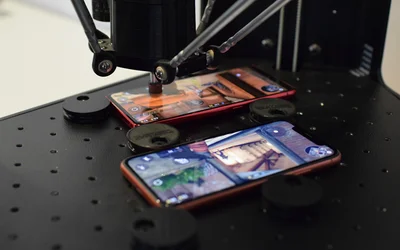
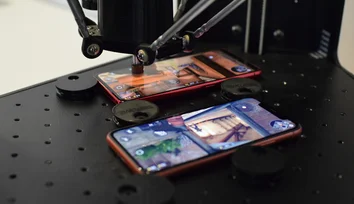
Measured in milliseconds, the response time to a tap on a smartphone’s screen might not be a “show stopping” issue, but a delay between an action and its reaction in the mobile gaming industry can make an important difference.
Researchers have developed a new kind of nanoelectronic device that could dramatically cut the energy consumed by artificial intelligence (AI) hardware by mimicking the human brain.
To help generative AI models create durable, real-world accessories and decor, the PhysiOpt system runs physics simulations and makes subtle tweaks to its 3D blueprints.
AI-occupational therapy team leverages novel vision-language models to detect cognitive errors
A new 3D simulation tool developed by ETH and SLF researchers now allows for significantly more accurate predictions of complex alpine mass movements, supporting alpine risk management.

6 minutes read
How do MOSFETs work? This article provides an in-depth exploration of their internal structure, electrical characteristics, operation modes, real-world use cases, and the latest technological advancements and trends for 2025!
PhD candidate Sabrina Corsetti builds photonic devices that manipulate light to enable previously unimaginable applications, like pocket-sized 3D printers.
Cornell researchers have developed an AI-powered process that automatically transforms a short video of a room into an interactive, 3D simulation of the space.

3 minutes read
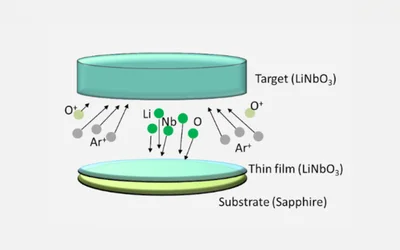
TFLN offers a much smaller footprint and improved modulation efficiency, making it highly attractive for short-reach optical communication and future integrated photonics.
GNAT Pro Assurance customers have access to a special variant of GNATcheck called GNATkp (GNAT Known Problems detector). This tool is packaged with rules designed to detect Ada constructs affected by known problems in compiler releases.

2 minutes read
aster KCL circuit analysis with our comprehensive engineering guide covering nodal analysis, modern simulation tools, and industry applications. Learn advanced techniques used by leading engineers. Start optimizing your circuit designs today.
Scientists at ITMO have come up with a new way to protect microelectronics devices from counterfeit. The new technology is based on gold and silicon nanoparticles with unique optical properties that make it possible to create unclonable functions with a record information density.

3 minutes read
Photonic integrated circuits are enabling smarter, faster, and more sustainable environmental monitoring.
This article provides a comprehensive technical comparison of CAN vs LIN, examining their architectures, use cases, and performance trade-offs.
The low-cost, scalable technology can seamlessly integrate high-speed gallium nitride transistors onto a standard silicon chip.
French company leverages AdaCore's tools, training, and mentorship services to produce flight software for small satellite launchers
Plasma Science and Fusion Center researchers created a superconducting circuit that could one day replace semiconductor components in quantum and high-performance computing systems.
ATCx AI for Engineers 2025, Altair's global virtual event, which focuses on the practical impact of AI in engineering. Bringing together industry experts, engineers, and technologists, the event showcases how AI is being applied across various domains, disciplines, and the world.
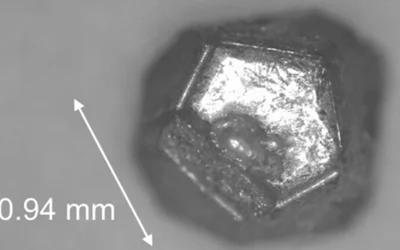
Quasicrystals couldn't be simulated with quantum mechanics because of their irregular atomic patterns. A new method overcomes this challenge.

4 minutes read