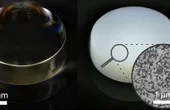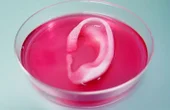
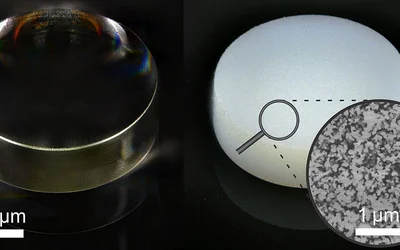
A bone-like composite developed at EPFL, in collaboration with researchers from ETH Zurich, Empa and the University of Fribourg, uses naturally occurring enzymes to accelerate mineralization through an energy-efficient, room-temperature process.
Discover how iAM Marketplace simplifies industrial additive manufacturing by unifying materials, validation services, and multi-brand technologies into one open ecosystem for efficient AM sourcing.
To help generative AI models create durable, real-world accessories and decor, the PhysiOpt system runs physics simulations and makes subtle tweaks to its 3D blueprints.
Discover how iAM Marketplace simplifies industrial additive manufacturing by unifying materials, validation services, and multi-brand technologies into one open ecosystem for efficient AM sourcing.
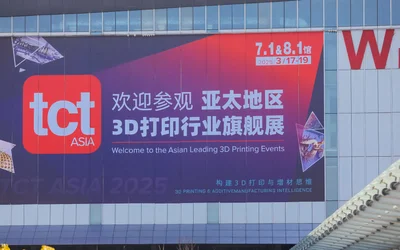
This article discusses what attendees can expect from TCT Asia 2026, including its conference format, focus areas, and the experts contributing to industry-specific discussions.
This article discusses the exhibitors, products, and industrial trends defining additive manufacturing across the Asia-Pacific region at TCT Asia 2026.
This article discusses how the Asia-Pacific region is advancing additive manufacturing and the role of TCT Asia as the leading 3D printing and additive manufacturing event in the Asia-Pacific.
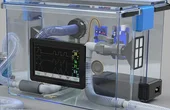
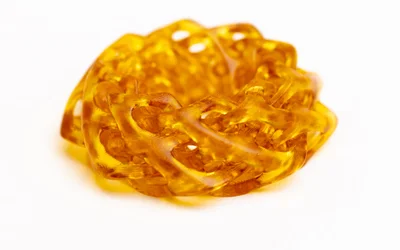
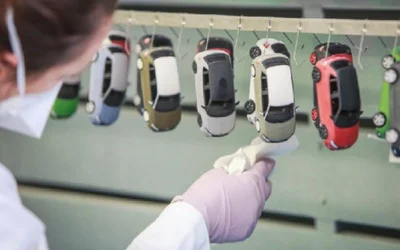
Right now, the 3D printers at the ETH spin-off Spectroplast are working at full capacity as never before: the young company has started producing silicone attachments for breathing masks on behalf of medical companies.
Research using quantum-mechanical computation will be used to identify combinations of elements that have the most promise for load-bearing applications
By merging the ancient art of origami with 21st century technology,researchers have created a one-step approach to fabricating complex origami structures whose light weight,expandability,and strength could have applications in everything from biomedical devices to equipment used in space exploration
A new understanding of the mechanics of dragonfly larvae respiration and maneuvering could lead to the next generation of prosthetic heart valves, say Caltech engineers.
A team of researchers from the Georgia Institute of Technology has developed a way to use 3-D printers to create objects capable of expanding dramatically that could someday be used in applications ranging from space missions to biomedical devices.