Turning 3D Printing Waste Into a Sustainable Business Case
3devo validates a ready-to-deploy recycling system that could transform 3D printing waste material management

23 Apr, 2026. 5 minutes read
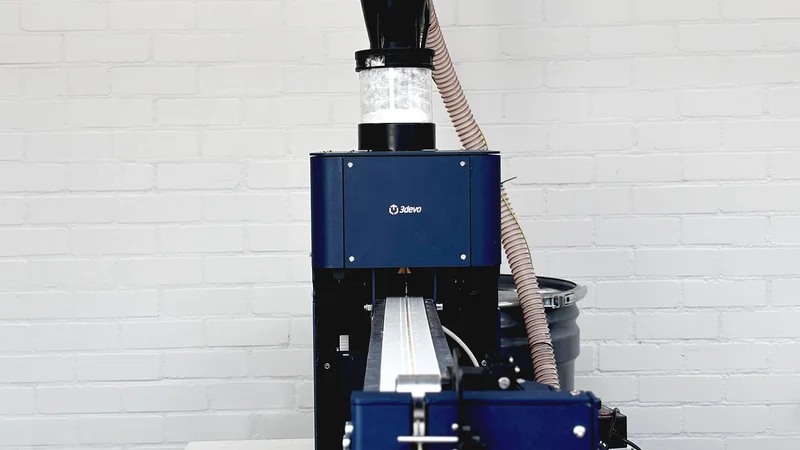
3devo pilot workflow setup for in-house material processing and validation
In the 3D printing industry, as much as any other, ecological choices are most often made when there are also tangible economic benefits. Recognizing this reality, Dutch company 3devo has developed a recycling workflow for converting 3D printing powder waste into high-quality recycled filament. The technology, which is being validated for HP’s Multi Jet Fusion (MJF) PA12 powder, unlocks greater sustainability while delivering a strong business case. Down the line, 3devo’s recycling workflow could also be implemented to manage other 3D printing waste streams, including SLS powders and 3D printed parts at the end of their lives.
As we’ll see in more detail, by creating a largely automated, ready-to-deploy recycling and filament production system, 3devo is on a mission to build greater circularity and sustainability in additive manufacturing.
Recognizing Waste Streams
As a prototyping and production technology, 3D printing itself enables manufacturers to pursue greater sustainability. The technology not only generates less waste than subtractive manufacturing processes, it also unlocks greater design efficiency and on-demand production, which can lead to more eco-friendly workflows and end products. That said, it is important to highlight that while the technology may generate less waste, it does not generate no waste. Whether it’s printed support structures, failed prints, or unusable powders, there are 3D printing waste streams that must be addressed.
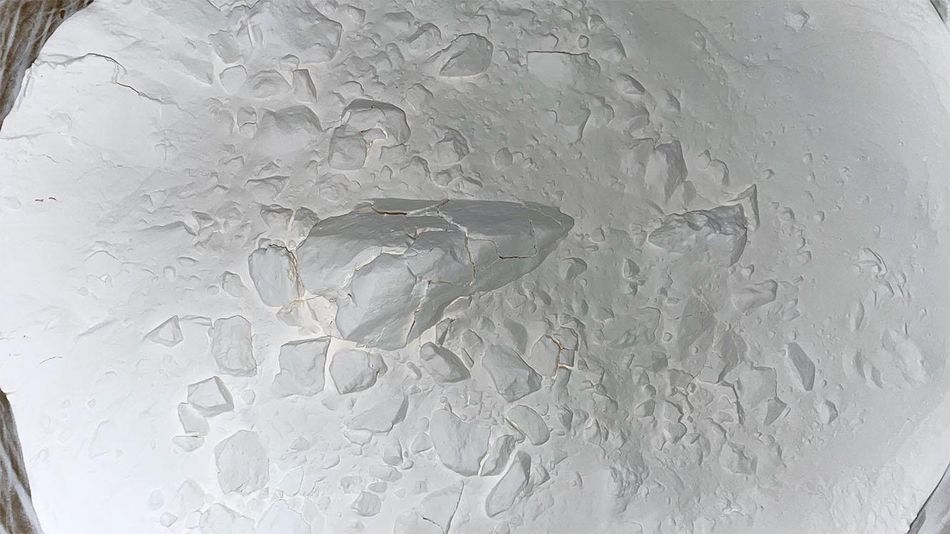
In the case of powders, for instance, we find a clear example with HP’s MJF technology. An inkjet powder bed fusion process, MJF has been used in the production of over a hundred million parts. One of the main materials used in MJF 3D printing is PA12, a nylon powder known for its high tensile strength, durability, chemical resistance, and dimensional accuracy.
In the printing process, layers of PA12 are spread over a heated build surface and inkjets selectively deposit fusing and detailing agents to build parts. While between 60 and 85% of unfused powders can be reused[1], with every print job there is an inevitable portion of PA12 powder that is no longer viable, due to the effects of moisture, oxygen, and heat degradation.[2]
This material waste not only comes with environmental challenges—as it ends up in landfills or incinerated—it also comes with cost implications. As a valuable raw material, unused PA12 powder drives up the cost of printing parts, not to mention the cost of industrial waste disposal services. For all these reasons, MJF PA12 seemed like the ideal use case for 3devo to validate its innovative powder recycling and filament production workflow.
Validating the Workflow
3devo’s goal in developing and validating its recycling workflow was clear: to showcase how recycling can be economically beneficial and create new revenue streams through the production of new 3D printing consumables. This is illustrated through its partnership with UK filament manufacturing Filamentive, which recently launched the first fully recycled PA12 filament made from MJF waste using 3devo’s solution.[3]
The recycling and filament production workflow itself involves automated steps that transform powder waste into high-quality filament with ~50 micron tolerances. These steps include:
Transferring surplus PA12 powder automatically from storage containers into the extrusion system, without the need for any drying.
Feeding the powder through four controlled heating zones until it melts using a nitrided steel screw.
Extruding the molten thermoplastic through a nozzle to form filament.
Controlling the filament shape and diameter accuracy through a combination of controlled cooling, sensors, and a dynamic pulling speed mechanism.
Automated winding of the filament onto spools in preparation for final packaging.
The entire workflow is also monitored using sensors, resulting in thorough process data for each spool of filament manufactured. For 3devo, establishing this level of traceability and quality control has been vital to making its solution viable for industrial rollout.
Sustainability Is Profitable
In validating its integrated recycling and extrusion solution for PA12 powder, 3devo is preparing for the next phase: making the workflow available to MJF users all over the world.
Presently, 3devo is continuing to refine the workflow at its own facility (where Filamentive rPA12 Recycled Nylon is made). It is also running pilot programs with selected partners, where the recycling and filament extrusion workflow is being integrated and tested in real environments. This phase enables the Dutch company and its partners to evaluate the workflow’s performance in a real production environment.
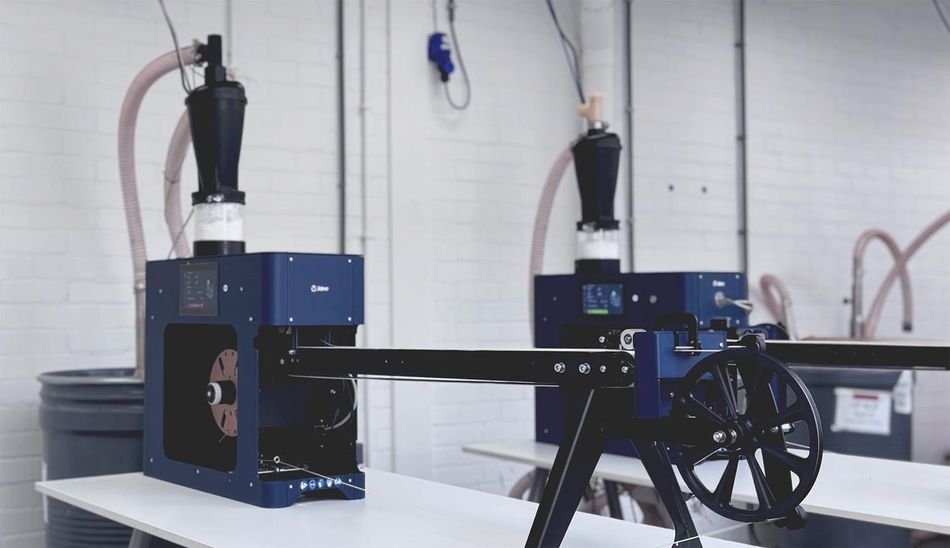
3devo’s vision is for 3D printing services and users all over the world to adopt its solution to manage their waste streams. As the company says: “People have questioned the profitability of recycling, so that is why we are proving the business case ourselves.”
This initiative also marks a step in 3devo’s own commercial evolution. The company, which has primarily served the education and R&D markets with its filament extruders, is now expanding its horizons to include industrial MJF manufacturers. Introducing a decentralized solution for this segment of users is significant: it could not only significantly reduce their MJF material waste, it can also make recycling profitable through the production of new raw material.
Conclusion
In the end, building a more circular future for 3D printing is necessary in terms of protecting our planet and managing resources. As 3devo is demonstrating, achieving a high level of sustainability and circularity does not have to be at odds with economic growth.
By turning PA12 powder waste into new filament, it is possible to both reduce landfill waste and create a new saleable product. And with MJF used in-house by OEMs as well as by AM services all over the world (HP itself has over 65 production partners that use its technology[4]), there is a considerable amount of powder that could be turned from waste into revenue.
For 3devo, eliminating PA12 powder waste is just the beginning. The company also has sights set on applying its recycling framework to other types of materials, including reinforced SLS powder streams, high-performance materials such as PEEK, and use cases such as end-of-life or unusable 3D printed components.
If you are working with MJF systems or exploring in-house material processing, feel free to get in touch with the 3devo team to discuss how this approach could apply in your setup.
References
- HP’s 3D printing materials portfolio [Internet]. HP Development Company, L.P., 2026. https://www.hp.com/us-en/printers/3d-printers/materials.html
- Sanders B, Cant E, Amel H, Jenkins M. The effect of physical aging and degradation on the re-use of polyamide 12 in powder bed fusion. Polymers. 2022 Jun 30;14(13):2682.
- World’s First: Nylon Filament made from Recycled MJF Waste [Internet]. Filamentive, Feb 12, 2026. https://www.filamentive.com/worlds-first-nylon-filament-made-from-recycled-mjf-waste/
- HP Digital Manufacturing Network directory [Internet]. HP Development Company, L.P., 2026. https://reinvent.hp.com/us-en-3dprint-digitalmanufacturing