Featured

We are going to see in this blogpost how the additive manufacturing technology can revolutionize the sports field. Then, we are going to check what the best sports equipments made with 3D printing are.
This Report shows how tools like artificial intelligence, digital twins, and on-demand manufacturing are no longer emerging concepts, but are already delivering measurable impact across the product lifecycle.
We are going to see in this blogpost how the additive manufacturing technology can revolutionize the sports field. Then, we are going to check what the best sports equipments made with 3D printing are.
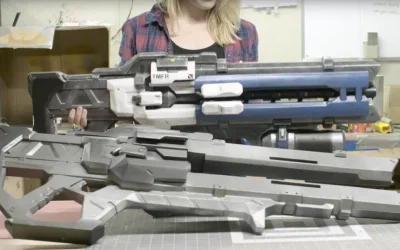
Jordan Duncan originally started creating video game props as a way to demonstrate his prop making skills to the community. Over time, his project turned from a hobby into a successful business.
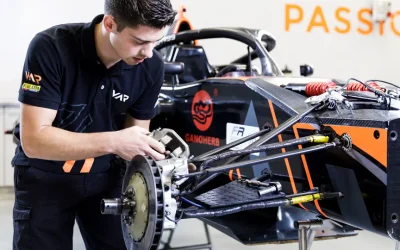
Motorsport has always been the home of technological innovation. Engineers in the sport work around the clock, competing with brilliant innovators worldwide – experts from automotive, aerospace, data analysis, and many other fields – to create vehicles that are faster, stronger, and more resilient.
An engineer’s guide to understanding the state of the art in metal 3D Printing
15 minutes read.
22 minutes read.
11 minutes read.
18 minutes read.
12 minutes read.
16 minutes read.


Entertainment
The Next Byte Podcast is hosted by two young engineers - Daniel and Farbod - who select the most interesting tech/engineering cont...
165 Posts
ADDITIV Medical 2026 will bring together more than 500 medical professionals
Choosing between 3D printing and injection molding is one of the key decisions in product development—especially in case of prototyping.
The choice between 3D printing and CNC machining is the most common decision regarding manufacturing methods that must be made before placing the first order for prototypes. The correct answer depends on tolerance requirements, material specifications, component geometry, and schedule.
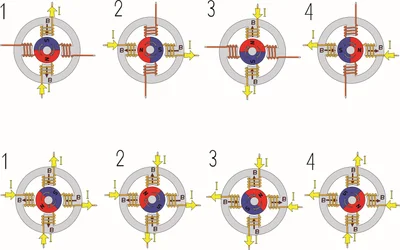
How microstepping works in stepper motors, the incremental torque cost of each resolution, and why finer microsteps do not improve positioning accuracy.
Discover how iAM Marketplace simplifies industrial additive manufacturing by unifying materials, validation services, and multi-brand technologies into one open ecosystem for efficient AM sourcing.
This article discusses what attendees can expect from TCT Asia 2026, including its conference format, focus areas, and the experts contributing to industry-specific discussions.
This article discusses the exhibitors, products, and industrial trends defining additive manufacturing across the Asia-Pacific region at TCT Asia 2026.
This article discusses how the Asia-Pacific region is advancing additive manufacturing and the role of TCT Asia as the leading 3D printing and additive manufacturing event in the Asia-Pacific.
We are going to see in this blogpost how the additive manufacturing technology can revolutionize the sports field. Then, we are going to check what the best sports equipments made with 3D printing are.

5 minutes read
Jordan Duncan originally started creating video game props as a way to demonstrate his prop making skills to the community. Over time, his project turned from a hobby into a successful business.

2 minutes read
Motorsport has always been the home of technological innovation. Engineers in the sport work around the clock, competing with brilliant innovators worldwide – experts from automotive, aerospace, data analysis, and many other fields – to create vehicles that are faster, stronger, and more resilient.
4 minutes read
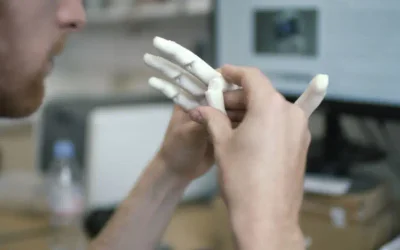
Open Bionics is creating the next generation of prosthetic limbs. What sets these apart from traditional prosthetics is that all of the mechanical parts are 3D printed, bringing along considerable cost-savings.
3 minutes read
State-of-the-art technologies provide researchers with new insights

6 minutes read
Let's take a look at some of the Material Science and Rheology behind 3D printed concrete. This type of concrete is unique because it needs to be strong enough to support the next layer being printed on top.
How subtractive and additive manufacturing create the ideal equation for metal manufacturing
6 minutes read
This industrial 3D printing white paper explores the properties of thermoplastic and metal materials available with stereolithography, selective laser sintering, and direct metal laser sintering technologies. It also includes a quick-reference guide of material attributes.
3 minutes read
Surgeons, students, dentists, do you know that 3D printing is becoming one of the main tools of the medical industry?
11 minutes read
nTop Platform is helping companies realize products with Additive Manufacturing by integrating the Design for Additive Manufacturing (DfAM) workflow and removing inherent barriers to iterative redesign necessary to create breakthrough new products.

5 minutes read
Could 3D design serve as a new bridge between current standards and a breakthrough in athletic feats?
Read below to see how a Ph.D. student used nTop Platform to help him realize complex design intent
4 minutes read
Meet Mathilde Berchon, faithful member of the Maker community, Women in 3D Printing ambassador as well as 3D printing consultant & author.
4 minutes read
With just under a week before submissions close we share two very different ways to use COR Alpha from some of the incredible designs entered in the challenge.
A potentially life-saving monitoring system for hospital patients on general wards is one step nearer to reality thanks to Protolabs’ European Cool Idea Award.
4 minutes read