Featured
Do you find it challenging to understand the potential 3D printing holds for your organization? It can be easier to understand its benefits by studying real-world cases.
This Report shows how tools like artificial intelligence, digital twins, and on-demand manufacturing are no longer emerging concepts, but are already delivering measurable impact across the product lifecycle.
Do you find it challenging to understand the potential 3D printing holds for your organization? It can be easier to understand its benefits by studying real-world cases.
In this blog, we will take a look at a few of the biggest misconceptions about 3D printing, as well as dispel inaccuracies surrounding the technology, enabling you to come to an informed decision.
“Toughness” is a combination of an object’s strength (how easily it breaks) and ductility (how easily it deforms). In this way, toughness and impact resistance are one and the same – especially in material science, as toughness is a measure for how easily your part breaks upon impact.
An engineer’s guide to understanding the state of the art in metal 3D Printing
15 minutes read.
22 minutes read.
11 minutes read.
18 minutes read.
12 minutes read.
16 minutes read.


Entertainment
The Next Byte Podcast is hosted by two young engineers - Daniel and Farbod - who select the most interesting tech/engineering cont...
165 Posts
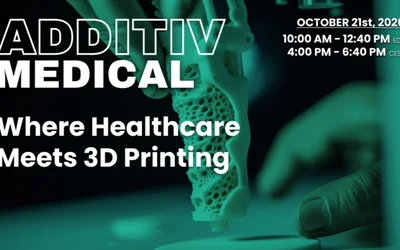
ADDITIV Medical 2026 will bring together more than 500 medical professionals
Choosing between 3D printing and injection molding is one of the key decisions in product development—especially in case of prototyping.
The choice between 3D printing and CNC machining is the most common decision regarding manufacturing methods that must be made before placing the first order for prototypes. The correct answer depends on tolerance requirements, material specifications, component geometry, and schedule.
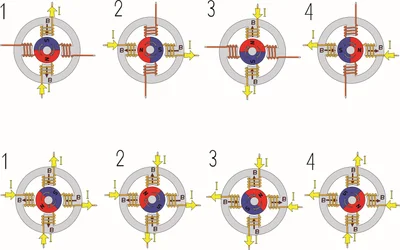
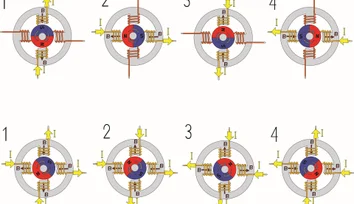
How microstepping works in stepper motors, the incremental torque cost of each resolution, and why finer microsteps do not improve positioning accuracy.
Discover how iAM Marketplace simplifies industrial additive manufacturing by unifying materials, validation services, and multi-brand technologies into one open ecosystem for efficient AM sourcing.
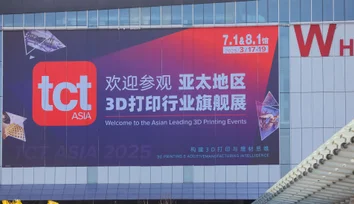
This article discusses what attendees can expect from TCT Asia 2026, including its conference format, focus areas, and the experts contributing to industry-specific discussions.
This article discusses the exhibitors, products, and industrial trends defining additive manufacturing across the Asia-Pacific region at TCT Asia 2026.
This article discusses how the Asia-Pacific region is advancing additive manufacturing and the role of TCT Asia as the leading 3D printing and additive manufacturing event in the Asia-Pacific.
Do you find it challenging to understand the potential 3D printing holds for your organization? It can be easier to understand its benefits by studying real-world cases.

3 minutes read
In this blog, we will take a look at a few of the biggest misconceptions about 3D printing, as well as dispel inaccuracies surrounding the technology, enabling you to come to an informed decision.
3 minutes read
“Toughness” is a combination of an object’s strength (how easily it breaks) and ductility (how easily it deforms). In this way, toughness and impact resistance are one and the same – especially in material science, as toughness is a measure for how easily your part breaks upon impact.
4 minutes read
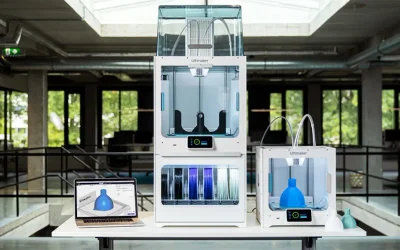
FFF 3D printing, or fused filament fabrication, is an additive manufacturing (AM) process in which thermoplastic material is pushed through a heated nozzle to create objects layer by layer.
6 minutes read
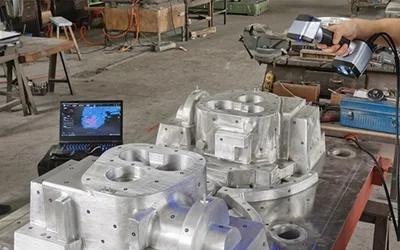
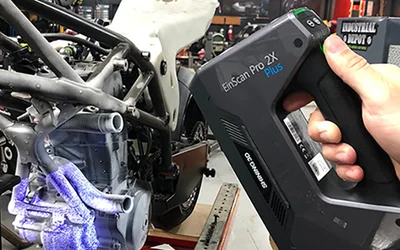
3D scanning technology has radically improved to now offer immense value in applications as diverse as reverse engineering to contactless dentistry.

7 minutes read
The next step in machine learning, how 3D printing will change the airline industry, and why flies hold the secret to robotic flight.

The new Protolabs whitepaper describes how additive manufacturing has established itself as a driver of innovation in medicine in recent years and what role 3D printing will play in the industry in the future.

3 minutes read
What should be your priorities? How can you find the best manufacturing partner for your products?

4 minutes read
Art, culture and the craft of metal – Bryan Fuller's automotive and motorcycle design and customization shop 'Fuller Moto' inspires, educates and entertains those with a creative spirit and a do-it-yourself attitude and combines all these aspects together by creating 'rolling works of art'.
3 minutes read
To date the huge demand for customized products confronts businesses and professionals from a broad array of industries with the question: how can customized products be designed accurately, effectively and at reasonable cost?
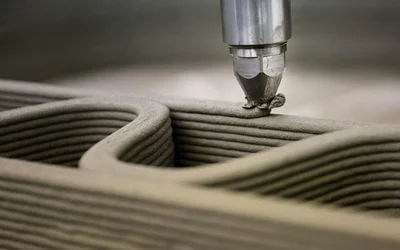
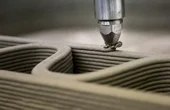
Is 3D printing the future of construction? Can it really become an alternative to traditional construction techniques in the future? That’s what we are going to see!
10 minutes read
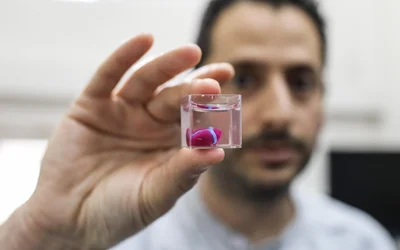
In the near future, 3D bioprinting will allow medical professionals to engineer and 3D print patient-specific organs for organ transplants in a few hours.
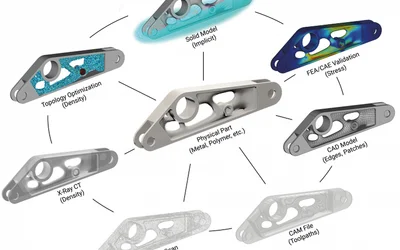
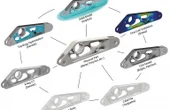
Fueled by computational modeling and the ability to synthesize data and leverage it within a design, coupled with technology to create complex geometries, industries are able to deliver more cost efficient parts without sacrificing performance.

2 minutes read
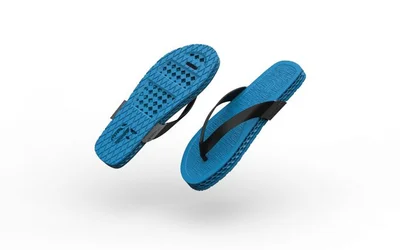
Creating an automated design workflow for custom flip flops opens the doors for sustainability and customization in footwear.
3 minutes read
Mass customization: production strategy aimed at satisfying customer needs while preserving the efficiency of mass production. At .Zero here's how we view mass customization, and how we are using nTop Platform helps us achieve it successfully.
3 minutes read