Featured

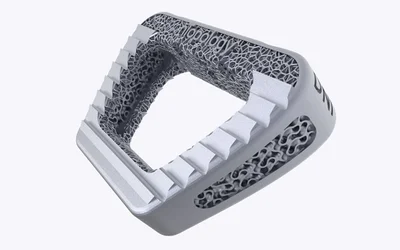
Find out more about how 3D printing can be used for implants, medical devices and custom-made products, as well as an outlook to what the future could hold for 3D printing in this field.
This Report shows how tools like artificial intelligence, digital twins, and on-demand manufacturing are no longer emerging concepts, but are already delivering measurable impact across the product lifecycle.
Find out more about how 3D printing can be used for implants, medical devices and custom-made products, as well as an outlook to what the future could hold for 3D printing in this field.
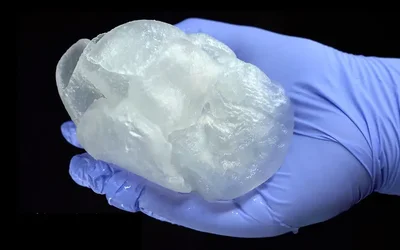
In this episode, we talk about the first full-size soft tissue 3D printed heart, an AI algorithm that knows what music is best for you, and the newest weather-monitoring satellite.
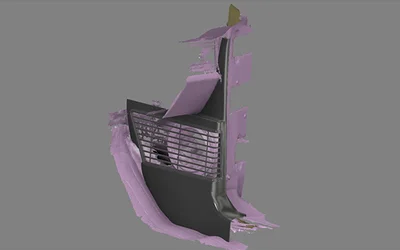
Fullermoto cut down production time to 25% compared to traditional production method by adopting the scan to print workflow
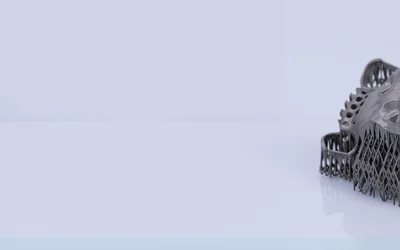
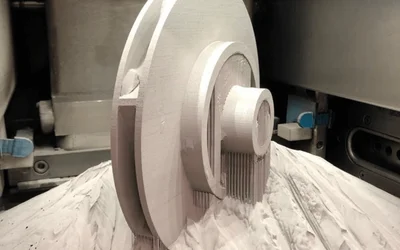
An engineer’s guide to understanding the state of the art in metal 3D Printing
15 minutes read.
22 minutes read.
11 minutes read.
18 minutes read.
12 minutes read.
16 minutes read.


Entertainment
The Next Byte Podcast is hosted by two young engineers - Daniel and Farbod - who select the most interesting tech/engineering cont...
165 Posts
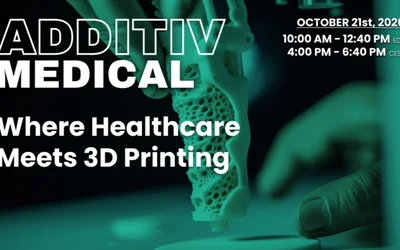
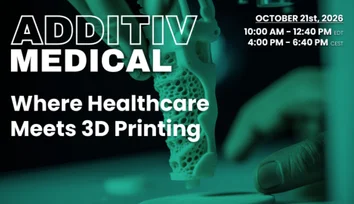
ADDITIV Medical 2026 will bring together more than 500 medical professionals
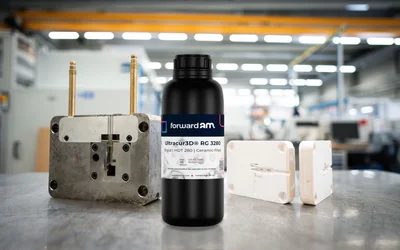
Choosing between 3D printing and injection molding is one of the key decisions in product development—especially in case of prototyping.
The choice between 3D printing and CNC machining is the most common decision regarding manufacturing methods that must be made before placing the first order for prototypes. The correct answer depends on tolerance requirements, material specifications, component geometry, and schedule.
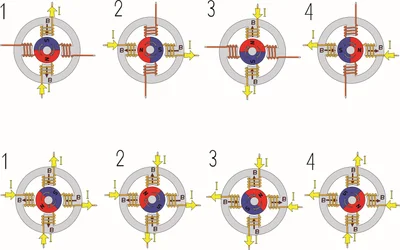
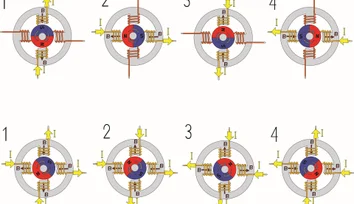
How microstepping works in stepper motors, the incremental torque cost of each resolution, and why finer microsteps do not improve positioning accuracy.
Discover how iAM Marketplace simplifies industrial additive manufacturing by unifying materials, validation services, and multi-brand technologies into one open ecosystem for efficient AM sourcing.
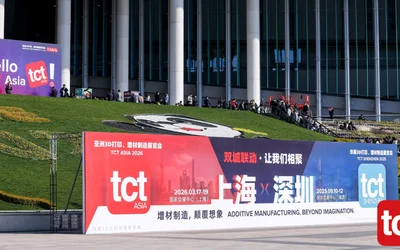
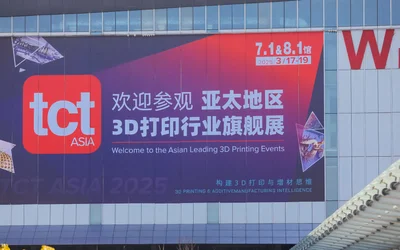
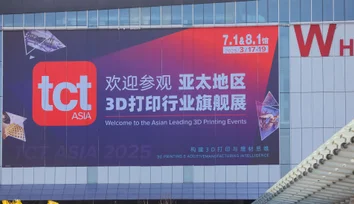
This article discusses what attendees can expect from TCT Asia 2026, including its conference format, focus areas, and the experts contributing to industry-specific discussions.
This article discusses the exhibitors, products, and industrial trends defining additive manufacturing across the Asia-Pacific region at TCT Asia 2026.
This article discusses how the Asia-Pacific region is advancing additive manufacturing and the role of TCT Asia as the leading 3D printing and additive manufacturing event in the Asia-Pacific.
Find out more about how 3D printing can be used for implants, medical devices and custom-made products, as well as an outlook to what the future could hold for 3D printing in this field.

4 minutes read
In this episode, we talk about the first full-size soft tissue 3D printed heart, an AI algorithm that knows what music is best for you, and the newest weather-monitoring satellite.

Fullermoto cut down production time to 25% compared to traditional production method by adopting the scan to print workflow

2 minutes read
Metal 3D Printing is an advanced manufacturing method that builds metal parts from a CAD file using a layer-by-layer technique known as additive manufacturing.

3 minutes read
From the subtle stipple of your laptop’s casing of to the geometric grip of your toothbrush handle, texture is a key consideration in the design process for any and every physical product. Read further to learn how I use nTop Platform to apply texturing to products I design.
A major factor that influences design decisions during the product development of medical devices is time-to-market. Accelerating or automating your design processes can give you a distinct advantage over your competitors.

2 minutes read
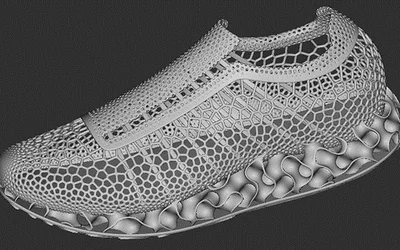
Fast Radius had an internal design challenge to create a shoe that could be printed as one part using an elastomeric material on HP's Multi-Jet Fusion technology. They designed workflows within nTop Platform as a way to explore the industrial design of the shoe.
3 minutes read
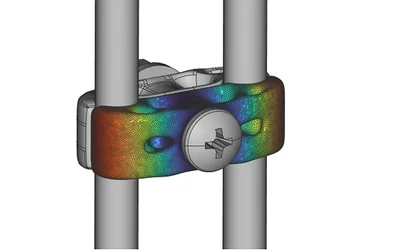
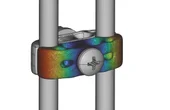
Engineers from nTopology, Stress Engineering Services, and Origin joined forces to redesign a family of clamps used on the F-16 aircraft. The result was an optimized design that was 2x stiffer, easy to assemble even with one hand and manufacturable on-demand.
4 minutes read
SQ4D List First 3d Printed Home
Additive manufacturing (AM or 3D printing) has made design-driven production a reality. Any shape that can be constructed in a 3D CAD program can be produced with AM, providing product designers maximum geometric design freedom to realize new design concepts.
2 minutes read
Once you’ve decided to implement 3D printing within your workflow, you’ll need to know how to use the technology as productively as possible. The following tips will enable you to make the most of your 3D printer as quickly as possible.

3 minutes read
A material’s strength refers to the maximum stress it can be put under before its failure. Its stiffness refers to how much it will deform when pulled or bent. Materials with high stiffness often also have high strength.
4 minutes read
The combination of 3D printing and injection molding creates a start-up friendly approach to fast, low-risk prototyping.
nTopology is sponsoring the 3D Pioneers Challenge 2021. This year's challenge focuses on not just the design of a part but the entire process. What does this mean to you? You get free access to nTopology for a month to enhance your 3DPC submission, and a chance to win a year's license of nTopology
5 minutes read
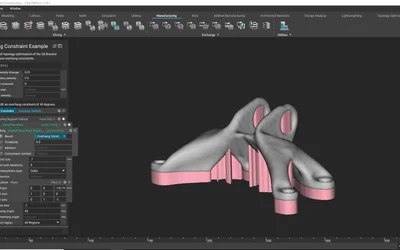
In the recent nTopology 2.24 update, we introduced the topology optimization overhang constraint for Additive Manufacturing.
4 minutes read