Featured
EHD is a promising digital printing technology for going beyond the resolution limits of inkjet. Most examples showcase electronic or display related applications.
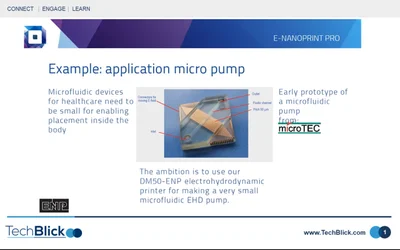
EHD is a promising digital printing technology for going beyond the resolution limits of inkjet. Most examples showcase electronic or display related applications.
PCB Trace Width Calculator
Glossary of Semiconductors Terms
EHD is a promising digital printing technology for going beyond the resolution limits of inkjet. Most examples showcase electronic or display related applications.
The three themes are closely linked since QDs can be digitally printed as color conversation materials atop blue microLEDs to enable wide color gamut RGB uLED displays without requiring a separate transfer step for each color.. This is an important technology as it simplifies the manufacturing step for microLED and thus removing a major hinderence.
As microLEDs inevitably shrink in size, the micro-bumping requirements for the microLED dies becomes more challenging. Direct wafer-based printing based on gravure offset techniques offers a promising solution in this regard. Indeed, this is another field where printed electronics can play a role.
Semiconductors are the building blocks of modern electronics, powering everything from smartphones to satellites. This in-depth guide provides a comprehensive understanding of semiconductors' engineering principles and applications, delving into their fundamental concepts, materials, devices, manufacturing processes, and their impact on today's technology landscape.
18 minutes read.
20 minutes read.
26 minutes read.
17 minutes read.
21 minutes read.
29 minutes read.
Semiconductors
Nordic Semiconductor is a fabless semiconductor company specializing in wireless technology that powers the IoT.
181 Posts
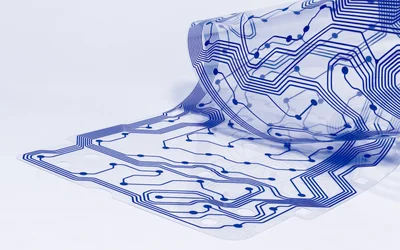
Exploring the shift to additive digital printing in modern electronics fabrication.
This article explains the ESP8266 pinout, covering GPIO mapping, boot-strapping pins, safe-to-use pins, flash connections, ADC limits, deep-sleep functions, and NodeMCU and D1 mini pin labels.
Learn how a Hall Effect Current Sensor works, including principles, topologies, specifications, comparisons and engineering applications.
A guide covering the full radio-frequency design workflow, starting from setting specifications and choosing topologies to matching, simulation, layout, and verification, to help antenna engineers.
Controlled impedance is the control of PCB trace impedance within specified tolerances. This article covers microstrip and stripline designs, IPC-2141A formulas, stackup selection, impedance tolerances, routing practices, and TDR testing for signal integrity.
Exploring the shift to additive digital printing in modern electronics fabrication.
A PCB design can be electrically correct, pass every design rule check and perform exactly as expected on an engineer's screen - and still cause significant problems when it reaches manufacturing.
A semiconductor is a material whose electrical conductivity falls between that of a conductor and an insulator and can be controlled by temperature, light, and impurities. This article covers semiconductor materials, doping, diodes, transistors, and integrated circuits.
EHD is a promising digital printing technology for going beyond the resolution limits of inkjet. Most examples showcase electronic or display related applications.

The three themes are closely linked since QDs can be digitally printed as color conversation materials atop blue microLEDs to enable wide color gamut RGB uLED displays without requiring a separate transfer step for each color.. This is an important technology as it simplifies the manufacturing step for microLED and thus removing a major hinderence.
As microLEDs inevitably shrink in size, the micro-bumping requirements for the microLED dies becomes more challenging. Direct wafer-based printing based on gravure offset techniques offers a promising solution in this regard. Indeed, this is another field where printed electronics can play a role.
Nano-Ops is commercialising an automated wafer-based process and fab-in-a-box based on the directed assembly technology which can 'print' features down to 20nm. Here, In the first step a pattern is first etched into a template wafer.
2 minutes read
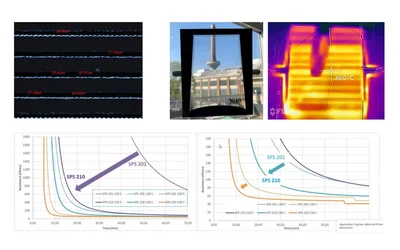
The progress of screen printing towards fine line printing has been incredible going from 100 µm features before 2010 to 70 µm to 2015 to 40 µm in 2018 and now pushing - in development- towards 20 µm and less. In parallel, the wet thickness of the printed line have gone down from 12um or so in 2018 to now just 4um.
To scale up microLED displays to large areas, smaller displays can be titled. Because microLEDs can be truely edge-less devices, the tiling can function, yielding a seemless look.
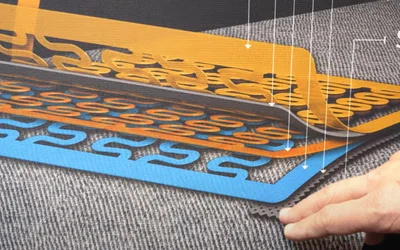
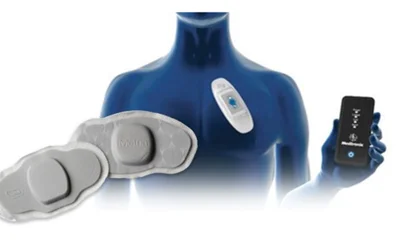
Stretchable Electronics and inks for durable wearable electronics. These inks can be printed on TPU films which can be bonded to fabrics. This results in devices that stretch without cracking and maintain excellent electrical properties. Examples include biometric sensors & fixed resistance heaters
As wearable electronic devices continue to be more prevalent, it becomes an ever-greater challenge for companies that manufacture them to keep their competitive edge. It is vitally important for manufacturers that each device is effective, cost-efficient and reflects the highest quality available.
2 minutes read
Silver nanoparticle inks improve every year. These improvements are often incremental, but very important. One ever-present direction of development is towards inks which offer ever higher conductivity levels at a low curing temperature and a short curing time. This a critical figure of merit because it opens more substrate choices, saves time, and lowers energy consumption costs.
This article explores active filter types, circuit design principles, frequency response, and key differences between active and passive filters.
Circuit card assemblies (CCA) give birth to a complete printed circuit board (PCB) after assembling every component. A printed circuit board has no electrical components and needs to go through a manufacturing process called circuit card assemblies which are the complete board assembly.
A short primer on how to choose PCBA surface finishes

4 minutes read
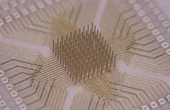
Carnegie Mellon University collaborators pioneer the CMU Array—a customizable, 3D nano-printed, ultra-high-density microelectrode array platform for next-generation brain-computer interfaces. This technology can transform the way doctors are able to treat neurological disorders.

3 minutes read
Article #5 Electronics Innovation Series. IoT security is a shared responsibility between chip manufacturers, hardware designers, and the consumer.
Article #2 of the "Why Edge?" Series. Edge AI increases battery life, reduces latency, and in many cases, eliminates the need for cloud communication, making wearable devices more user-friendly and secure.