Featured
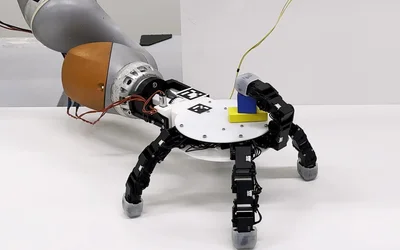
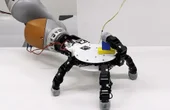
A robotic hand developed at EPFL surpasses the limits of human dexterity with a dual-thumbed, reversible-palm design that can detach from its robotic 'arm' to reach and grasp multiple objects.
A robotic hand developed at EPFL surpasses the limits of human dexterity with a dual-thumbed, reversible-palm design that can detach from its robotic 'arm' to reach and grasp multiple objects.
Learn how Shadow Robot combines deep dexterous robotics expertise with transparent collaboration to move from concept to scalable manipulation systems.
Nabtesco provides strain wave and cycloidal gears with a torque range from 7 to 70,000 Nm, enabling consistent performance, seamless compatibility, and cost-effective operation across different applications.
This comprehensive article dives deep into the world of robotics, exploring the history, types, engineering components, applications, and future trends of robots, offering readers an in-depth understanding of how these remarkable machines work and shape our lives.
16 minutes read.
21 minutes read.
16 minutes read.
23 minutes read.
19 minutes read.
27 minutes read.


University
At the Harvard John A. Paulson School of Engineering and Applied Sciences (...
42 Posts

Robotics & Automation
READY Robotics is a robotics software company that vastly simplifies robot ...
24 Posts

Automation Machinery Manufacturing
We are a company in flying robotics, specializing in Non-destructive inspec...
23 Posts
Everyone, guess how fast is it?
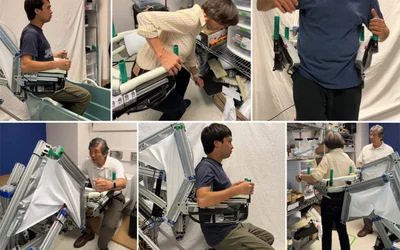
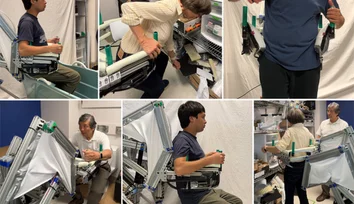
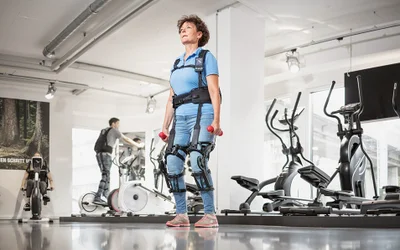
The new design could assist the elderly as they age in place at home.
The hospitality industry can leverage the gender characteristics of service robots to influence customers' decisions, according to new research from a team in the Penn State School of Hospitality Management.
Service robots have evolved from simple automated machines to intelligent adaptive systems that can navigate unpredictable environments and interact with humans.
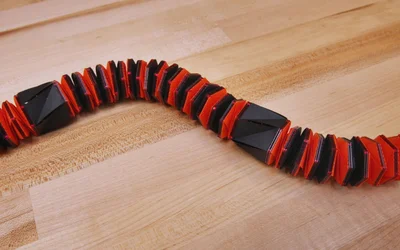
Engineers at Princeton and North Carolina State University have combined ancient paper folding and modern materials science to create a soft robot that bends and twists through mazes with ease.
A research team from ETH Zurich and the University of Zurich (UZH) has developed a novel approach to treating spinal cord injuries: controllable microrobots deliver stem cells directly to the site of an injury, where they promote nerve cell regeneration.
Cornell engineers have developed a robotic collective that behaves less like a machine and more like a material that flows, reshapes and adapts to its environment without centralized control.
From hospital wards to crop fields, from microscopic swarms to biohybrid machines powered by fungi, robotics research at Cornell spans an astonishing range of scale, application and ambition.
A robotic hand developed at EPFL surpasses the limits of human dexterity with a dual-thumbed, reversible-palm design that can detach from its robotic 'arm' to reach and grasp multiple objects.

3 minutes read
Learn how Shadow Robot combines deep dexterous robotics expertise with transparent collaboration to move from concept to scalable manipulation systems.
Nabtesco provides strain wave and cycloidal gears with a torque range from 7 to 70,000 Nm, enabling consistent performance, seamless compatibility, and cost-effective operation across different applications.
From a mechanical guide dog to a self-learning exoskeleton and magnetically controlled bacteria, researchers at ETH Zurich are busy devising robots for medical applications.

6 minutes read
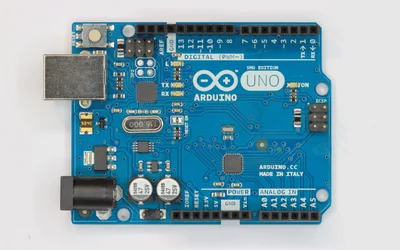
This article covers every aspect of the Arduino UNO pinout, presenting a technical, pin-by-pin explanation to help readers confidently design, analyze, and implement Arduino-based systems.
M2M SIMs deliver secure multi-network mobile connectivity for EV charging stations worldwide, ensuring reliable payments, monitoring, and uptime even in remote locations.
M2M SIM cards enable secure wireless connectivity for telemedicine and IoT healthcare devices, supporting remote patient monitoring, reliable data transfer, and flexible nationwide roaming.
Integrated motion solutions built for speed, efficiency, and customization.
Learn why M2M SIMs (also known as IoT SIMs) are the better choice for IoT projects, compared with consumer SIMs.

4 minutes read
Have you exercised today? How about training together with a robot? Please use robots in a friendly and safe manner, and keep a safe distance.

From automation to aviation, high-precision gears by Nabtesco Corporation ensure reliable and efficient motion control in critical applications.
This episode celebrates five years of The Next Byte with a recap of 2025, highlighting standout episodes through The "Saucies" Awards, reflecting on major trends, sharing predictions for 2026, and thanking the global listener community.

The AI-powered tool could inform the design of better sensors and cameras for robots or autonomous vehicles.
In this episode, we explore the engineering behind Unitree's newest boxing robot demo, the history of humanoid robots, and why robotics might create a new F1-esque sport in the combat sports realm.
13 minutes read
In this episode, we explore MIT's new system that turns spoken ideas into physical assemblies by linking speech-to-text, text-to-CAD, CAD-to-assembly, and robotic fabrication - pointing to a future where making hardware could be as easy as prompting an AI with your voice.
12 minutes read