Featured
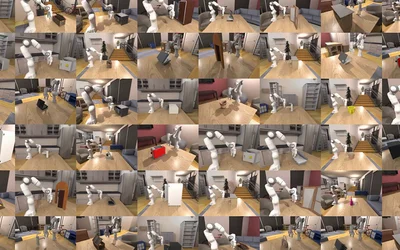
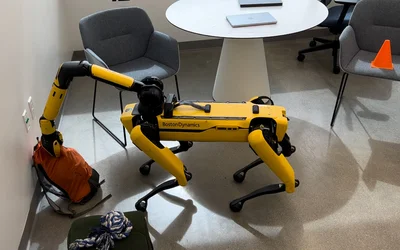
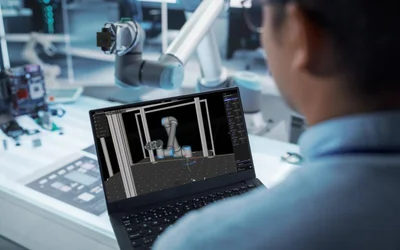
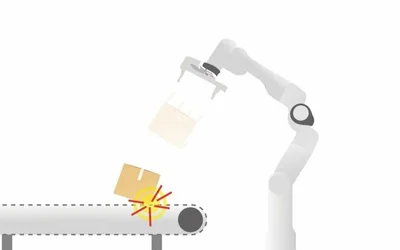
For robots, simulation is a great teacher for learning long-horizon (multi-step) tasks — especially compared to how long it takes to collect real-world training data.
For robots, simulation is a great teacher for learning long-horizon (multi-step) tasks — especially compared to how long it takes to collect real-world training data.
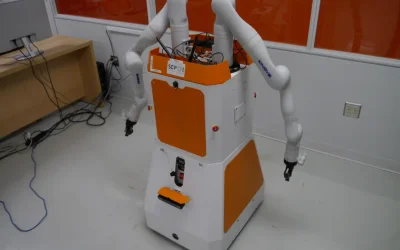
Rosie is a dual arm mobile manipulation robot designed for pick and place in an industry 4.0 setting.
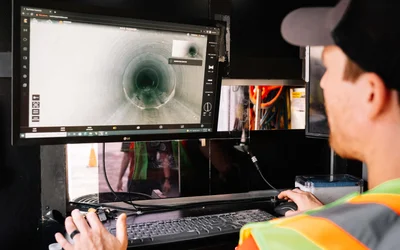
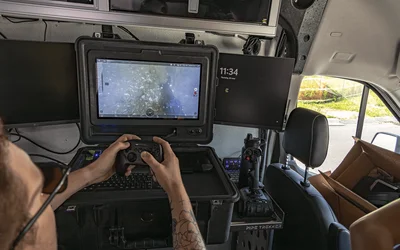
Explore Loyola University's groundbreaking research using Pipe Trekker Crawlers to combat mosquito-borne diseases in sewer systems. Innovative techniques reshaping public health.
This comprehensive article dives deep into the world of robotics, exploring the history, types, engineering components, applications, and future trends of robots, offering readers an in-depth understanding of how these remarkable machines work and shape our lives.
16 minutes read.
21 minutes read.
16 minutes read.
23 minutes read.
19 minutes read.
27 minutes read.


University
At the Harvard John A. Paulson School of Engineering and Applied Sciences (...
42 Posts

Robotics & Automation
READY Robotics is a robotics software company that vastly simplifies robot ...
24 Posts

Automation Machinery Manufacturing
We are a company in flying robotics, specializing in Non-destructive inspec...
23 Posts
Everyone, guess how fast is it?
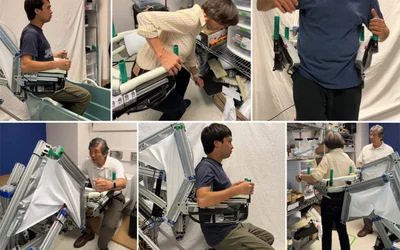
The new design could assist the elderly as they age in place at home.
The hospitality industry can leverage the gender characteristics of service robots to influence customers' decisions, according to new research from a team in the Penn State School of Hospitality Management.
Service robots have evolved from simple automated machines to intelligent adaptive systems that can navigate unpredictable environments and interact with humans.
Engineers at Princeton and North Carolina State University have combined ancient paper folding and modern materials science to create a soft robot that bends and twists through mazes with ease.
A research team from ETH Zurich and the University of Zurich (UZH) has developed a novel approach to treating spinal cord injuries: controllable microrobots deliver stem cells directly to the site of an injury, where they promote nerve cell regeneration.
Cornell engineers have developed a robotic collective that behaves less like a machine and more like a material that flows, reshapes and adapts to its environment without centralized control.
From hospital wards to crop fields, from microscopic swarms to biohybrid machines powered by fungi, robotics research at Cornell spans an astonishing range of scale, application and ambition.
For robots, simulation is a great teacher for learning long-horizon (multi-step) tasks — especially compared to how long it takes to collect real-world training data.
Rosie is a dual arm mobile manipulation robot designed for pick and place in an industry 4.0 setting.

8 minutes read
Explore Loyola University's groundbreaking research using Pipe Trekker Crawlers to combat mosquito-borne diseases in sewer systems. Innovative techniques reshaping public health.

6 minutes read
In a world where industrial automation is happening at a fast rate, it is crucial to understand more about a cobot vs robot. There are over 3.4 million industrial robots being used in different industries today.

6 minutes read
MIT CSAIL researchers developed an AI-driven approach to “low-discrepancy sampling,” a method that improves simulation accuracy by distributing data points more uniformly across space.
A team of EPFL researchers has demonstrated the feasibility of an AI-driven method for crack detection, growth and monitoring, and will soon test it on the railway section between Zermatt and Brig in Valais Canton.

2 minutes read
A new method called Clio enables robots to quickly map a scene and identify the items they need to complete a given set of tasks.
Empowering users with zero programming knowledge: building a robust manufacturing network to enhance industry resilience.
Recap of the Third Annual Showcase of Smart Mobility
9 minutes read
Learn how different industries can benefit from Deep Trekker’s proprietary BRIDGE technology that enhances ROV functionality for underwater operations.
7 minutes read
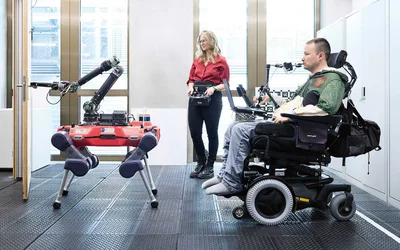
In the international Cybathlon competition, people with physical disabilities undertake routine tasks with the aid of assistive tech that can be seamlessly integrated into everyday life. Here are three ETH teams that will be putting their innovative solutions to the test at this October’s event.

6 minutes read
Utilizing SKYRON Technology

3 minutes read
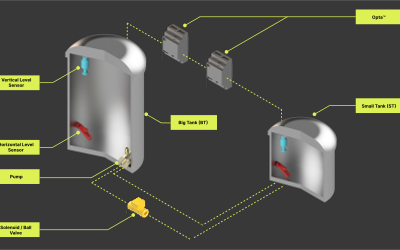
The need for advanced tank monitoring and pump control solutions is growing across industries – from water treatment to aquaculture to industrial utilities. Meanwhile, smart technology is transforming tank management for a variety of liquids, ensuring a streamlined process and minimizing risks.

3 minutes read
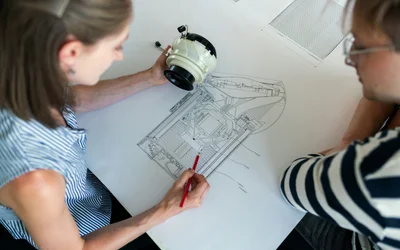
To achieve greater efficiency, robots must develop more human-like skills, such as fast physical interaction. That was the focus of the I.AM project.

4 minutes read
This comprehensive guide will walk you through the process of calculating torque, explaining the necessary formulas and concepts along the way.
5 minutes read