Research from MIT suggests that a certain type of robust computer-vision model perceives visual representations similarly to the way humans do using peripheral vision.

Designed for "energy neutral operation" of resource-constrained wearable devices, tinyMAN learns how to eke out the power available from an energy harvesting system to maximize utility without ever needing a manual charge.
This article explores TPU vs GPU differences in architecture, performance, energy efficiency, cost, and practical implementation, helping engineers and designers choose the right accelerator for AI workloads today!
From simple sensor control to connected, intelligent devices, embedded systems often outgrow a single MCU. Pairing an MCU with Linux adds power and flexibility, but also introduces communication challenges, dual development workflows, and increasing software complexity.
This article explores how automated CI/CD pipelines replace fragile manual build processes with reproducible, auditable workflows that improve compliance, reduce defects, and accelerate development in regulated embedded systems
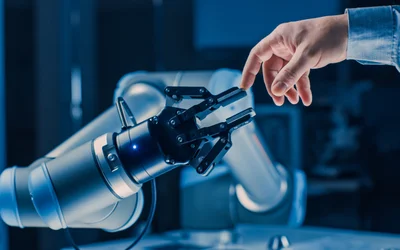
Mario Mauerer, maxon's Global Business Development Manager, Robotics, discusses what it takes for robotic deployments to be successful in complex real-world environments.
Join Prof. Fei Chen as he explores advanced bimanual manipulation and teleoperation techniques shaping the future of intelligent human-like robots in this expert-led robotics session.
Research from MIT suggests that a certain type of robust computer-vision model perceives visual representations similarly to the way humans do using peripheral vision.
Designed for "energy neutral operation" of resource-constrained wearable devices, tinyMAN learns how to eke out the power available from an energy harvesting system to maximize utility without ever needing a manual charge.
The Industrial IoT (IIoT) is the foundation of Industry 4.0. By sending sensor data to the cloud and using it to feed machine learning algorithms, manufacturers can detect process problems immediately, rather than at later stages when rework and field failures are much more expensive.
Designed as a necklace-style wearable in a 3D-printed case, SpeeChin is capable of recognizing 54 English and 44 Chinese voice commands — even if the wearer never says anything out loud.
The in-sensor adaptation strategy widens the range for image perception under different illumination conditions to simplify the complexity of hardware and algorithms.
Sounds provide important information about how well a machine is running. ETH researchers have now developed a new machine learning method that automatically detects whether a machine is "healthy" or requires maintenance.
Designed to address the OOD data false prediction by adaptively synthesizing virtual outliers that can maintain the model’s decision boundary during training.
Designed to address the exploding computational demands of deep neural networks, physical neural networks (PNNs) branch out from electronics into optics and even mechanics to boost performance and efficiency.
Concentrated logistics power without the waffle – at the virtual Future of Intralogistics Days 2022 conference on March 9th and 10th, 18 famous companies will be presenting the latest intralogistics technologies. The free event is aimed at experienced intralogistics experts in the B2B sector.
Designed for use in the human body for everything from drug delivery to less-invasive biopsies, these tiny microrobots operate under the control of a deep-learning system trained with no modelling or prior environmental knowledge.
Taking its cues from the haunting electronic instrument, the MoCapaci project sews a theremin into a blazer to feed a deep-learning system with data for accurate gesture sensing and activity recognition.
Over the last decade, deep neural networks have emerged as the solution to several AI complex applications from speech recognition and object detection to autonomous vehicular systems.