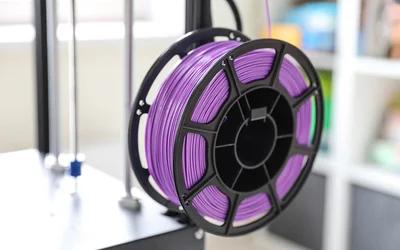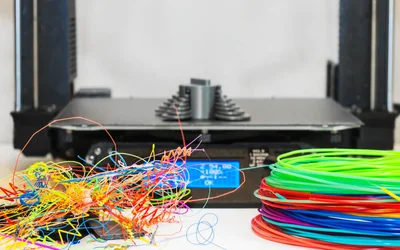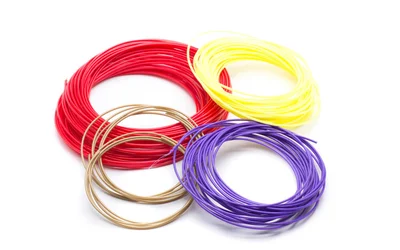
What is 3D printer filament made of? This guide examines polymers, additives, and composites, offering practical tips for digital design and hardware engineers.
Discover how to print with high-performance filaments like PEEK, PEKK, and ULTEM. Learn about their properties, hardware needs, challenges, and best practices for industrial-grade 3D printing.
Explore how 3D-Fuel's Pro PCTG filament advances additive manufacturing, offering higher impact strength, improved environmental resistance, and reliable printability for functional and industrial 3D printing applications.
3devo's next-generation desktop extruder combines industrial precision with lab-scale simplicity enabling more controlled, higher-performance and data-driven 3D printing material workflows.
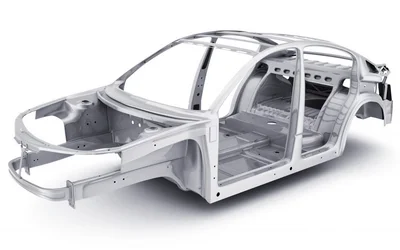
Lightweighting materials play a crucial role in offering the potential for improved fuel efficiency, enhanced performance, and reduced emissions in the automotive industry. It is anticipated that the lighter and more efficient automotive materials and components will revolutionize the industry in the coming years.
In this episode, we talk about a graduate student’s thesis which resulted in a robot that’ll allow you to hug loved ones that are far away, how artificial photosynthesis might hold the key to our energy crisis, and a novel technique to conduct spinal stimulation therapy via non-invasive surgery.
Delve into the variety of filament options available and discover how to select the perfect material to meet the specific requirements of your 3D printed projects.
In this episode, we talk about a company that is upcycling chewed and unwanted gum to create polymer based products, a software solution to reduce embodied carbon in construction projects, and a Boston based startup that is planning to change the way consumers think about coastal transportation.
Gumdrop Ltd, a company based in London, UK, has developed a thermoplastic elastomer (TPE) material called Gumtec that is made of up to 30% recycled chewing gum and can be used in shoes, phone cases, and other consumer goods.
Procedural texturing is a technique that can be used to generate surface textures for a variety of applications. This article will guide you through the steps involved in generating and applying a roughness texture, along with three other natural surface treatments: leather, wood, and marble.
In this episode, we talk about the next-gen lunar rover built by Lockheed and GM for NASA’s Artemis mission, how a frustrated tech CEO made a rock-picking robot, and an initiative from University of Manchester to reduce global CO2 emissions by 2% using graphene-enhanced concrete.
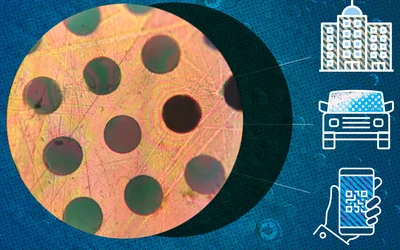
Researchers at Manchester University have developed a stronger form of concrete capable of driving down construction costs while substantially decreasing its environmental impact
ABS and PETG are, along with PLA, some of the most affordable and widely used 3D printing filaments for extrusion-style printing. This article discusses the key differences between the two thermoplastic materials.
The founding mission of polySpectra is straightforward: to create engineering-grade materials for additive manufacturing that help designers, inventors, and engineers make their ideas real.
In this episode, we talk about a research from Penn State that has proven the concept of printing tissue during surgery, a joint effort between MIT & Harvard to develop a hair brushing robot, and a breakthrough in anode free and sodium based batteries coming out of Washington University in St. Louis
PETG vs PLA is a question asked by many newcomers to FFF 3D printing, with both materials offering important benefits. Choosing between them often comes down to the requirements of the project.
In this episode, we talk about MIT’s lobster inspired armor, wireless charging of electric vehicles, and a joint effort between RE2 Robotics and the US Department of Energy Solar Energy Technologies Office to reduce the set up time/cost of solar farms.