Featured
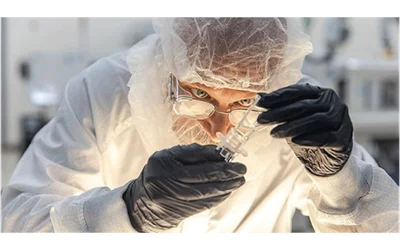
There’s a lot to think about when it comes to plastics for medical parts. At the top of the list are safety and, for parts going inside the body, longevity. So, which is the best to choose for your application?
There’s a lot to think about when it comes to plastics for medical parts. At the top of the list are safety and, for parts going inside the body, longevity. So, which is the best to choose for your application?
There’s a lot to think about when it comes to plastics for medical parts. At the top of the list are safety and, for parts going inside the body, longevity. So, which is the best to choose for your application?
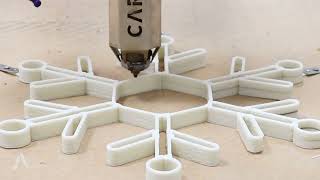
To send its Christmas wishes Caracol worked on a project that is representative of its values and work as an Additive Manufacturing company.
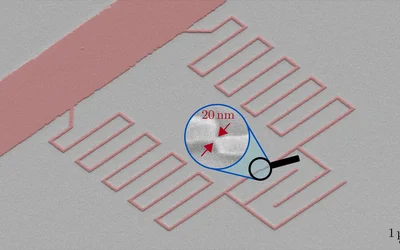
KIT researchers are working on a new qubit approach - publication in Nature Materials
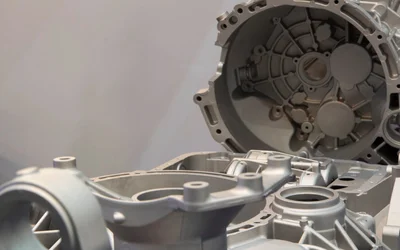
Unlock the potential of aluminum die casting in modern engineering applications through advanced techniques.
12 minutes read.
16 minutes read.
18 minutes read.
14 minutes read.
8 minutes read.


Entertainment
The Next Byte Podcast is hosted by two young engineers - Daniel and Farbod - who select the most interesting tech/engineering cont...
165 Posts

University for science and technology
Freedom and individual responsibility, entrepreneurial spirit and open-min...
43 Posts
Discover how iAM Marketplace simplifies industrial additive manufacturing by unifying materials, validation services, and multi-brand technologies into one open ecosystem for efficient AM sourcing.
This article discusses what attendees can expect from TCT Asia 2026, including its conference format, focus areas, and the experts contributing to industry-specific discussions.
This article discusses the exhibitors, products, and industrial trends defining additive manufacturing across the Asia-Pacific region at TCT Asia 2026.
This article discusses how the Asia-Pacific region is advancing additive manufacturing and the role of TCT Asia as the leading 3D printing and additive manufacturing event in the Asia-Pacific.
Lightweighting materials play a crucial role in offering the potential for improved fuel efficiency, enhanced performance, and reduced emissions in the automotive industry. It is anticipated that the lighter and more efficient automotive materials and components will revolutionize the industry in the coming years.
There’s a lot to think about when it comes to plastics for medical parts. At the top of the list are safety and, for parts going inside the body, longevity. So, which is the best to choose for your application?

5 minutes read
To send its Christmas wishes Caracol worked on a project that is representative of its values and work as an Additive Manufacturing company.

KIT researchers are working on a new qubit approach - publication in Nature Materials

2 minutes read
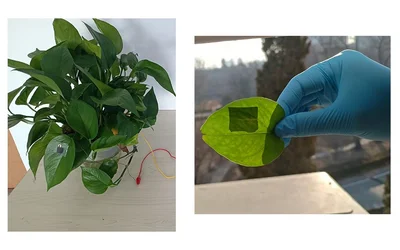
The popularity of wearable electronics has induced demand for their parts, including power sources such as triboelectric nanogenerators (TENGs). Such power sources must be both stretchy and high-performance, holding up under various deformation conditions over hours of use.

2 minutes read
You've probably heard about the amazing capabilities of some recent AI models, such as GPT, AI21, or BLOOM. Perhaps you use one of these models yourself. Either directly, or through another product like Wordtune, YouWrite, Jasper – or ChatGPT. It turns out that while these models are trained on language data, they can be used for other applications as well. In my latest article, you can read more about applications in materials discovery, cybersecurity, and even building management.

5 minutes read
Engineers at Caltech have developed a method for 3-D printing pure and multicomponent metals, at a resolution that is, in some cases, an order of magnitude smaller than previously possible. The process, which uses water-based chemistry and 3-D printing, was described in a paper published in Nature on October 20.

3 minutes read
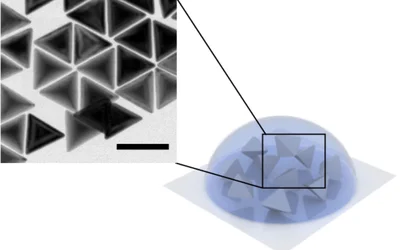
Producing chirality, a property found throughout nature, through large-scale self-assembly could lead to applications in sensing, machine perception and more.

4 minutes read
Carbon fiber fashion aims to assist humans to endure extreme weather and activities.
For the first time, ETH Zurich researchers have been able to make a superconducting component from graphene that is quantum coherent and sensitive to magnetic fields. This step opens up interesting prospects for fundamental research.

3 minutes read
Where one engineer may require a surface that is as reflective as a mirror, another may want a product that absorbs as much light as possible. How do you achieve both material properties?
Researchers have developed a hackable and multi-functional 3D printer for soft materials that is affordable and open design.
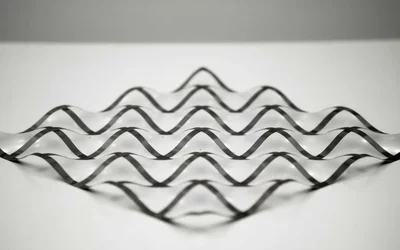
ETH Zurich researchers have developed a structure that can switch between stable shapes as needed while being remarkably simple to produce. The key lies in a clever combination of base materials.
4 minutes read
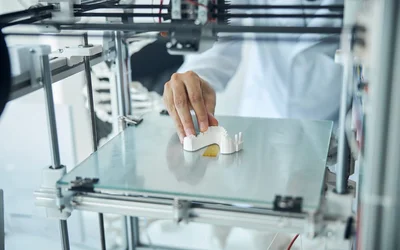
Good bed adhesion is key to achieving defect-free prints. But how do you remove 3D prints that are stuck firmly to the build surface of the 3D printer? This guide reveals all.
In this video we start with a recap on why you would choose MJF rather than other 3D printing technologies and explore TPU, looking at the advantages of the material and how it can be used.
3 minutes read
While automated manufacturing is ubiquitous today, it was once a nascent field birthed by inventors such as Oliver Evans, who is credited with creating the first fully automated industrial process, in flour mill he built and gradually automated in the late 1700s.