Be the first to know.
Get our Materials  weekly email digest.

Category

Materials

ORGANIZATIONS.

SHAPING THE INDUSTRY.

The Next Byte

Entertainment

The Next Byte Podcast is hosted by two young engineers - Daniel and Farbod - who select the most interesting tech/engineering cont...

165 Posts

UltiMaker

Manufacturing

Since 2011, Ultimaker has built an open and easy-to-use solution of 3D prin...

105 Posts

nTopology

Design & Engineering Software

nTopology is a software company building the next generation of engineering...

63 Posts

EPFL

University

Located in Switzerland, EPFL is one of Europe’s most vibrant and cosmopolit...

56 Posts

ETH Zurich

University for science and technology

Freedom and individual responsibility, entrepreneurial spirit and open-​min...

43 Posts

View more

TAGGED WITH lightweighting

Latest Posts

With a relatively low melting point (between 150°C and 180°C), PLA is one of the easiest thermoplastics to 3D print. Here’s how PLA melting point factors into choosing the optimal print settings, such as nozzle temperature and print bed temperature.

How PLA Melting Point Influences 3D Printing

Aluminium is a common and popular metal that’s found everywhere and used in a stunningly wide range of parts and products, in this blog we explore why aluminium is so commonly used, why there are so many aluminium alloys, and take a brief glimpse at the main alloys we use at Protolabs.

Aluminium Alloys: Go-to materials for automotive, aerospace, and more

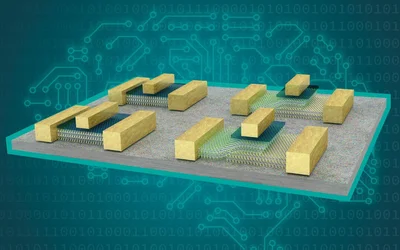
Photonic time crystals, whose properties change periodically, promise significant advances in microwave technology, optics and photonics. Researchers at the Karlsruhe Institute of Technology (KIT), together with partners at Aalto University and Stanford University, have now produced a two-dimensional photonic time crystal for the first time and demonstrated important applications.

Metamaterials: Time Crystal Gets Light Going

In this episode, we talk about a breakthrough research project that resulted in a corrosion protection coating capable of similar performance as current state of the art, lower cost per application, ability to self heal, and illuminates cracks/pits in the coating for easier detection.

Podcast: Self Repairing Corrosion Coating