Featured
Marcus Foston takes a detailed look at lignin disassembly on path to replace petroleum with renewables

Marcus Foston takes a detailed look at lignin disassembly on path to replace petroleum with renewables
Marcus Foston takes a detailed look at lignin disassembly on path to replace petroleum with renewables
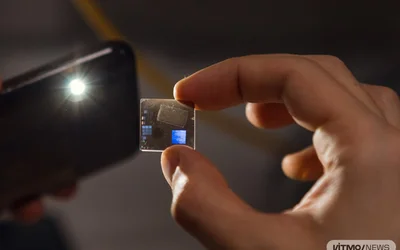
Researchers from ITMO University have suggested a method of creating colored patterns with an affordable, domestically-produced laser. Compared to others, the new method makes it possible to create smaller separate patterns within a single bigger one, which are harder to forge.
The Laboratory of Sustainability Robotics of the Swiss Empa institute develops a special drone for firefighting operations. Lightweight, stable and temperature resistant parts manufactured with SLS 3D printing is the key to success.
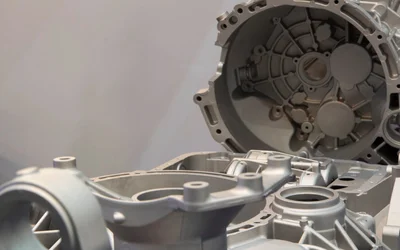
Unlock the potential of aluminum die casting in modern engineering applications through advanced techniques.
12 minutes read.
16 minutes read.
18 minutes read.
14 minutes read.
8 minutes read.


Entertainment
The Next Byte Podcast is hosted by two young engineers - Daniel and Farbod - who select the most interesting tech/engineering cont...
165 Posts

University for science and technology
Freedom and individual responsibility, entrepreneurial spirit and open-min...
43 Posts
Discover how iAM Marketplace simplifies industrial additive manufacturing by unifying materials, validation services, and multi-brand technologies into one open ecosystem for efficient AM sourcing.
This article discusses what attendees can expect from TCT Asia 2026, including its conference format, focus areas, and the experts contributing to industry-specific discussions.
This article discusses the exhibitors, products, and industrial trends defining additive manufacturing across the Asia-Pacific region at TCT Asia 2026.
This article discusses how the Asia-Pacific region is advancing additive manufacturing and the role of TCT Asia as the leading 3D printing and additive manufacturing event in the Asia-Pacific.
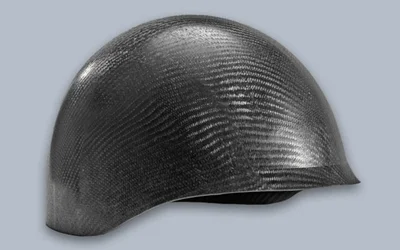
Lightweighting materials play a crucial role in offering the potential for improved fuel efficiency, enhanced performance, and reduced emissions in the automotive industry. It is anticipated that the lighter and more efficient automotive materials and components will revolutionize the industry in the coming years.
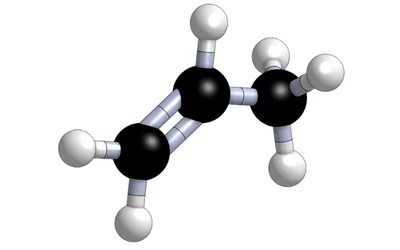
Marcus Foston takes a detailed look at lignin disassembly on path to replace petroleum with renewables

2 minutes read
Researchers from ITMO University have suggested a method of creating colored patterns with an affordable, domestically-produced laser. Compared to others, the new method makes it possible to create smaller separate patterns within a single bigger one, which are harder to forge.

3 minutes read
The Laboratory of Sustainability Robotics of the Swiss Empa institute develops a special drone for firefighting operations. Lightweight, stable and temperature resistant parts manufactured with SLS 3D printing is the key to success.

3 minutes read
Composites are materials composed of a matrix and reinforcement, offering unique advantages and properties derived from both components.
3D printed Body-contouring Therapeutic Positioning Equipment provides support for people with mild to moderate control of the body and reduces damage caused by improper seating during child development.
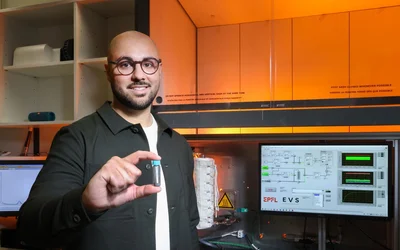
Kevin Turani-I-Belloto has developed a low-cost method for breaking down ammonia to produce hydrogen. He’s just been awarded a Bridge grant to develop a proof of concept for his technology.

3 minutes read
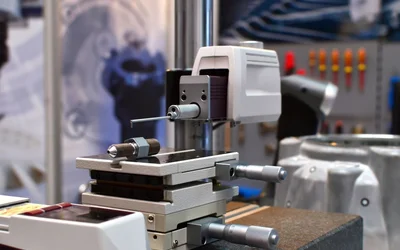
Measuring surface roughness allows metrologists to establish the roughness of a surface for quality control or other purposes. But how exactly is it done?
Ongoing research in thermoplastic materials science since its inception has led to groundbreaking discoveries like nylon and Kevlar, and now focuses on innovative formulations and processing methods, pushing technological boundaries, as explored in this chapter on the latest advancements.
Stanford researchers have developed a new phase-change memory that could help computers process large amounts of data faster and more efficiently.

4 minutes read
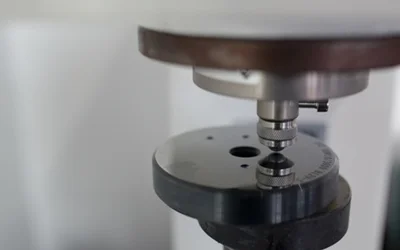
Ensuring the right level of hardness for your CNC machined part

4 minutes read
Silver/silver chloride (Ag/AgCl) is a conductive ink typically used to print electrodes for biomedical applications.

3 minutes read
An MIT team precisely controlled an ultrathin magnet at room temperature, which could enable faster, more efficient processors and computer memories.
The glass transition temperature (Tg) is a fundamental property that allows us to predict, understand and manipulate the performance of polymer materials.
In the automotive industry, the focus is on seamlessly integrating advanced technologies such as touchscreens, digital dashboards and driver assistance systems into the interior without compromising driving comfort or aesthetics.

3 minutes read
Nexa3D’s patented Lubricant Sublayer Photo-curing (LSPc) technology can print at up to 24 vertical centimeters per hour. That means more prototypes in less time.