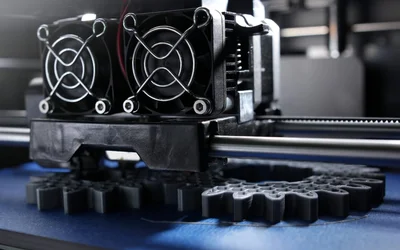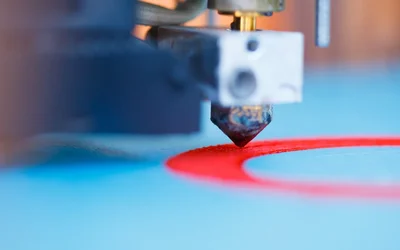

What is 3D printing? This article goes over the basics of 3D printing, otherwise known as additive manufacturing, covering its engineering principles and applications.
What is 3D printer filament made of? This guide examines polymers, additives, and composites, offering practical tips for digital design and hardware engineers.
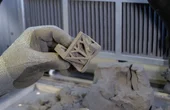
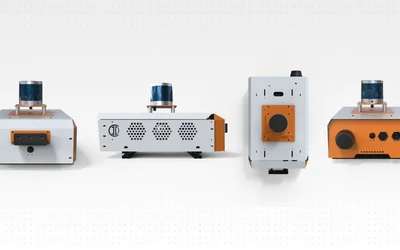
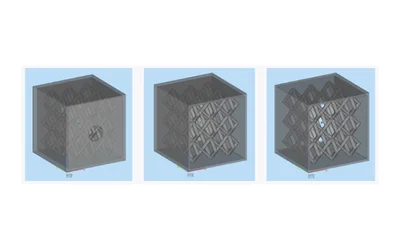
With SCANOLOGY's KSCAN-X 3D scanner, wind turbine manufacturers can redesign blade core materials faster and more accurately than ever—cutting revision time from days to just 30 minutes.

Smarter technology, stronger performance.
Learn everything you need about the full adder circuit. From binary addition theory to low-power hardware implementations and modern ASIC/FPGA design flows, this technical article equips digital design engineers, hardware engineers with practical insights and current research trends.
Explore how a transistor works from first principles through practical circuit design. This in depth guide explains BJT and FET operation, switching and amplification modes, design calculations, modern market trends, and FAQs, ideal for digital design engineers, hardware engineers, and students.
The military and defense sectors are undergoing an unprecedented transformation as military bases around the world adopt 3D scanning and additive manufacturing technologies for a wide range of applications. That includes maintenance, repair, and overhaul (MRO) processes, damage assessments and reverse engineering of parts, to name a few.
Castellated holes are extensively used in the printed circuit board (PCB) design process. This article is a detailed overview of castellated holes, covering their history, application, benefits, design attributes, challenges, and significance in modern electronic design.
Players may not be aware of the severity of head impacts suffered during a game. Bearmind, an EPFL spin-off, has developed smart helmets that provide a series of metrics enabling coaches to monitor the neurological effects of head impacts suffered by their players. The firm hopes to quickly conquer the US market.
The overall goals are to minimise the environmental damage caused by industrial production, and, more specifically, to do our best to reduce our industrial carbon footprint.
Delta arms are high-performance robotic arms that use parallel linkages and jointed construction to provide fast, precise, and flexible movement, making them ideal for various industrial and manufacturing applications.
This article offers an in-depth view of process control, including its history, fundamental concepts, components, strategies, and implementation in industrial systems.
The pandemic has already brought in a host of challenges to global manufacturing industries, especially for those supply chain has severely delayed, suspended or even damaged. Finding a reliable manufacturing supplier has immeasurable value to the entire circle of your new product research and development. Here 4 tips to help find your desired supplier amid the pandemic
Researchers have developed a 3D bioprinter for cancer research that can be folded into a carry-on pack, transported, and easily reassembled for printing inside a biosafety cabinet. The technology can perform rapid and reproducible manufacture of complex tumouroids – 3D cell cultures which resemble tumour tissues – to test potential immunotherapy treatments.
Explore how assembly line automation integrates robotics, control systems, and smart technologies to boost efficiency, quality, and flexibility in manufacturing!
In this episode we talk about how researchers at EPFL have developed a new method of 3D printing bone-like composites using bacteria-infused ink. The process involves the use of hydrogel as a printing medium that provides a scaffold for bacterial growth, which produces calcium carbonate crystals that mimic the properties of bone.
Overhangs represent one of the biggest challenges for FDM 3D printers. Here we look at how to safely print them using support structures, bridging, and other techniques.
To be able to fix the bike computer to the bike, a corresponding mount is necessary. The bike computer mounts currently available on the market are traditionally manufactured by injection molding – showing their limits when it comes to weight, functionality, design and manufacturing.