
What is 3D printing? This article goes over the basics of 3D printing, otherwise known as additive manufacturing, covering its engineering principles and applications.
What is 3D printer filament made of? This guide examines polymers, additives, and composites, offering practical tips for digital design and hardware engineers.
With SCANOLOGY's KSCAN-X 3D scanner, wind turbine manufacturers can redesign blade core materials faster and more accurately than ever—cutting revision time from days to just 30 minutes.
Smarter technology, stronger performance.
Learn everything you need about the full adder circuit. From binary addition theory to low-power hardware implementations and modern ASIC/FPGA design flows, this technical article equips digital design engineers, hardware engineers with practical insights and current research trends.
Explore how a transistor works from first principles through practical circuit design. This in depth guide explains BJT and FET operation, switching and amplification modes, design calculations, modern market trends, and FAQs, ideal for digital design engineers, hardware engineers, and students.
Unveiling the Duel of Digital Design - A Comprehensive Exploration of History, Syntax, and Applications of the two popular hardware description languages
When it comes to FFF (Fused Filament Fabrication) 3D printing, selecting the appropriate printing material is crucial and should never be underestimated.
Today, BigRep’s large-format 3D printers are used for an incredibly broad range of applications, from large-scale models and prototypes to industrial end-use parts. It goes without saying that its range of 3D printer models are vital to this diversity, but the company’s materials, all optimized for large-format printing, also play a crucial role.
In this video we look at complex machined parts, focusing on the five key things you need to keep in mind when creating a particularly complex part: hole placement, grooves, threading, milled text, and corners.
Injection molding has been around for a while, but still continues to facilitate the manufacturing industry and plays an integral role in making plastic part production more efficient, cost-effective, and durable for multiple industries.
Developing a new type of train that could transport luxury tourists from Tokyo to mountain resorts, such as Hakone and Mount Fuji, and beaches, such as Odawara and Enoshima, in less time. That was the Odakyu Electric Railway’s mission when the company undertook the design of the Romance Car in 1957.


The design process for CNC machining requires precision and accuracy to produce quality designs. This is why there are recommended general CNC machining design rules that apply to the most common features of CNC machined parts.
Despite an enormous effort and a significant reduction in fatality rates, mining remains one of the most hazardous industries for workers. However, new technologies are starting a safety revolution, while simultaneously fueling the mining industry’s digital transformation.
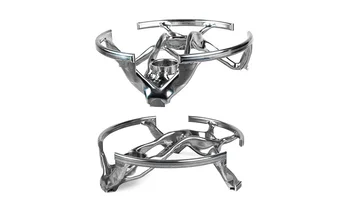
With 3D printing technology, whether for prototypes, individual parts or small series, seemingly impossible geometries can be produced quickly, precisely and cost-effectively. Speed and free design possibilities are the key features of this technology.