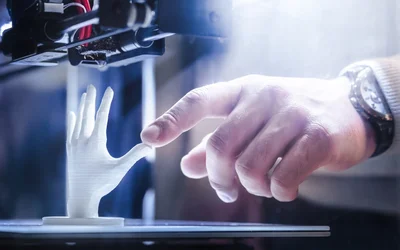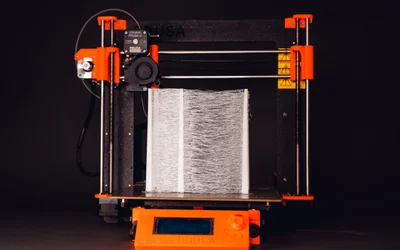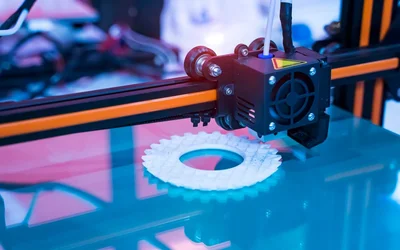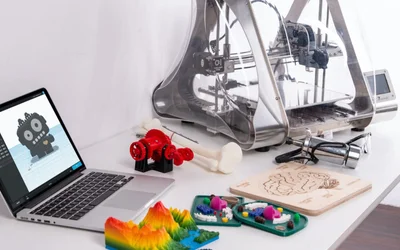

What is 3D printing? This article goes over the basics of 3D printing, otherwise known as additive manufacturing, covering its engineering principles and applications.
What is 3D printer filament made of? This guide examines polymers, additives, and composites, offering practical tips for digital design and hardware engineers.
Learn everything you need about the full adder circuit. From binary addition theory to low-power hardware implementations and modern ASIC/FPGA design flows, this technical article equips digital design engineers, hardware engineers with practical insights and current research trends.
Explore how a transistor works from first principles through practical circuit design. This in depth guide explains BJT and FET operation, switching and amplification modes, design calculations, modern market trends, and FAQs, ideal for digital design engineers, hardware engineers, and students.
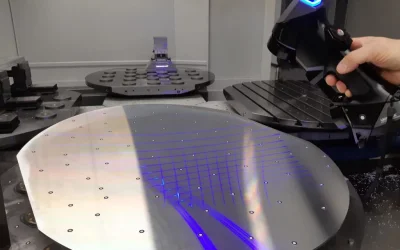
Advanced 3D scanning delivers comprehensive, high-accuracy inspection for massive grinding roller shells. It replaces manual measurement with fast, traceable digital analysis, enabling smarter maintenance and reduced operational costs.
In this episode, we talk about a solar powered car that could be the next step in the EV evolution cycle and how a 3D printed hypercar broke the world record lap time at Laguna Seca.
Any technology exists to solve a problem or make our lives better – and 3D printing is no different. Before diving into all the technical details, let’s look at what 3D printing is used for.
The new CMM Fixturing Module of the FDM™ Fixture Generator streamlines fixture design for inspection in Coordinate Measuring Machines. The tool enables QA engineers and technicians to generate & 3D print custom fixtures with just a couple clicks.
We don’t yet fully know what this “new normal” will mean for the global economy. But it’s clear that food and beverage manufacturers are facing bigger challenges than ever.
The old adage, two heads are better than one, simply indicates that two people can solve a problem better than an individual can. This is certainly the case when it comes to 3D printing, and why dual extruder technology is must-have for any engineer, designer, architect or artist.
Learning is always easier with the right tools. 3D printing empowers teachers, educators, and students who want to bridge theory and reality by making objects that suit every situation!
Adding desktop 3D printing to your workflow can make a big difference. Concepts and prototypes can be printed in a matter of hours. Multiple iterations produced quickly and cheaply. And complex ideas conveyed through a physical model that team members and stakeholders can see and touch.
The U.S. Air Force Institute of Technology (AFIT) leveraged nTopology and architected materials to develop an additively manufactured CubeSat bus assembly from Inconel 718 that was 50% lighter and 20% stiffer than the original aluminum assembly.
Tapis Magique is a pressure-sensitive, knitted electronic textile carpet that generates 3D sensor data based on body gestures and drives an immersive sonic environment in real time.
Learn how Ford optimized factory-floor tooling production with a 94% lead time reduction by introducing BigRep large-format additive manufacturing. Following an incredible success, Ford expanded their BigRep ONE’s use and needed more additive manufacturing capacity – leading to a BigRep PRO!
Not all products can be 3D printed. Nor should they be. Why? Because 3D printing will never rival the economies of scale found in mass-produced commodities.