
Featured
The benefits of flexible materials come with challenges when it comes to post-processing.
The benefits of flexible materials come with challenges when it comes to post-processing.
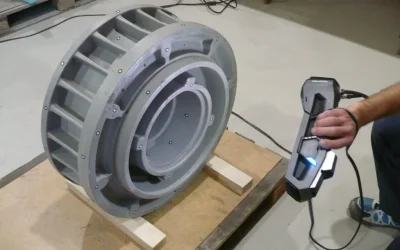
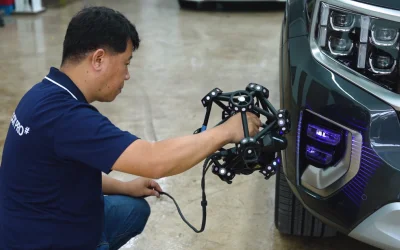
An on-site demo of the Go!SCAN SPARK at Hidrostal’s facilities made a particularly good impression as it enabled the team to save several hours compared with the technology the company had been operating, and, on top of that, it was also easier to use.
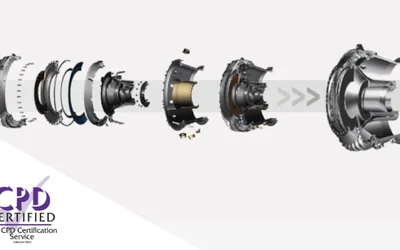
How to find the right opportunities to consolidate multi-part assemblies into single components with industrial 3D printing.
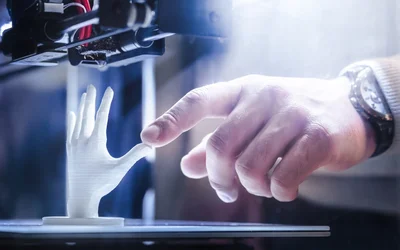
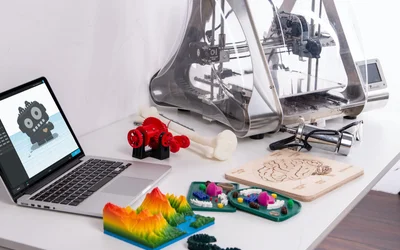
What is 3D printing? This article goes over the basics of 3D printing, otherwise known as additive manufacturing, covering its engineering principles and applications.
14 minutes read.
17 minutes read.
11 minutes read.
18 minutes read.
13 minutes read.
10 minutes read.


Entertainment
The Next Byte Podcast is hosted by two young engineers - Daniel and Farbod - who select the most interesting tech/engineering cont...
165 Posts
With just one month before the South Asian 3D printing trade show, we look at the events and showcases visitors will be able to take part in.
Lean manufacturing focuses on creating more value with less waste. Pioneered by Toyota in the 1950s, this approach helps businesses streamline processes, improve efficiency, and eliminate activities that don't add value to the final product.
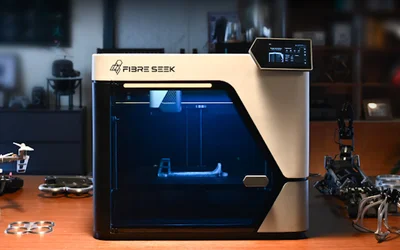
Following a successful crowdfunding campaign, the FibreSeeker 3 from FibreSeek is bringing continuous carbon fiber printing to a new audience.
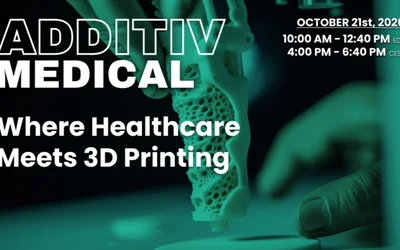
ADDITIV Medical 2026 will bring together more than 500 medical professionals
The data problem
From leading experts at the CDFAM Computational Design Symposium
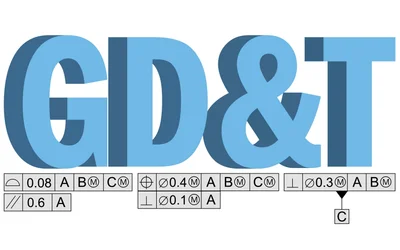
GD&T is the symbolic language engineers use to state exactly how much a part can vary and still work. This guide covers the basics.
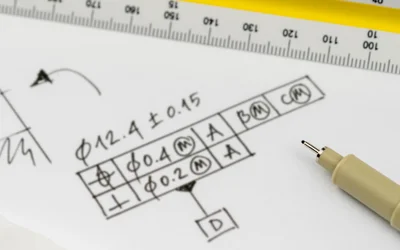
This guide covers the true position formula, how to read the feature control frame, and how MMC and LMC generate bonus tolerance.
The benefits of flexible materials come with challenges when it comes to post-processing.

11 minutes read
An on-site demo of the Go!SCAN SPARK at Hidrostal’s facilities made a particularly good impression as it enabled the team to save several hours compared with the technology the company had been operating, and, on top of that, it was also easier to use.

How to find the right opportunities to consolidate multi-part assemblies into single components with industrial 3D printing.

13 minutes read
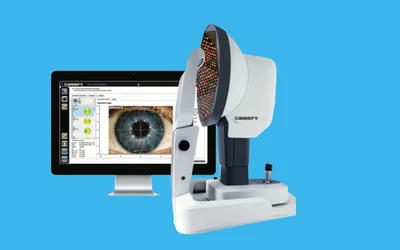
A rapidly-growing European medical device firm was looking for a partner for their high-end eye diagnostics device. Annual demand for this product is hundreds of units, with a design that could require modifications in order to respond to the changing market needs.

4 minutes read
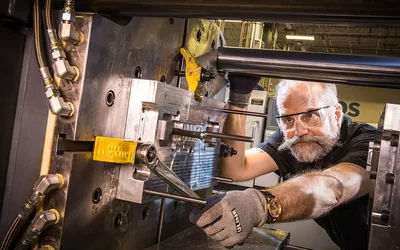
Most people consider 3D printing to be a prototyping process and injection molding to be a form of mass manufacturing. However, choosing between the two processes isn’t always straightforward.
Here's what you need to know about nylon (glass-filled), from material properties, to manufacturing processes, to applications, and more.
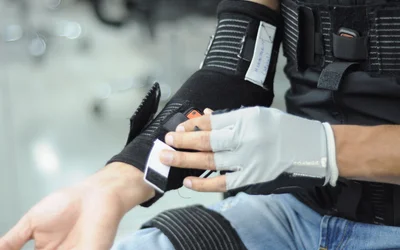
by Movella DOT

4 minutes read
The CREATE Education Project and 3DGBIRE are pleased to announce that they are now partnered with WorldSkills UK to launch a new Additive Manufacturing competition category aimed at Post-16 students in education and training throughout the UK.

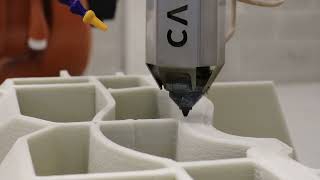
Large Format Additive Manufacturing can be game-changing in product and process optimization, contributing to fighting climate breakdown. For the project Demo4Green - 𝗥𝗔𝗥𝗲-𝗪𝗔𝗦𝗧𝗘, Caracol used recycled glass fibers and polypropylene to produce a lamination tool for micro wind turbines.

Anodising produces aluminuim oxide on the surface of the metal, helping to protect your part against abrasion and corrosion. This video talks about anodising and why you may want to use the service for your metal parts.
4 minutes read
Robots have helped us solve some of the most challenging problems in the industries. They come in all shapes and sizes and take care of many repetitive and hazardous tasks. Based on their design, they can be classified into cartesian, articulated, cylindrical, delta, polar, SCARA, and cobots.
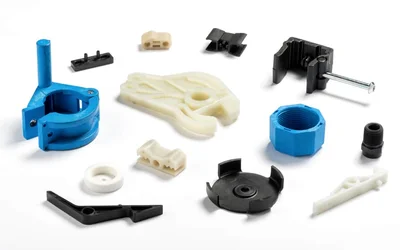
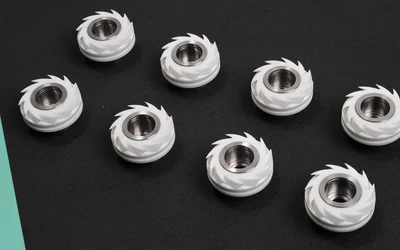
The client, one of the world's leading manufacturer of automation machines, found RPWORLD to provide qualified prototypes and low volume solutions for monthly order of 40 units. They had a new tooling machine under R&D stage, a key component, the impeller assembly failed, which caused delay of the whole product development process.So the client contacted RPWORLD to address the delay problem.
Based in South Korea, Autocut is an automotive paint protection film (PPF) and tinted film solutions provider. It delivers software with 17000+ pattern data of paint protection films (PPF) and pre-cutting films for automotive aftermarket shops. Pre-cutting of the film based on the shapes of car parts is needed for productive PPF projects. With over 15 years of expertise, Autocut’s solutions are adopted in over 100 shops in South Korea.
2 minutes read
The world has seen a real boom in bicycles since the coronavirus pandemic – and those with gears are booming in particular. However, e-bikes require a complex design with a high level of precision.

2 minutes read
Although 3D printing was predicted to be more widespread than it has turned out to be, the technology is still undergoing enormous development. Senior Researcher David Bue is in charge of establishing DTU’s giant ‘3D printing playground’, where new records for miniature printing are currently being set.

6 minutes read