Featured
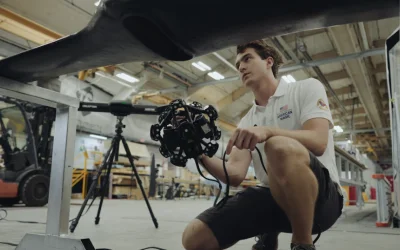
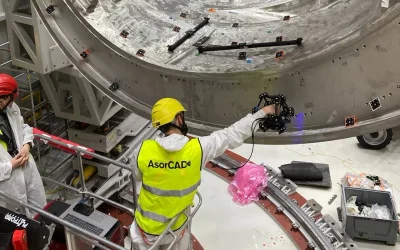
The New York City Yacht Club’s American Magic team once again chooses Creaform’s 3D measurement technologies to gear up for the next America’s Cup. Learn more.
The New York City Yacht Club’s American Magic team once again chooses Creaform’s 3D measurement technologies to gear up for the next America’s Cup. Learn more.
Developing a new type of train that could transport luxury tourists from Tokyo to mountain resorts, such as Hakone and Mount Fuji, and beaches, such as Odawara and Enoshima, in less time. That was the Odakyu Electric Railway’s mission when the company undertook the design of the Romance Car in 1957.
Recreating the fusion reaction occurring in the Sun’s core here on Earth; this is the mission that scientists and engineers have taken up with ITER, one of human history’s most ambitious engineering projects.
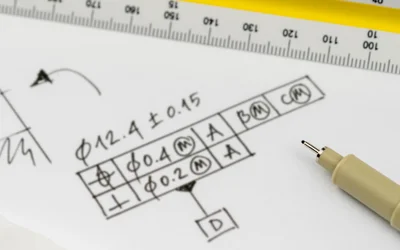
This guide covers the true position formula, how to read the feature control frame, and how MMC and LMC generate bonus tolerance.
10 minutes read.
14 minutes read.
13 minutes read.
12 minutes read.
9 minutes read.

Robotics and Drones
We empower R&D by providing the computational power, ROS packages, payloads...
14 Posts

Drone Fleet Management Software
Cloud Ground Control is a cloud based command and control solution for oper...
7 Posts
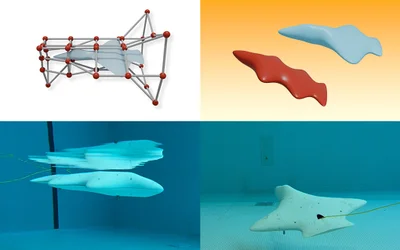
An AI pipeline developed by CSAIL researchers enables unique hydrodynamic designs for bodyboard-sized vehicles that glide underwater and could help scientists gather marine data.
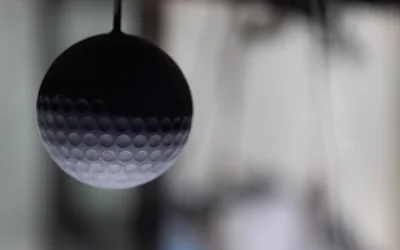
A spherical prototype with "nimble dimples" can change its surface from smooth to dimpled, cutting through drag and generating lift.
Helping Maintain Stable Position in Fast-Moving Waters
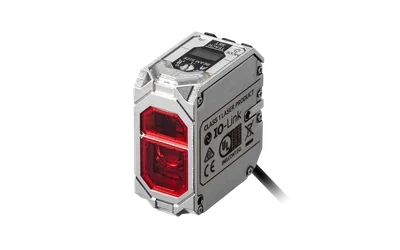
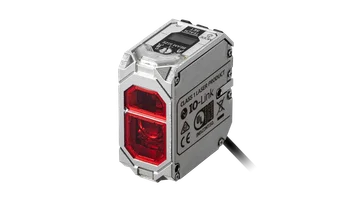
Conventional photoelectric sensors used for object detection and distance measurement can struggle with dark, glossy, or irregular targets because they rely on light intensity. Time-of-flight laser sensors overcome these challenges by using distance-based sensing instead.
Why traditional inspection can no longer keep pace with modern automotive production, and what to do about it
Physics Behind the Blue Laser Advantage
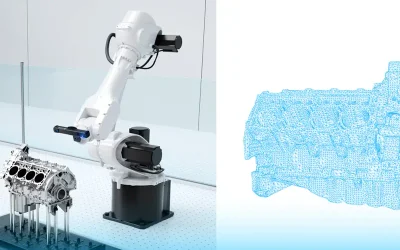
Learn how Shining3D is driving precision in automotive and civil aviation.
The New York City Yacht Club’s American Magic team once again chooses Creaform’s 3D measurement technologies to gear up for the next America’s Cup. Learn more.

2 minutes read
Developing a new type of train that could transport luxury tourists from Tokyo to mountain resorts, such as Hakone and Mount Fuji, and beaches, such as Odawara and Enoshima, in less time. That was the Odakyu Electric Railway’s mission when the company undertook the design of the Romance Car in 1957.
3 minutes read
Recreating the fusion reaction occurring in the Sun’s core here on Earth; this is the mission that scientists and engineers have taken up with ITER, one of human history’s most ambitious engineering projects.
3 minutes read
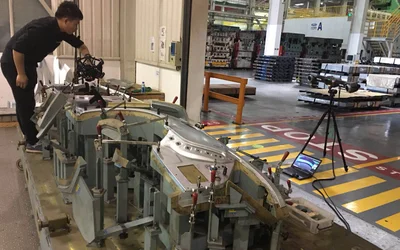
More time—this is a luxury that many people wish they could afford. What about engineers who work long hours to design and manufacture molds to produce automotive performance parts, such as engine devices, transmissions, and electronic controls? What would they do if they could save 85% of the time required for mold inspections?
6 minutes read
AIC-Automotive Intelligence Center, based in Amorebieta-Etxano, Bizkaia, is a European center for the generation of value for the automotive industry based on a concept of open innovation where companies improve their positioning through cooperation.
3 minutes read
Based in California but servicing the entire United States, APEX Race Parts brings the latest wheel and tire technology to the automotive racing industry. The business employs dozens of car racing experts that are driven by the need for speed and performance.
3 minutes read
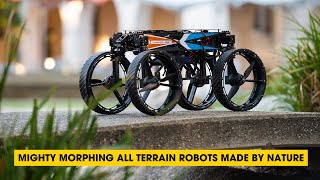
In this episode, we discuss the fascinating world of bioinspired robotics. Discover how researchers have created versatile robots inspired by nature's flight, rolling, and walking abilities.

17 minutes read
BOMAG’s team was searching for 3D measurement solutions to add to its portfolio that would enable uncomplicated, flexible and non-contact measurement of free-form surfaces, such as castings and plastic parts. The ideal 3D measurement solution also needed to be portable so that scanning of large components and the highest quality standards could be guaranteed.
2 minutes read
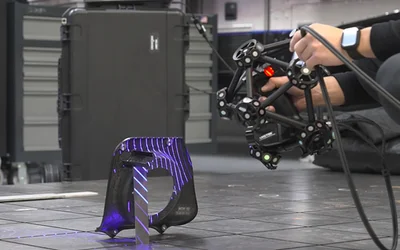
This blog aims to illustrate the different manufacturing challenges leading to product defects and highlight how 3D scanning technology allows for more features and parts to be inspected. It also describes how QC managers can shorten inspection time and reduce production costs associated with scraps.
5 minutes read
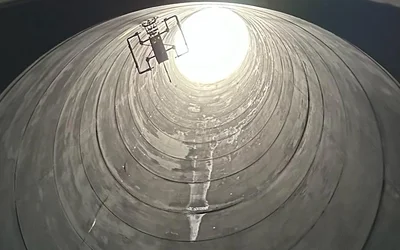
First NON-entry confines space Ultrasonic Thickness inspection with an aerial robot.

3 minutes read
Endurance racing does not only require the best and latest technology. It also involves having the ability to harness it for multiple hours in a row without causing disaster. When you are competing at the highest level and against the best of the best, attention to detail is everything. This means leaving no stone unturned, no issue unresolved. Only then can a racing team truly be at the top of its game.
3 minutes read
3D scanning can be used to measure objects of art in order to assess their 3D dimensions accurately.
3 minutes read
The inspection of stack interiors presents challenges due to limited access and poor visibility. Avestec overcame these obstacles by employing the remote capabilities of their aerial robot.
As IoT evolves, projects are shifting from being experimental and exploratory to business critical. This makes them more complex, ensures they receive more scrutiny and, inevitably, increases the opportunities for things to go wrong. This is even more true when you consider that IoT devices and solutions have a long shelf life, making long-term success only possible if you’re properly planning and building today for the unknown factors in the future.

3 minutes read
First article inspection (FAI) is a crucial step in the manufacturing process. The quality control (QC) team needs to optimize this phase of inspection in order to limit the back and forth between conception and fabrication. The QC team must not only correctly identify the defects, but also provide relevant data, measurements, and results for solving the identified problems.
6 minutes read