Featured
A guide to ISO 2768, the standard that sets default permissible deviations for dimensions that carry no individual tolerance.
A guide to ISO 2768, the standard that sets default permissible deviations for dimensions that carry no individual tolerance.
Surface finish symbols express a parameter, a limit, a process, and a lay direction in a callout the size of a check mark.
Learn how to choose the right rocker switch by evaluating voltage, current rating, pole and throw configuration, sealing, mounting, and application requirements.
A guide to ISO 2768, the standard that sets default permissible deviations for dimensions that carry no individual tolerance.
9 minutes read.
7 minutes read.
11 minutes read.
13 minutes read.
10 minutes read.
14 minutes read.


Robotics and Drones
We empower R&D by providing the computational power, ROS packages, payloads...
14 Posts

Drone Fleet Management Software
Cloud Ground Control is a cloud based command and control solution for oper...
7 Posts
An AI pipeline developed by CSAIL researchers enables unique hydrodynamic designs for bodyboard-sized vehicles that glide underwater and could help scientists gather marine data.
A spherical prototype with "nimble dimples" can change its surface from smooth to dimpled, cutting through drag and generating lift.
Helping Maintain Stable Position in Fast-Moving Waters
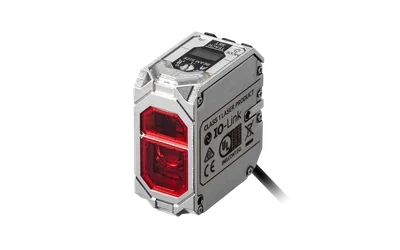
Conventional photoelectric sensors used for object detection and distance measurement can struggle with dark, glossy, or irregular targets because they rely on light intensity. Time-of-flight laser sensors overcome these challenges by using distance-based sensing instead.
Why traditional inspection can no longer keep pace with modern automotive production, and what to do about it
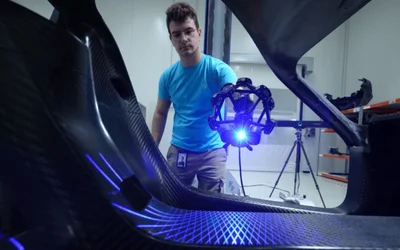
Physics Behind the Blue Laser Advantage
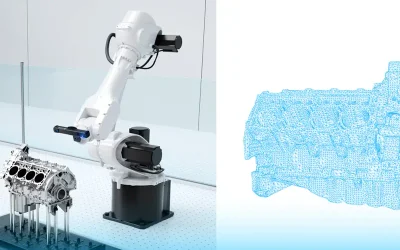
Learn how Shining3D is driving precision in automotive and civil aviation.
A guide to ISO 2768, the standard that sets default permissible deviations for dimensions that carry no individual tolerance.
Surface finish symbols express a parameter, a limit, a process, and a lay direction in a callout the size of a check mark.
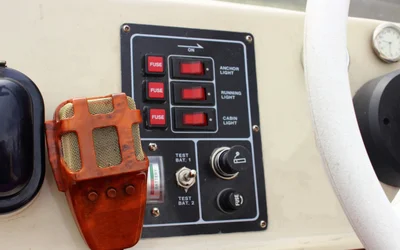
Learn how to choose the right rocker switch by evaluating voltage, current rating, pole and throw configuration, sealing, mounting, and application requirements.
A reference chart for converting between surface finish units, plus Ra values by manufacturing process and the relationship between surface
Yield strength marks the point where a material bends but doesn't break, which is a critical detail for safe, reliable design.

8 minutes read
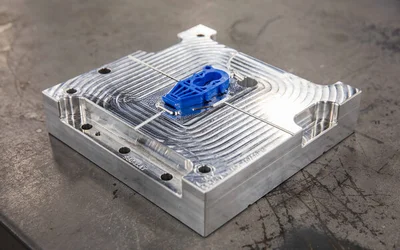
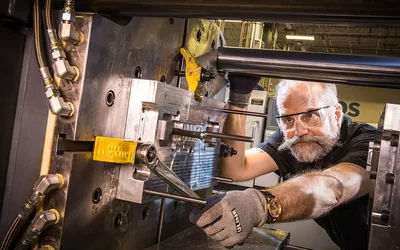
Injection moulding enables consistent, high-volume production of complex plastic parts at a lower cost per part once tooling is in place. Learn how the process works, when it outperforms 3D printing, and why material flow, cooling, and part design matter.
6 minutes read
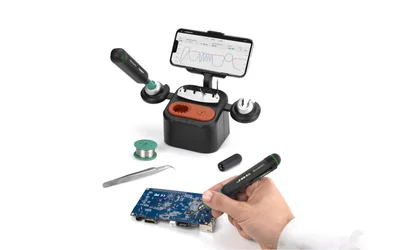
What are the advantages of battery-powered tools, and do they offer the same precision and temperature stability as their corded counterparts?
Lean manufacturing focuses on creating more value with less waste. Pioneered by Toyota in the 1950s, this approach helps businesses streamline processes, improve efficiency, and eliminate activities that don't add value to the final product.
5 minutes read
Manufacturing is evolving rapidly as industry leaders navigate shifting supply chains, economic uncertainty, and changing market demands. Explore the key issues shaping the industry today and discover how manufacturers are embracing innovation to stay competitive.
5 minutes read
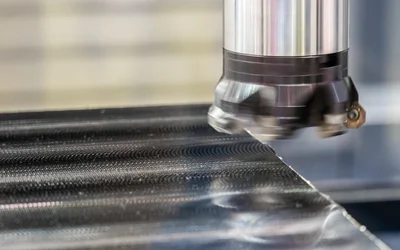
CNC milling explained: process steps, machine components, axis types, materials, costs, and how FACTUREE sources milling partners.

2 minutes read
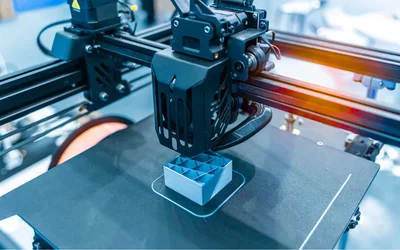
Rapid prototyping (3D printing, CNC, casting) speeds up product development, cuts costs & risk—turning ideas into tested prototypes fast.
3 minutes read
This guide covers the true position formula, how to read the feature control frame, and how MMC and LMC generate bonus tolerance.
Guide covers moving from prototype to series production—same partner throughout, no re-qualification, consistent quality at every scale.
3 minutes read
Lockout/Tagout (LOTO) is a mandated set of safety procedures operational in the United States, under the governance of the US Department of Labor's Occupational Safety & Health Administration (OSHA).
H7 tolerance is the default hole class in the ISO system of limits and fits. This guide explains why H7 is useful for manufacturers.