This article explores the basics of SR Latch, covering its fundamental principles and implementation using NOR and NAND gates, metastability and race conditions, illustration of gated variants and real world applications such as switch debouncing and integrated latch ICs.
Protect sensitive electronics by understanding the current limiting resistor, learning how to calculate appropriate values, and applying them in LEDs, transistors, microcontroller inputs and other circuits.
This guide explains how potentiometer pins interact with mechanical rotation, resistive tracks, and load conditions across various circuit configurations. It provides clarity for both low-power electronic designs and high-precision embedded systems.
This technical article explains the theory behind potentiometer schematics. It shows how to implement mechanical and digital potentiometers in practical circuits, tailored for engineers, and students.
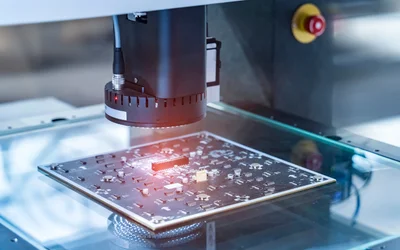
Focused laser-like light that covers a wide range of frequencies is highly desirable for many scientific studies and for many applications, for instance quality control of manufacturing semiconductor electronic chips.
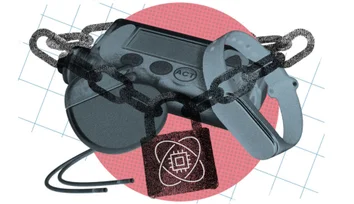
Scientists at ITMO have come up with a new way to protect microelectronics devices from counterfeit. The new technology is based on gold and silicon nanoparticles with unique optical properties that make it possible to create unclonable functions with a record information density.
An international team of scientists was first to demonstrate that halide perovskites can serve as a base for nonlinear on-chip optical components. As an example, they can be used to build ultrafast optical chips and transistors, and, potentially, other integrated optical systems.
As IoT technology evolves, automation will play a more important role by, for instance, automatically stopping the watering process once the soil has received a sufficient level of moisture. Furthermore, analysis of irrigation data transmitted to Cloud computing can help ensure that watering occurs at the optimal time (for example, overnight or at cooler times during the day) to minimize evaporation losses.
Semiconductors are the building blocks of modern electronics, powering everything from smartphones to satellites. This in-depth guide provides a comprehensive understanding of semiconductors' engineering principles and applications, delving into their fundamental concepts, materials, devices, manufacturing processes, and their impact on today's technology landscape.
This comprehensive article dives deep into the world of robotics, exploring the history, types, engineering components, applications, and future trends of robots, offering readers an in-depth understanding of how these remarkable machines work and shape our lives.
In this episode, we talk about a combined effort between ETH Zurich & the Swiss Federal Lab for Material Science (EMPA) to create “smart” internal bandages for safely patching patients post stomach/intestinal surgery while providing insight to the medical staff about the status of the patch to prevent leakages which can be fatal.
The Inflation Reduction Act directs nearly $400 billion to clean energy incentives including $47 billion allocated for manufacturing. This article concentrates on the advantages offered to businesses.
This article provides a detailed guide to System in Package technology, its advantages and challenges, key components, design, and manufacturing process.
Products referred to as "beauty tech" that utilize AI, IoT, and other technologies are breathing new life into the cosmetics industry. First, let's look at the background that led to the birth of beauty tech.
Wafer backgrinding is a crucial step in semiconductor manufacturing, as it prepares the wafer for further processing and packaging. The procedure comprises the thinning of silicon wafers by scraping out material from the backside, which is crucial for enhancing the functionality and dependability of semiconductor devices. This article examines the wafer backgrinding procedure, its difficulties, and the significance of quality control in ensuring the production of high-quality semiconductor devices.
Healthcare is undergoing a transformative shift with the rise of stick-to-skin wearable monitoring devices. These data-collecting marvels, such as continuous glucose or cardiac monitoring devices, offer convenience & real-time insights.This article explores capabilities, applications & market trends
Introducing a brand new series featuring innovative projects related to edge computing and machine learning. The first article presents a predictive maintenance solution utilizing the Nordic Thingy:91, monitoring machine health through anomaly detection with a TinyML model.
In wearables, the design on paper often does not work in practice. In this world, your idea may only go as far as your chosen contract manufacturer can take you. It is the key role of the contract manufacturers to help you make the vital adjustment to make your product a success.
Additive electronics is intrinsically more sustainable than subtractive processes. Yet the current materials are often based on metallic inks and plastic substrates. This is a particular issue in medical wearables with disposable devices. Hence the need to develop sustainable material options