Featured
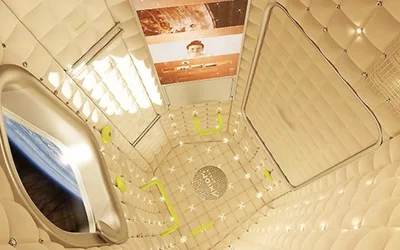
Article #2 Simulation Education Series. Exploring how engineers might design a commercial space station accurately and cost-effectively using mechanical analysis techniques

This white paper explains how precision timing solutions support reliable PNT architectures across aerospace, defense, and industrial systems.
Article #2 Simulation Education Series. Exploring how engineers might design a commercial space station accurately and cost-effectively using mechanical analysis techniques
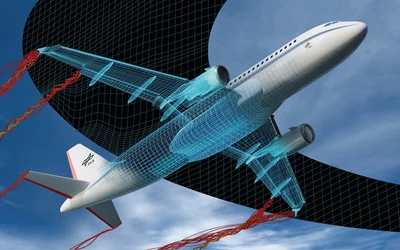
The initial project for the digitalised development of control surfaces for future aircraft wings has now been successfully completed at the German Aerospace Center (Deutsches Zentrum für Luft- und Raumfahrt; DLR) Virtual Product House (VPH).
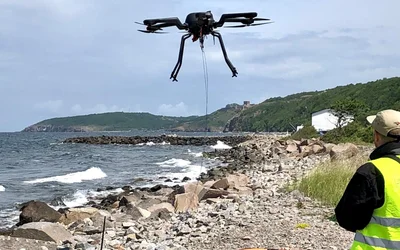
DTU spinout solves mine clearance tasks for the Danish Defence and the offshore wind turbine industry.
Aerospace CNC machining is the backbone of modern aircraft production. This guide explains the theory and practice behind it.
12 minutes read.
16 minutes read.
16 minutes read.
9 minutes read.

Robotics and Drones
We empower R&D by providing the computational power, ROS packages, payloads...
14 Posts
Learn why growing hardware teams slow down as they scale, and how aligned workflows, parallel collaboration, and real-time design visibility restore speed and momentum.
How standardized electronic identification will enable high-volume, complex drone operations.
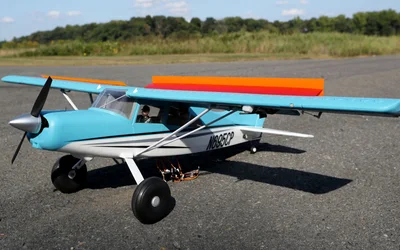
In this episode, we explore how the mechanics of bird wings are inspiring new approaches to prevent airplanes from stalling and learn how bio-mimetic designs from nature are paving the way for innovations in aviation, enhancing stability and safety for future flights.
Taking inspiration from bird feathers, Princeton engineers have found that adding rows of flaps to a remote-controlled aircraft’s wings improves flight performance and helps prevent stalling, a condition that can jeopardize a plane’s ability to stay aloft.
In this episode, we explore NASA's successful test of a powerful new lithium-fed electric thruster that could one day power human missions to Mars.
A novel electromagnetic thruster passed an initial test in a specialized chamber at JPL. With further development, these thrusters could support human missions to the Red Planet.
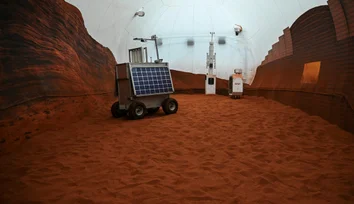
Humanity's drive to explore has taken us across the solar system, with astronaut boots, various landers and rovers' wheels exploring the surfaces of several different planetary bodies.
A spacecraft that sails on light could provide new vantage point on solar eruptions that can disrupt modern electrical and navigation systems.
Article #2 Simulation Education Series. Exploring how engineers might design a commercial space station accurately and cost-effectively using mechanical analysis techniques
The initial project for the digitalised development of control surfaces for future aircraft wings has now been successfully completed at the German Aerospace Center (Deutsches Zentrum für Luft- und Raumfahrt; DLR) Virtual Product House (VPH).

4 minutes read
DTU spinout solves mine clearance tasks for the Danish Defence and the offshore wind turbine industry.

3 minutes read
Monthly robotics news blog. Discover the latest products, research, tutorials, and security news for robotics.

6 minutes read
The German Aerospace Center (DLR) has now successfully tested high temperature structures, advanced measurement techniques and design tools for the re-entry phase with the STORT (Schlüsseltechnologien für hochenergetische Rückkehrflüge von Trägerstufen) flight experiment.
3 minutes read
The German Aerospace Center (Deutsches Zentrum für Luft- und Raumfahrt; DLR) is developing a new computer architecture that will provide On-Board Computers (OBCs) with more power as well as enabling them to repair themselves.
2 minutes read
As a result of a constant increase in the number of flights, aircraft noise is becoming a major source of noise-induced annoyance. This article lists down some of the sources contributing to it and proposes possible solutions for mitigating the problem.
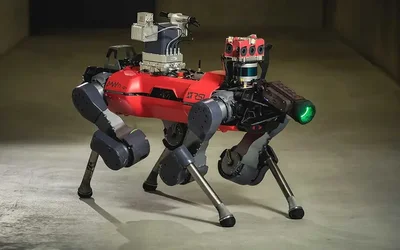
In this episode, we talk about how robotic dogs might be the next best astronauts as they are well-equipped to explore the Moon’s unforgiving terrain, and about a framework for launching swarms of robots into warehouses to get work done better, safer, and more efficiently.

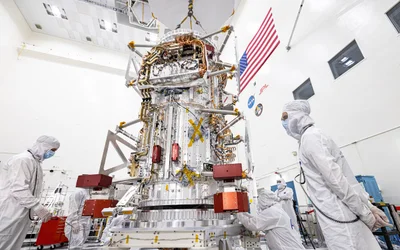
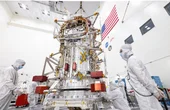
The agency’s mission to explore Jupiter’s icy moon takes a big step forward as engineers deliver a major component of the spacecraft.

4 minutes read
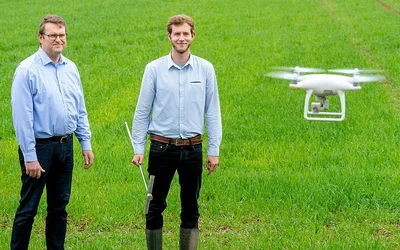
Using smart sensor and measurement techniques to make farming more efficient and sustainable is the goal of a team of researchers at TUM.
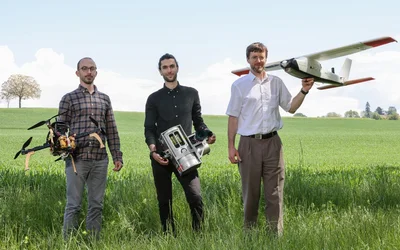
Engineers at EPFL and the University of Geneva believe they hold the key to automated drone mapping. By combining artificial intelligence with a new algorithm, their method promises to considerably reduce the time and resources needed to accurately scan complex landscapes.
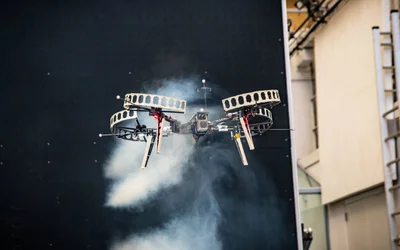
To be truly useful, drones—that is, autonomous flying vehicles—will need to learn to navigate real-world weather and wind conditions.

4 minutes read
In this episode, we talk about how an app leveraging 3 sets of machine learning algorithms aims to reduce waste and emissions by creating 3D models of feet and the hoverfly inspired AI that will be keeping airfields safe from small drones via acoustic mapping and filtering.
Beyond leisure, drones offer enormous potential for developing a wide array of innovative applications that benefit society.

3 minutes read
Could drones provide a safe and effective alternative to sending out ships, helicopters and cranes in future, and could they take some of the pressure off of maintenance staff?
3 minutes read