Featuredpodcast
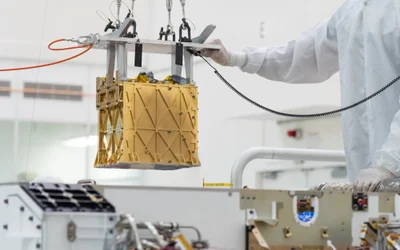
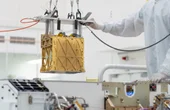
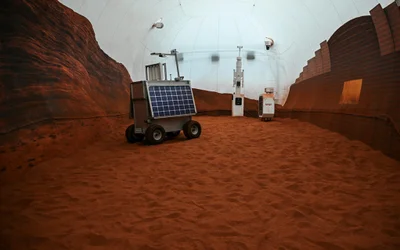
In this episode, we follow up on MIT + JPL’s experiment to make oxygen on Mars - MOXIE - that we first discussed in episode 5.

This white paper explains how precision timing solutions support reliable PNT architectures across aerospace, defense, and industrial systems.
In this episode, we follow up on MIT + JPL’s experiment to make oxygen on Mars - MOXIE - that we first discussed in episode 5.
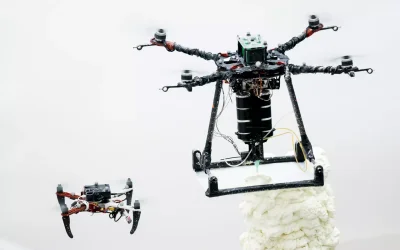
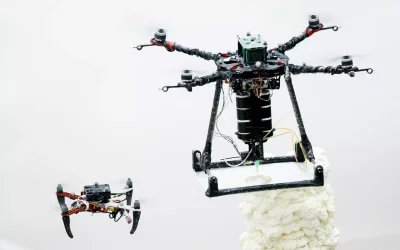
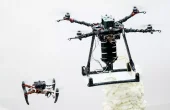
In this episode, we talk about how a team from TUM has developed a system composed of collaborative drones that can create structure in remote and/or disastrous areas.
An international team of researchers have created a fleet of bee-inspired flying 3D printers for building and repairing structures in-flight.
Aerospace CNC machining is the backbone of modern aircraft production. This guide explains the theory and practice behind it.
12 minutes read.
16 minutes read.
16 minutes read.
9 minutes read.

Robotics and Drones
We empower R&D by providing the computational power, ROS packages, payloads...
14 Posts
Learn why growing hardware teams slow down as they scale, and how aligned workflows, parallel collaboration, and real-time design visibility restore speed and momentum.
How standardized electronic identification will enable high-volume, complex drone operations.
In this episode, we explore how the mechanics of bird wings are inspiring new approaches to prevent airplanes from stalling and learn how bio-mimetic designs from nature are paving the way for innovations in aviation, enhancing stability and safety for future flights.
Taking inspiration from bird feathers, Princeton engineers have found that adding rows of flaps to a remote-controlled aircraft’s wings improves flight performance and helps prevent stalling, a condition that can jeopardize a plane’s ability to stay aloft.
In this episode, we explore NASA's successful test of a powerful new lithium-fed electric thruster that could one day power human missions to Mars.
A novel electromagnetic thruster passed an initial test in a specialized chamber at JPL. With further development, these thrusters could support human missions to the Red Planet.
Humanity's drive to explore has taken us across the solar system, with astronaut boots, various landers and rovers' wheels exploring the surfaces of several different planetary bodies.
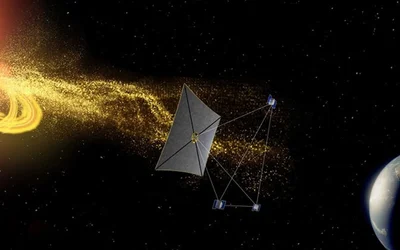
A spacecraft that sails on light could provide new vantage point on solar eruptions that can disrupt modern electrical and navigation systems.
In this episode, we follow up on MIT + JPL’s experiment to make oxygen on Mars - MOXIE - that we first discussed in episode 5.

In this episode, we talk about how a team from TUM has developed a system composed of collaborative drones that can create structure in remote and/or disastrous areas.
An international team of researchers have created a fleet of bee-inspired flying 3D printers for building and repairing structures in-flight.
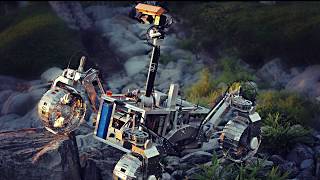
How an online manufacturer supplied over 50 components for the LUVMI lunar rover, a project of the Space Applications Services that specializes in space technology.

3 minutes read
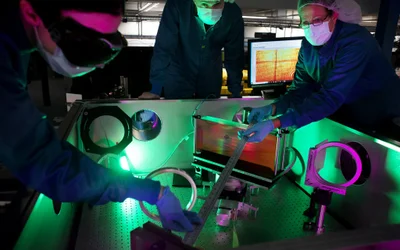
The ZEUS laser at the University of Michigan has begun its commissioning experiments

4 minutes read
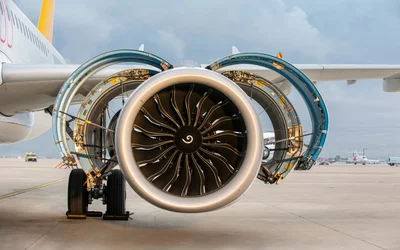
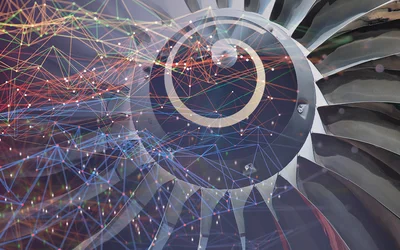
Gas turbines are widely used for power generation and aircraft propulsion. According to the laws of thermodynamics, the higher the temperature of an engine, the higher the efficiency. Because of these laws, there is an emerging interest in increasing turbines’ operating temperature.
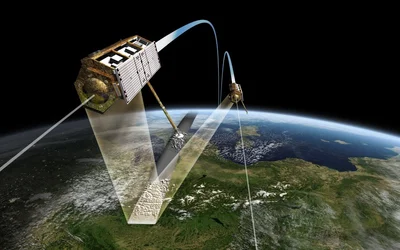
Researchers from DTU Space have developed a new type of high-resolution radar that looks in many directions concurrently.

4 minutes read
The docuseries that is exposing the incredible innovations which new space companies are developing.
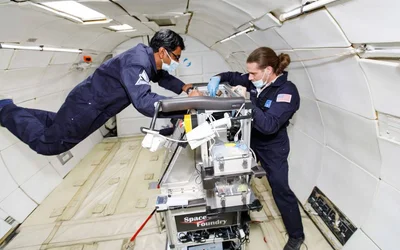
As NASA prepares to send astronauts back to the Moon to live and explore, capabilities for space-based manufacturing of sensors, circuits, and other electronics will become increasingly critical. Recent microgravity flights have helped to advance cutting-edge methods for 3D printing of electronics

4 minutes read
The new Space Sustainability Rating hosted at eSpace, the EPFL Space Center, encourages space actors to design and implement sustainable and responsible space missions – trailblazing the path to ensure the long-term sustainability of the space environment.

5 minutes read
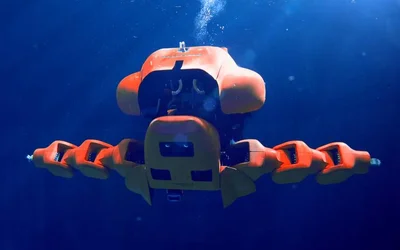
What’s the difference between deep space and the deep sea? For a robot, the answer is: not much. Both environments are harsh and demanding, and, more importantly, both are far removed from the machine’s operator.
4 minutes read
For real-time geo-registration, Oversight uses a physical engine and digital twins to make image matching algorithms more agnostic to variations.

2 minutes read
Flightmare is an open-source simulator for quadrotors that moves away from rigid paradigms and proposes a flexible modular structure that empowers the users or automated algorithms to fine-tune the simulator to the task at hand.
DLR supports new test flight programme by Airbus and its subsidiary Airbus UpNext for CO2-emission-free flight. The 'Blue Condor' project investigates the effects of contrails from hydrogen engines.

4 minutes read
In this episode, we talk about how researchers are developing tools to keep us safe using technology that ranges from ultra-heat resistant tents for fighters to drones capable of discovering hidden landmines.