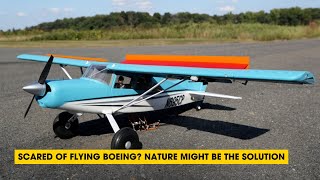
In this episode, we explore how the mechanics of bird wings are inspiring new approaches to prevent airplanes from stalling and learn how bio-mimetic designs from nature are paving the way for innovations in aviation, enhancing stability and safety for future flights.
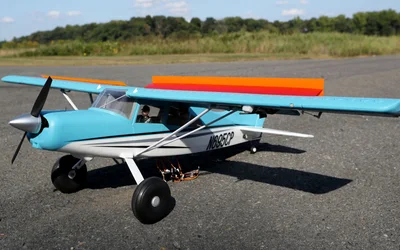
Taking inspiration from bird feathers, Princeton engineers have found that adding rows of flaps to a remote-controlled aircraft’s wings improves flight performance and helps prevent stalling, a condition that can jeopardize a plane’s ability to stay aloft.
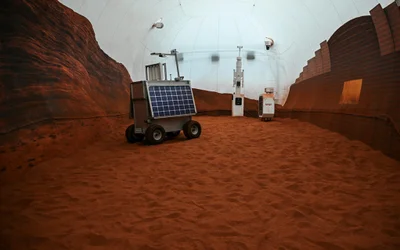
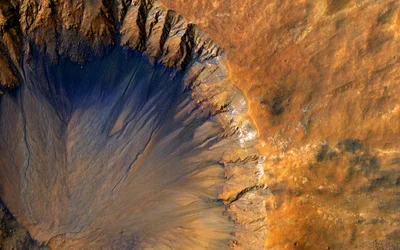
Humanity's drive to explore has taken us across the solar system, with astronaut boots, various landers and rovers' wheels exploring the surfaces of several different planetary bodies.
In space, maintenance isn't possible, so satellites must operate reliably for their entire mission. This makes fault detection, isolation, and recovery (FDIR) a critical requirement in satellite design.
Since ordering supplies from Earth won’t be practical, the astronauts will have to fabricate their own components for equipment and other products through additive manufacturing, better known as 3D printing.
Human cells in a 3D printer that can be used to cover wounds like a sticking plaster – this is the long-term goal of the Bioprint FirstAid experiment. As part of his 'Cosmic Kiss' mission, German ESA astronaut Matthias Maurer has now carried out this series of experiments on the ISS.
In this episode, the Alauda engineering team implements improvements to our Global Navigation Satellite Systems or GNSS. What is GNSS? More popularly known as GPS, we need these navigation systems to track the exact positions of racing Alauda Mk3Cs.
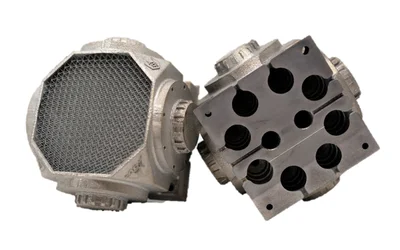
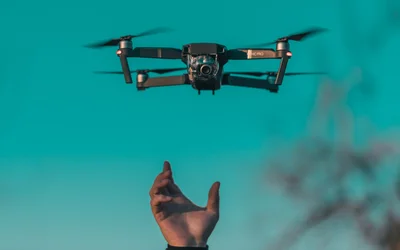
In this episode, we talk about additive manufacturing being used to create fuel injection nozzles for marine applications and the subterranean 3D printed drone being used to combat food insecurity.
The European Space Agency (ESA) has given the green light to build the flight models of the spacecraft and science payload for the PLATO mission to search for extrasolar planets.
In this episode, we talk about an initiative from EPFL to allow those with spinal cord injuries to control robots for help with day-to-day tasks and MIT’s bug robots that are taking big strides for small scaled bio-robotics.
The ROboMObil (ROMO) has been transferring space research to the road since 2011. The project began a few years earlier at the DLR when researchers at the Robotics and Mechatronics Center (RMC) had the idea to combine rover technology developed for Mars and lunar vehicles with electric mobility.
In this Taking Flight episode we investigate how Alauda Aeronautics engineers are implementing new battery access designs, First Person View (FPV) capabilities and weight-saving measures for the Alauda Mk3C.
In this episode, we talk about MIT’s new ion propelled hovering rover destined to change the way we explore our universe and an emergency drone coming from TUM hoping to reduce the fatalities caused by cardiac arrest episodes.
Vision is the cornerstone of every border surveillance platform. Pushing the boundaries of what we can see—from high ground and binoculars to electro-optics and infrared sensors—is the determining factor of a system’s efficacy.
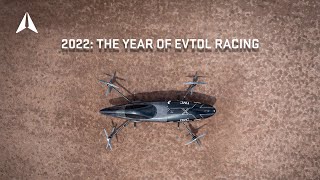
5G communications between eVTOL race Speeders and our Alauda Aeronautics engineers at race control is critically important to making the first electric flying racing car series a reality.
James Webb Space Telescope aims to take us to the unexplored realm of our cosmic origins. From observing the formation of the first stars and galaxies to looking for the possibility of life on other planets, the telescope will play a major role in the future of space exploration.