Aerospace CNC Machining: How Precision Manufacturing Powers Modern Flight
Aerospace CNC machining is the backbone of modern aircraft production. This guide explains the theory and practice behind it.

14 Nov, 2025. 13 minutes read
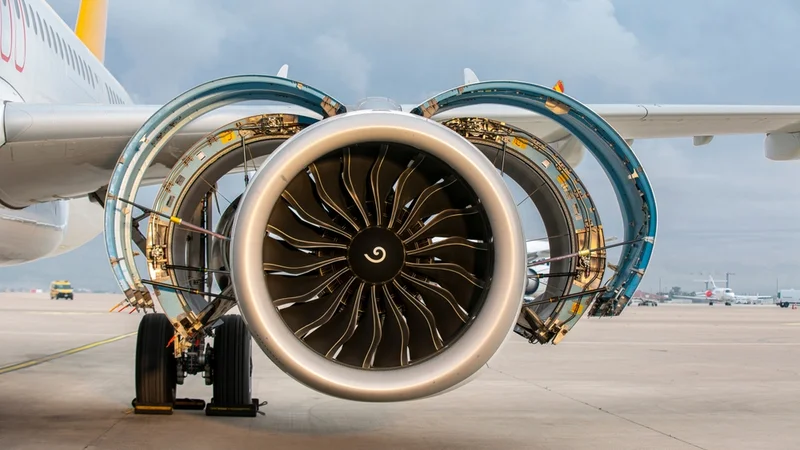
The aerospace industry packs decades of engineering into every component. A commercial aircraft contains thousands of machined and fabricated parts, each expected to perform under extreme temperatures, vibration, and aerodynamic loads. In this setting, aerospace CNC machining is a key method for turning digital designs into reliable, certifiable hardware.
Unlike general machine shops, aerospace programs work to far tighter tolerances and strict material traceability, all governed by standards such as AS9100D. These demands influence how engineers approach CAD modeling, tolerance analysis, and material choices. Meanwhile, shifting supply chains, sustainability goals, and new digital manufacturing tools continue to reshape how parts are produced.
This article offers a technical overview of aerospace CNC machining for design, hardware, and electronics engineers. It combines core principles with practical guidance across materials, machining processes, quality control, digital integration, cost drivers, and future trends. A final FAQ section addresses common questions and practical considerations.
CNC Machining Fundamentals

Computer numerical control (CNC) machining is a subtractive manufacturing method in which cutting tools remove material from a solid workpiece according to instructions written in G-code. Instead of manual control, servo motors move the machine’s axes in a programmed sequence generated from a CAD model. This allows parts to be produced with higher consistency, accuracy, and safety than traditional manual machining.
Common CNC platforms include mills, lathes, routers, and multitasking machines. Although configurations vary, most workflows follow the same core steps:
CAD design: Engineers define geometry, tolerances, materials, and surface-finish requirements.
CAM programming: CAM software produces toolpaths, specifying tool types, feeds, speeds, entry strategies, and tool changes.
Machine setup: Operators fixture the workpiece, load the tools, set coordinate systems, and verify the program.
Machining: The machine executes the program, moving tools along the defined paths; modern systems use encoders and sensors to maintain accuracy and monitor cutting conditions.
CNC machining is widely used because it can process metals, polymers, and composite materials with high precision. In general manufacturing, parts are often produced to moderately tight tolerances, whereas aerospace components typically require much higher accuracy, documented process control, and full material traceability.
Benefits of CNC Machining
Several characteristics make CNC machining a foundational technology for aerospace production:
Precision and repeatability: Programmed toolpaths and closed-loop motion control enable complex geometries and tight tolerances to be reproduced reliably across multiple parts.
Efficiency and automation: Tool changers, multi-axis movement, and unattended operation reduce manual intervention and increase throughput.
Material capability: With the right tooling and cutting strategies, CNC systems can machine high-strength alloys, heat-resistant materials, and fiber-reinforced composites.
Digital integration: CNC workflows integrate directly with CAD/CAM systems, supporting model-based definition, automated inspection planning, and digital-twin environments.
These capabilities form the foundation for the specialized machining practices used in aerospace applications.
Aerospace Machining Requirements: Tolerances, Standards, and Certification
Tolerance and Surface-Finish Demands
Aerospace components operate under severe thermal, mechanical, and environmental loads. As a result, they require significantly tighter tolerances than those used in general industrial machining. Critical features may call for tolerance bands measured in a few microns, while roundness, flatness, and concentricity must be controlled to similarly stringent levels. Aerodynamic surfaces often demand very fine surface finishes to reduce drag, and bearing or sealing interfaces typically require even smoother finishes to ensure long-term reliability.
These requirements influence the entire design and manufacturing process. Engineers must perform detailed tolerance-stack analyses, define robust datum structures, and specify appropriate fit classes to ensure assemblies function as intended. At the machining stage, thermal expansion, tool deflection, and residual stresses can undermine accuracy, making process planning, tool selection, and fixturing strategy highly important.
Certification and Quality Standards (AS9100D)
The aerospace sector relies on the international AS9100D quality management standard, an extension of ISO 9001 developed specifically for aviation, space, and defense manufacturing.[1] AS9100D adds extensive requirements related to risk management, configuration control, process verification, and long-term record retention.
Key elements include:
Comprehensive inspection: Critical features typically require full inspection using tools such as coordinate-measuring machines (CMMs), laser scanners, or nondestructive testing methods.
Material traceability: Heat-lot identifiers, certifications, and test reports must be maintained for every component throughout its life cycle.
Supplier oversight: Subcontractors must be qualified, monitored, and periodically audited to maintain compliance with aerospace program requirements.
Manufacturers serving defense and space programs may also maintain ITAR compliance and pursue NADCAP accreditation for special processes such as heat treating, chemical processing, or nondestructive testing. Engineers working in these environments must be familiar with first-article inspection (AS9102), production-readiness reviews, PFMEA, and other quality-assurance practices.
Comparing Standard and Aerospace Machining
The table below highlights how typical machine-shop practices differ from aerospace-grade machining. Values are indicative rather than prescriptive, illustrating the contrast in expectations:
Attribute | Standard CNC | Aerospace CNC |
Linear Tolerance | Moderate, suitable for general industrial parts | Extremely tight, often in the micron range |
Quality System | ISO 9001 | AS9100D, often with additional program-specific requirements |
Inspection Approach | Sampling-based | Full inspection of critical features, often with CMM and NDT |
Material Traceability | Limited | Mandatory, with tracked lots and long-term documentation |
Design Complexity | Mostly simple 2D/3D geometry | Complex 5-axis surfaces and multifunction assemblies |
Surface Finish | Moderate industrial finishes | Very fine finishes tailored to aerodynamic or bearing needs |
Certification | Varies by industry | AS9100D, ITAR, and NADCAP for special processes |
These differences demonstrate why aerospace CNC machining is a distinct discipline. It requires specialized equipment, rigorous documentation, skilled personnel, and tightly controlled processes to meet the reliability and safety expectations of flight-critical hardware.
CNC Machined Aerospace Components and Applications

Aerospace programs rely heavily on CNC machining because it can produce lightweight, high-strength components with the precision, surface finish, and material integrity required for flight. From structural members to electronics housings, CNC equipment enables engineers to translate complex digital designs into parts that meet demanding mechanical and environmental requirements.
Structural Components
Aircraft structures—including fuselage frames, wing ribs, spars, bulkheads, and landing-gear fittings—must combine low weight with high strength. CNC machining is widely used to mill ribs and spars from aluminum or titanium billets, creating pocketed geometries that minimize mass while maintaining rigidity. This “integral machining” approach removes material from a single block, reducing the number of fasteners and improving fatigue performance. Landing-gear components, which endure extreme loads during takeoff and landing, often use titanium or high-strength steels. By machining optimized geometries directly into solid stock, engineers can reduce part count, lower assembly weight, and improve overall structural efficiency.
Engine and Propulsion Components
Gas-turbine engines and electric propulsion systems contain some of the most demanding parts in aerospace manufacturing. Turbine blades, compressor discs, shrouds, and combustor components operate at high temperatures and rotational speeds, requiring precise machining of superalloys such as Inconel, Waspaloy, and advanced titanium grades. Airfoil surfaces, internal cooling features, and shaft geometries must be held to strict tolerances to ensure aerodynamic efficiency and mechanical integrity. Emerging propulsion technologies—such as eVTOL motors—also rely on CNC machining for housings, rotors, motor mounts, and precision-balanced rotating assemblies.
Avionics, Control Systems, and Electronics Housings
CNC machining plays a central role in producing enclosures for avionics, radar units, sensors, flight-control computers, power converters, and battery systems. These housings often require tight dimensional control to maintain board alignment, ensure electromagnetic shielding, and withstand vibration. Aluminum, magnesium, and high-performance polymers are common choices due to their strength-to-weight ratios and thermal behavior. Many housings include intricate internal features, mounting bosses, cooling fins, and connector interfaces that benefit from multi-axis machining strategies.
Interiors and Cabin Systems
Interior hardware—such as seat tracks, brackets, hinges, latches, and cabin-equipment fittings—must be lightweight, durable, and compliant with strict fire-smoke-toxicity (FST) regulations. CNC machining enables the production of custom aluminum profiles and high-performance plastic components (e.g., PEEK, ULTEM) with integrated fastening features. Interior parts often undergo secondary finishing processes such as anodizing, passivation, or plating to improve corrosion resistance and appearance.
Prototyping and Maintenance, Repair, and Overhaul (MRO)
CNC machining supports rapid prototyping by allowing engineers to iterate designs quickly and verify fit, function, and manufacturability before full production. In the MRO sector, CNC machining is used to fabricate replacement components, restore worn features, or refurbish critical parts that are no longer available from original suppliers. This capability reduces aircraft downtime, extends component life, and helps maintain airworthiness across long service cycles.
Real-World Case Studies
1. Machining Next-Generation Spaceflight Structures
Axiom Space is developing the first commercial space-station modules, and CNC machining sits at the core of its manufacturing strategy. The company’s new facility is equipped with advanced three- and five-axis machines capable of handling large, complex structures used in pressurized modules and spacecraft subsystems. Because these parts are oversized and highly intricate, Axiom relies on sophisticated CAM software and simulation to validate machining strategies before cutting begins.
Digital-twin technology plays a central role. Using virtual machine models, programmers test full tool motion, tool-change sequences, and part fixturing to confirm reach, avoid collisions, and optimize cycle times. This approach sharply reduces on-machine trial-and-error—one new machine was fully programmed, validated, and producing parts within a single day thanks to digital-twin verification.
Axiom’s machinists work closely with materials and process engineers to meet space-flight requirements such as tight tolerances, strict traceability, and compatibility with hybrid additive–subtractive processes. The result is a machining operation capable of producing large pressure-module segments, propulsion mounts, and other mission-critical spacecraft components. The project demonstrates how digitally integrated CNC machining is enabling a new generation of commercial orbital infrastructure.[2]
2. Large Landing-Gear Structures for Commercial Aircraft
Liebherr-Aerospace Lindenberg produces the nose landing-gear assemblies used on the Airbus A350, and CNC machining is central to manufacturing these large, safety-critical structures. The company relies on heavy multi-axis machining centers capable of handling long, contoured forgings and achieving the tight dimensional and geometric tolerances required for landing-gear performance. Many features—such as bore alignments, load-bearing interfaces, and complex outer profiles—must be produced in as few clampings as possible to maintain accuracy over large distances.
To support this, the machining cells incorporate rigid machine frames, automated tool systems, and in-process measurement to verify form and position while the part remains fixtured. The work involves deep material removal in high-strength alloys, demanding careful control of cutter stability, thermal effects, and tool wear. Automation, including robotic tool handling and integrated probing, helps ensure consistency across long production runs and minimizes operator intervention.
The result is a machining workflow capable of producing large landing-gear components that meet the stringent fatigue, load, and safety requirements of commercial aircraft. This example illustrates how modern CNC machining enables the production of complex structural hardware for high-duty airframe systems.[3]
Materials in Aerospace CNC Machining

Selecting materials for aerospace parts requires balancing strength, weight, heat resistance, machinability, durability, and cost. Common material families include:
Material | Key Properties | Typical Applications | Machining Notes |
Aluminum Alloys (e.g., 2024, 6061, 7075) | Lightweight, strong, corrosion-resistant; good thermal conductivity | Structural components, ribs, brackets, housings | Machines easily; some tempers may require stress-relief strategies |
Titanium Alloys (e.g., Ti-6Al-4V) | High strength-to-weight ratio, corrosion resistant, stable at elevated temperatures | Landing-gear parts, engine hardware, fasteners | Generates heat at the cutting zone; prefers sharp tools, lower speeds, high-pressure coolant |
Nickel-Based Superalloys (Inconel, Hastelloy, Waspaloy) | Retain strength at high temperature; excellent creep and oxidation resistance | Turbine blades, hot-section engine parts | Very difficult to machine; rapid tool wear and strict heat management |
High-Performance Polymers (PEEK, ULTEM) | Strong, lightweight, heat-resistant, naturally flame-retardant | Avionics housings, brackets, electrical insulation | Low thermal conductivity; requires careful feeds to avoid melting |
Composites (CFRP) | Extremely high stiffness-to-weight ratio; corrosion-resistant; anisotropic | Fuselage skins, wing panels, fairings | Require abrasive or diamond tools, dust control, and controlled feed rates to prevent delamination |
Advanced Alloys (e.g., titanium aluminides, aluminum-lithium) | High temperature capability, reduced weight, improved fatigue properties | Next-generation engines and lightweight structures | Machining methods still evolving; often require specialized tooling |
Material selection influences not only performance but also machining strategy. For example, titanium’s low thermal conductivity makes heat control essential, while composites can splinter or delaminate if feeds are too aggressive. High-temperature alloys demand rigid setups and optimized toolpaths to combat tool wear.
Machining Processes Used in Aerospace

3-Axis vs. 5-Axis Milling
Simple parts such as brackets or flanges can be made on 3-axis mills, which move in X, Y, and Z. However, many aerospace components contain contoured surfaces, undercuts, cooling passages, or compound angles that require 5-axis capability. Five-axis machining allows the tool to tilt and rotate, giving access to complex features, reducing the number of setups, improving surface finish, and minimizing positional errors that accumulate during part repositioning.
Turning and Multi-Tasking Machines
CNC turning produces shafts, rings, bushings, and rotating engine or landing-gear components. Aerospace parts often require excellent roundness and concentricity, which depends on rigid fixturing and precision spindles. Multi-tasking machines combine turning and milling in a single platform, allowing complex parts—such as housings with both bores and milled flats—to be completed in one setup. This increases accuracy and supports unattended operation.
Electrical Discharge Machining (EDM)
EDM removes material using electrical sparks between an electrode and a conductive workpiece. Wire EDM is ideal for intricate internal profiles such as turbine-disc slots, while sinker EDM can form cavities and deep features. EDM is valuable for machining hard alloys or geometries that are difficult or impossible to mill.
Grinding, Honing, and Polishing
Many aerospace parts require post-machining finishing to achieve micro-level dimensional tolerance or low-roughness surfaces. Grinding can hold exceptionally tight diameter control for shafts and journals. Honing creates precise cross-hatched textures for lubrication in cylinders or hydraulic components. Superfinishing improves fatigue life and reduces friction on sliding or rotating parts.
Drilling and Holemaking Challenges
Aerospace structures contain large numbers of holes for fasteners, sensors, and fluid systems. Drilling in titanium, nickel alloys, or composites is challenging due to heat buildup, chip evacuation, or delamination risks. Techniques such as through-coolant drills, peck cycles, adaptive feed control, and specialized point geometries help maintain hole quality and reduce burrs or fiber breakout.
Hybrid Additive–Subtractive Manufacturing
Hybrid machines combine metal additive manufacturing (such as directed-energy deposition) with CNC milling. This approach builds near-net shapes and then machines the critical surfaces to final accuracy. Advantages include reduced material waste, improved buy-to-fly ratios, and the ability to repair worn components by adding and re-machining material. Hybrid workflows are increasingly used for complex engine hardware and high-value structural parts.
Recommended reading: Metal 3D Printing: A Comprehensive Guide for Engineers and Students
Inspection and Quality Control
Aerospace components must meet strict reliability and safety requirements, so inspection is built into every stage of manufacturing. Modern facilities use a combination of advanced metrology, nondestructive evaluation, and real-time process monitoring to confirm that each part meets design intent.
Coordinate-Measuring Machines (CMMs)
CMMs verify critical dimensions, geometric tolerances, and surface profiles with high accuracy. Touch probes, laser scanners, and structured-light systems can capture complex free-form surfaces and generate point-cloud data for comparison against CAD models. This ensures that airfoils, housings, and mating features conform to specification.
Nondestructive Testing (NDT)
NDT methods detect defects without damaging the part. Common techniques include:
Ultrasonic testing: Identifies internal voids, delamination, or inclusions.
Radiography (X-ray): Reveals hidden geometry, porosity, or assembly defects.
Dye penetrant inspection: Highlights surface-breaking cracks.
Eddy-current testing: Detects near-surface discontinuities in conductive materials.
These methods are widely used for engine hardware, structural components, and composite assemblies.
Metrology Integration
Inspection data flows into digital quality-management systems to create a continuous record of compliance. Aerospace programs often require full inspection of critical characteristics and long-term retention of measurement records. This traceability ensures that every part can be tracked from raw material through final assembly.
Process Monitoring
Sensors embedded in CNC machines measure spindle load, vibration, temperature, and cutting forces in real time. These signals help detect tool wear, chatter, or unexpected material behavior. Some systems use predictive algorithms to adjust feeds and speeds or prompt a tool change before a defect occurs.
Designing for Inspectability
Engineers must ensure that components can be measured accurately. This includes defining clear datums, avoiding obstructed measurement paths, and creating probe-friendly surfaces. Model-based definition (MBD) embeds product-manufacturing information directly into the CAD model, linking GD&T requirements to both machining and inspection workflows.
Recommended reading: The Comprehensive Guide to CMM Technologies
Digital Integration and AI in Aerospace Machining
Digital technologies are reshaping how aerospace parts are designed and produced. A digital thread links CAD models, machining programs, inspection data, and service history, creating a continuous flow of information. A digital twin extends this by providing a virtual model of machines or processes, allowing engineers to test toolpaths, detect collisions, and optimize cycle times before cutting any material. These tools reduce scrap, improve energy efficiency, and support more predictable production.
Artificial intelligence is becoming a core part of this landscape. In machining, AI systems analyze sensor data to optimize toolpaths, adapt feeds and speeds, and anticipate tool wear. Predictive maintenance models warn of spindle or bearing issues before failure, while adaptive machining compensates for tool deflection or thermal growth in real time. As these tools mature, they support more automated, “lights-out” machining cells.
Digital manufacturing surveys consistently show rising interest in automation, faster turnaround, and flexible small-batch production. CNC machining remains essential even as additive manufacturing grows, with many aerospace suppliers investing in digital quality systems, MES integration, and traceable workflows to strengthen supply-chain resilience.
Market Overview: Costs, Supply Chains, and Future Trends in Aerospace CNC Machining
Aerospace CNC machining operates in a high-precision, low-volume environment shaped by strict certification requirements and demanding materials. Several factors consistently influence cost and procurement decisions.
Primary cost drivers include:
Materials: Titanium, nickel alloys, and composites are expensive and can be affected by supply instability.
Part complexity: Multi-axis machining, intricate geometries, and tight tolerances increase programming time, tooling wear, and inspection needs.
Low-volume production: Setup and fixturing time represent a large share of cost.
Certification: AS9100D compliance, full inspection of critical features, and long-term documentation create additional overhead.
Most aerospace firms outsource at least part of their machining to access specialized skills and equipment. Suppliers differentiate themselves by offering fast-turnaround prototypes, small-batch production, integrated finishing processes, and strong digital traceability.
The market outlook remains steady. Long-term aircraft production forecasts support ongoing demand for machined engine parts, structural components, and spares.[4] Lightweighting initiatives continue to increase the use of composites, titanium, and next-generation alloys, with CNC machining providing the precision interfaces these materials require.
To strengthen supply-chain resilience, companies are prioritizing:
Nearshoring and dual-sourcing to reduce dependency on global logistics.
Suppliers with digital MES integration and the ability to deliver small batches quickly.
Emerging methods—such as hybrid additive–subtractive systems, laser-assisted machining, and expanded automation—are broadening capabilities while reducing material waste. Over the next decade, greater digital integration from design through inspection and more localized supply networks are expected to define competitiveness in aerospace CNC machining.
Conclusion
Aerospace CNC machining is ultimately about turning ambitious designs into dependable hardware. It thrives where precision, smart material choices, and disciplined process control meet. As aircraft evolve—lighter structures, hotter engines, more electrification—the demands on machining only grow. Digital tools and automation are changing how parts are planned and produced, but the fundamentals remain: clear design intent, tight quality control, and close collaboration between engineers and manufacturers. In a sector defined by safety and innovation, CNC machining will continue to be one of the technologies that quietly makes modern flight possible.
Frequently Asked Questions (FAQ)
What is aerospace CNC machining?
Aerospace CNC machining uses computer-controlled tools to produce components that must meet extremely high reliability and precision standards. It demands tight tolerances, fine surface finishes, full traceability, and strict compliance with aerospace quality systems.
Why are tolerances so strict in aerospace parts?
Aerospace components face extreme loads, temperatures, and vibration, so even small geometric errors can cause performance loss or premature failure. Tight tolerances ensure proper fit, structural integrity, and safe, efficient operation.
Which materials are commonly machined for aerospace components?
Typical materials include aluminum and titanium alloys, nickel-based superalloys, high-performance polymers, and composite laminates. Each is selected to balance weight, strength, temperature resistance, and durability.
How does 5-axis machining differ from 3-axis machining?
5-axis machines can tilt and rotate the tool, allowing access to complex features and reducing the need for multiple setups. This capability improves surface quality and enables machining of curved, contoured parts that 3-axis machines cannot reach efficiently.
What certifications and quality standards apply to aerospace machining?
Most aerospace suppliers follow AS9100D, which adds rigorous process control, inspection, and documentation requirements on top of ISO 9001. Some programs also require NADCAP approval for special processes and ITAR compliance for defense-related work.
What are digital twins and how do they benefit CNC machining?
A digital twin is a virtual replica of a machine or process used to test toolpaths, check for collisions, and refine machining strategies before production. It improves accuracy, reduces scrap, and supports predictive maintenance when paired with real-time sensor data.
How is the aerospace CNC supply chain evolving?
Supply-chain disruptions have pushed companies toward nearshoring, dual-sourcing, and closer collaboration with trusted suppliers. CNC shops offering fast small-batch production, strong traceability, and digital integration are becoming increasingly valuable.
How do aerospace companies choose between CNC machining and 3D printing?
They use CNC for high-quality machined parts that need tight tolerances, and 3D printing for lightweight or complex shapes. Many programs print a rough form, then finish it as machined components to meet industry standards.
Are CNC machining services cost-effective for aerospace production?
Yes—CNC is cost-effective for complex, low- to mid-volume parts where consistency matters. Automation and efficient machining capabilities help control cost even outside high-volume production.
What types of machined parts are used on Boeing aircraft?
Boeing uses thousands of machined components such as brackets, housings, ribs, and engine hardware. All must meet strict industry standards for safety and traceability.
How is CNC machining used in spacecraft manufacturing?
Spacecraft rely on high-quality machined parts for structures, propulsion mounts, and avionics housings. These features require precise surfaces and stability that printing alone cannot provide.
Can CNC machining support high-volume aerospace production?
Yes, for certain programs. Automated machining services and standardized setups allow consistent output even when high-volume demand increases.
References
[1] SAE International. AS9100D: Quality Management Systems – Requirements for Aviation, Space and Defense Organizations. Warrendale (PA): SAE International; 2016 [updated 2016 Sep 20]. Available from: https://www.sae.org/standards/content/as9100d/
[2] Plumb S. Destination space shop. Manufacturing Engineering. 2023 Apr 20 [cited 2025 Nov 13]. Available from: https://www.sme.org/technologies/articles/2023/april/destination-space-shop/
[3] Starrag Ltd. “Learning from the eagle.” Star-Digital, no. 02-2025 [cited 2025 Nov 13]. Available from: https://star-digital.starrag.com/en-gb/p/issues/issue-02-2025/learning-from-the-eagle-1347.html
[4] Grand View Research Inc. CNC Machining and Turning Centers Market Report, 2024-2030. San Francisco (CA): Grand View Research; 2024 [cited 2025 Nov 13]. Available from: https://www.grandviewresearch.com/industry-analysis/cnc-machining-turning-centers-market-report/
in this article
1. CNC Machining Fundamentals2. Aerospace Machining Requirements: Tolerances, Standards, and Certification3. CNC Machined Aerospace Components and Applications4. Real-World Case Studies5. Materials in Aerospace CNC Machining6. Machining Processes Used in Aerospace7. Inspection and Quality Control8. Digital Integration and AI in Aerospace Machining9. Market Overview: Costs, Supply Chains, and Future Trends in Aerospace CNC Machining10. Conclusion11. Frequently Asked Questions (FAQ)12. References