Hydrogen Fuel Cells Power the Future of eVTOLs
Learn why growing hardware teams slow down as they scale, and how aligned workflows, parallel collaboration, and real-time design visibility restore speed and momentum.

17 Feb, 2026. 5 minutes read
Based on an interview with Dr. Anita Sengupta
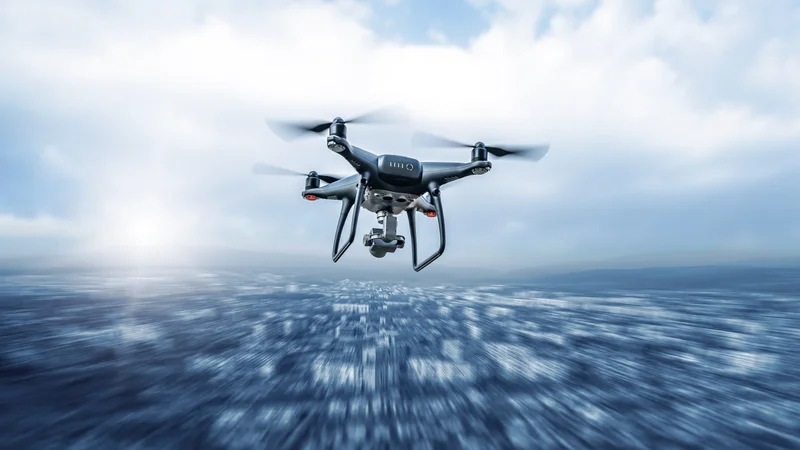
Images of futuristic societies have long included high-tech urban air transportation for average citizens. With small drones becoming ubiquitous, such a future seems within reach. With the expansion of electric vertical takeoff and landing (eVTOL) aircraft, a significant portion of the population is looking forward to reduced congestion, shorter commutes, improved accessibility, and increased sustainability.
Many also wonder what is delaying this future. When will we move beyond drones that deliver packages to air taxis that can carry human passengers across regions and urban areas for sustained periods?
According to Dr. Anita Sengupta, CEO of Hydroplane, an up-and-coming hydrogen fuel cell powerplant manufacturer, the answer to these questions lies in solving four key challenges: power density limitations, competition from established aviation technologies, reliability requirements for autonomous flight, and sustainability concerns associated with combustion engines.
Challenge 1: Power Density
Non-electric VTOLs have been in use for decades, including helicopters and other aircraft such as the Bell Boeing V-22 Osprey. However, nearly all these aircraft have relied on internal combustion engines. As VTOL manufacturers shift their focus to electric powertrains to reduce air and noise pollution, they face the challenge of power density. That is, eVTOLs need sufficient power to run near-constant urban and regional flights from lightweight batteries.
According to Sengupta, "In aviation, weight is everything. Batteries are heavy and can do short hops, but once you start talking about meaningful range and quick turnaround, the numbers just don't work."
Currently, most eVTOLs can manage 20–30 minutes of flight time per charge and then have to spend significant time on the ground to recharge. "This might be enough to move people a limited distance within a certain metropolitan area, but not much more," Sengupta continues. "In urban air mobility, cargo, and regional flights, every minute and every pound counts. The time required to recharge frequently would significantly reduce the number of people a sky taxi could move in a given time period."
Solution
To overcome the power density challenges of electric batteries, the Hydroplane team has turned to hydrogen fuel cells. These cells generate electricity through an electrochemical reaction between hydrogen and oxygen, producing water, heat, and electricity.
"Hydrogen-fuel-cell–powered electric propulsion gives you much higher energy density," Sengupta says. "This makes it possible to fly farther and carry more, putting regional air mobility and urban flights easily within reach."
In addition, Hydroplane's hydrogen fuel cells refuel quickly when needed, unlike the lithium-ion, solid-state, and sodium-ion batteries used by the current generation of eVTOLs. "For example, in the case of airport-to-city-centre shuttles, hydrogen electric would allow eVTOLs to cover a route and, then, with their rapid refuelling, turn around quickly and keep going," Sengupta explains.
Challenge 2: Heavy Competition
The next generation of air taxis faces stiff competition from a broad ecosystem of original equipment manufacturers (OEMs) of fixed-wing and rotary aircraft, as well as traditional VTOLs. Electric urban air mobility vehicles also face the daunting challenge of competing with combustion-engine aircraft, which offer broad capabilities and are time-tested, especially for the unique requirements of aviation.
Solution
Sengupta's strategy for this challenge is to avoid direct competition by emphasizing modularity. "We're focused on being the 'engine company' of the hydrogen-electric industry," she explains. "Our aim is to support—rather than compete with—OEMs. So, we have designed ourselves to be a drop-in replacement for both existing and new aircraft."
Also, unlike other alternatives, Hydroplane's hydrogen fuel cell powertrain is explicitly designed for aviation.
"It's modular, liquid-cooled, and integrates high-efficiency power electronics [and an] axial flux motor, all powered by a fuel cell stack optimized for flight," Sengupta says. "The entire unit is designed for high specific power [and] compact packaging and meets aviation standards. We also have a [Controller Area Network (CAN)]-enabled software architecture that can be customized for various piloted and autonomous aircraft."
So far, the Hydroplane team has tested its hydrogen fuel cell powertrain in a Piper Cherokee—a fixed-wing, propeller-driven aircraft—and US Army helicopters. This has provided rich, real-world data to improve the integration, operation, and reliability of Hydroplane fuel cells in eVTOLs and air taxis.
Challenge 3: Reliability
"As VTOLs move increasingly toward autonomy, it puts even more pressure on propulsion systems to be ultra-reliable," Sengupta explains. "For example, an autonomous sky bus service that runs the same route all day will require a propulsion system that demands only minimal downtime and predictable maintenance. And in terms of safety, with no pilot on board, it needs to have built-in redundancy in the event of an airborne fuel cell failure."
Solution
To address this challenge, the Hydroplane team has designed its hydrogen fuel cells to be more reliable than its electric counterparts. "We've built our fuel cells with fewer moving parts, fewer potential points of failure," Sengupta says. "This results in a significant reduction in downtime and maintenance that makes these eVTOLs a much more feasible, reliable option."
She continues: "And of course, our hydrogen fuel cells also address safety concerns with built-in redundancy between modules. If one module has an issue, the other modules will ensure that you stay in the air."
Challenge 4: Sustainability
While many see automobiles as the worst offenders for air-polluting emissions, aircraft combustion engines have performed far worse in this area.
Helicopters are notorious gas guzzlers that outperform most automobiles in emissions. For example, the Robinson R44, a helicopter commonly used in sightseeing, uses approximately 60L of fuel and produces an estimated 185kg of carbon dioxide equivalent emissions for every flight hour.[1] The Bell 206 JetRanger, however, dwarfs this output, with fuel consumption of 100L and more than 321kg of carbon dioxide equivalent emissions per flight hour.[2]
Therefore, filling urban airspace with combustion-powered VTOLs that emit similarly high levels is untenable.
Solution
eVTOLs offer a significant reduction in polluting emissions because they produce none. However, they can still indirectly contribute to air pollution if their electricity is generated from non-renewable sources such as coal.
The Hydroplane team's approach eliminates the need to draw electricity from the grid, generating its own energy in a fully emission-free process.
"We are proud to be able to help air travel take a big step forward in drastically reducing emissions," Sengupta says. "These advances will let us enjoy the benefits of this increased mobility without the anxiety and guilt that come with pollution."
Conclusion
According to Sengupta and the Hydroplane team, hydrogen fuel cells address four key challenges facing eVTOLs: the power-density limitations of batteries, competition from established aviation technologies, reliability requirements for autonomous flight, and sustainability concerns associated with combustion engines. Their aviation-specific, modular fuel cell powertrains offer higher energy density, rapid refueling capabilities, fewer points of failure, and zero emissions during flight. With successful testing already completed on aircraft such as the Piper Cherokee and on US Army helicopters, hydrogen fuel cells represent a viable path forward to making sustained urban and regional air mobility a practical reality.
Dr. Anita Sengupta
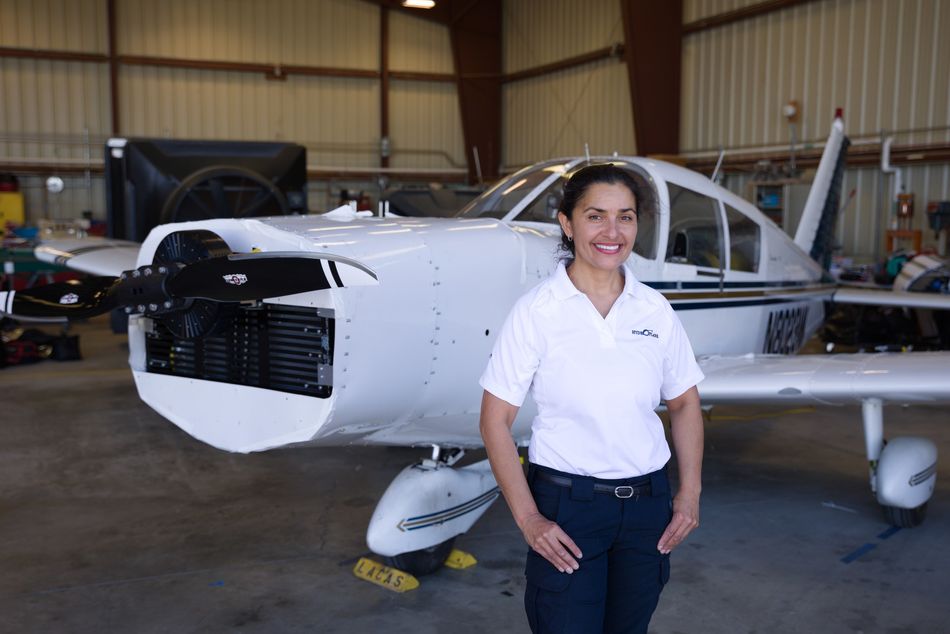
Dr. Anita Sengupta is an aerospace engineer, climate tech entrepreneur, commercial pilot, and professor at USC. As CEO of Hydroplane Ltd., she pioneers hydrogen fuel cell power plants for aviation and energy storage, advancing sustainability and innovation while shaping the future of space exploration and green transportation.
Sources
[1] tasmanianhelicopters.com.au/fleet/robinson; climatiq.io/data/emission-factor
[2] tasmanianhelicopters.com.au/fleet/jetranger; climatiq.io/data/emission-factor