Featured
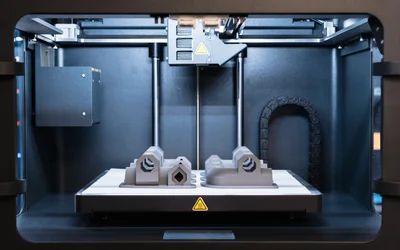
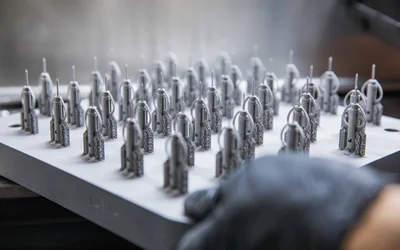
Markforged’s cost-effective Metal X solution brings the benefits of metal additive manufacturing to a wider adoption base.
This Report shows how tools like artificial intelligence, digital twins, and on-demand manufacturing are no longer emerging concepts, but are already delivering measurable impact across the product lifecycle.
Markforged’s cost-effective Metal X solution brings the benefits of metal additive manufacturing to a wider adoption base.
This guide delves into DFM's principles, implementation process, impacts, and challenges, aiming to provide readers with a comprehensive understanding of this integral concept.
The Creality Ender 3 Pro offers good value for money but lacks an automatic bed leveling feature. Fortunately, Ender 3 Pro bed leveling can be painless with the right tools and preparation.
An engineer’s guide to understanding the state of the art in metal 3D Printing
15 minutes read.
22 minutes read.
11 minutes read.
18 minutes read.
12 minutes read.
16 minutes read.


Entertainment
The Next Byte Podcast is hosted by two young engineers - Daniel and Farbod - who select the most interesting tech/engineering cont...
165 Posts
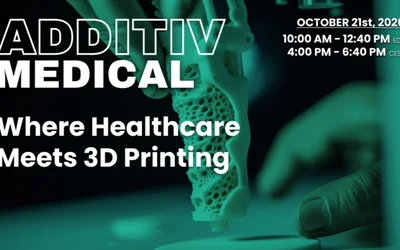
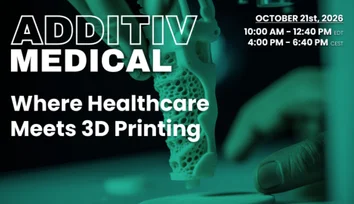
ADDITIV Medical 2026 will bring together more than 500 medical professionals
Choosing between 3D printing and injection molding is one of the key decisions in product development—especially in case of prototyping.
Explore how the right finishes and coatings can improve aerospace parts by boosting durability, extending service life, enhancing environmental resistance, and delivering the performance and appearance required for demanding applications.
The choice between 3D printing and CNC machining is the most common decision regarding manufacturing methods that must be made before placing the first order for prototypes. The correct answer depends on tolerance requirements, material specifications, component geometry, and schedule.
Discover how iAM Marketplace simplifies industrial additive manufacturing by unifying materials, validation services, and multi-brand technologies into one open ecosystem for efficient AM sourcing.
This article discusses what attendees can expect from TCT Asia 2026, including its conference format, focus areas, and the experts contributing to industry-specific discussions.
This article discusses the exhibitors, products, and industrial trends defining additive manufacturing across the Asia-Pacific region at TCT Asia 2026.
This article discusses how the Asia-Pacific region is advancing additive manufacturing and the role of TCT Asia as the leading 3D printing and additive manufacturing event in the Asia-Pacific.
Markforged’s cost-effective Metal X solution brings the benefits of metal additive manufacturing to a wider adoption base.
This guide delves into DFM's principles, implementation process, impacts, and challenges, aiming to provide readers with a comprehensive understanding of this integral concept.
The Creality Ender 3 Pro offers good value for money but lacks an automatic bed leveling feature. Fortunately, Ender 3 Pro bed leveling can be painless with the right tools and preparation.
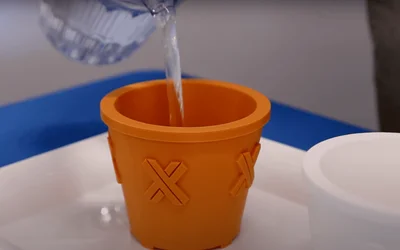
This article reviews the different ways of getting water-resistant parts with 3D printing: materials, 3D printing processes and finishing options.

5 minutes read
With its ability to produce ultra-robust, temperature-resistant final parts, PEEK 3D printing is becoming the manufacturing process of choice for more and more engineers.
Additive manufacturing is an excellent complement or alternative to machining when irregular, intricate, or smaller jigs and fixtures are needed.

3 minutes read
And the Challenges of Meaningful Training Data

6 minutes read
Global online manufacturing platform Hubs has just published its 3D Printing Trend Report 2023, sharing an overview of the current state of the 3D printing industry as well as highlighting the trends that are shaping its future. Here is a summary of the report and a brief look at its key takeaways. For all the insights, download the full report below.
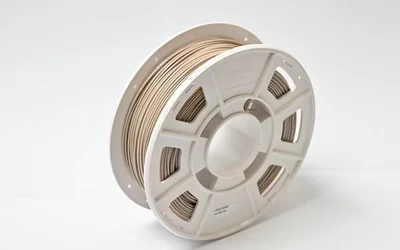
In this article, we look at how three of the most commonly used filaments—PLA, ABS, and PETG—compare in terms of printability, properties, and availability.
Breaking the Mold: How SLS Printing is Shaping the Future of Manufacturing with Unmatched Precision, Efficiency, and Creative Freedom
With a relatively low melting point (between 150°C and 180°C), PLA is one of the easiest thermoplastics to 3D print. Here’s how PLA melting point factors into choosing the optimal print settings, such as nozzle temperature and print bed temperature.
The world of polymer 3D printing is rich in technology. In this comparison, you will learn about the two most productive methods in detail: HSS and MJF

6 minutes read
With its rubber-like material properties, TPU is a versatile 3D printing material that can be used for numerous applications. Here's what you need to know about 3D printing TPU, from filament storage, to printer settings, and more.
ADDITIV Medical World is a free virtual event offered by 3Dnatives, the leading online magazine about 3D printing and Additive Manufacturing.
ABS is a widely used 3D printing filament with good impact resistance and flexural strength. It also exhibits moderate heat resistance, making it a go-to material for mid-temperature 3D printing applications.