Featured

The development of digital technology has revolutionised life as we know it.
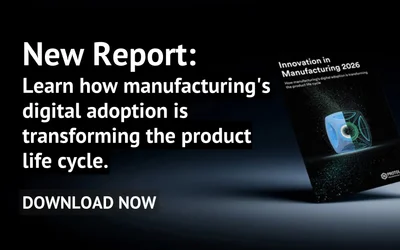
This Report shows how tools like artificial intelligence, digital twins, and on-demand manufacturing are no longer emerging concepts, but are already delivering measurable impact across the product lifecycle.
The development of digital technology has revolutionised life as we know it.
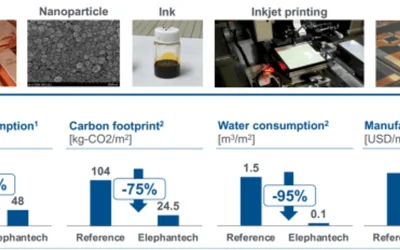
Additive electronics is sustainable reduceing copper and water consumption vs. the traditional PCB production processes by 70% and 95%, respectively whilst reducing the carbon footprint by 75%. Here you will read about the latest advances by one of the leading firms in the field from Japan
Part strength is sometimes seen as a weakness of 3D printing. But how strong are 3D printed parts really, especially compared to injection molding?
An engineer’s guide to understanding the state of the art in metal 3D Printing
15 minutes read.
22 minutes read.
11 minutes read.
18 minutes read.
12 minutes read.
16 minutes read.


Entertainment
The Next Byte Podcast is hosted by two young engineers - Daniel and Farbod - who select the most interesting tech/engineering cont...
165 Posts
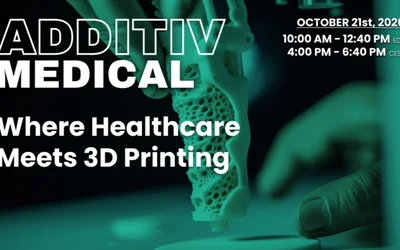
ADDITIV Medical 2026 will bring together more than 500 medical professionals
Choosing between 3D printing and injection molding is one of the key decisions in product development—especially in case of prototyping.
Explore how the right finishes and coatings can improve aerospace parts by boosting durability, extending service life, enhancing environmental resistance, and delivering the performance and appearance required for demanding applications.
The choice between 3D printing and CNC machining is the most common decision regarding manufacturing methods that must be made before placing the first order for prototypes. The correct answer depends on tolerance requirements, material specifications, component geometry, and schedule.
Discover how iAM Marketplace simplifies industrial additive manufacturing by unifying materials, validation services, and multi-brand technologies into one open ecosystem for efficient AM sourcing.
This article discusses what attendees can expect from TCT Asia 2026, including its conference format, focus areas, and the experts contributing to industry-specific discussions.
This article discusses the exhibitors, products, and industrial trends defining additive manufacturing across the Asia-Pacific region at TCT Asia 2026.
This article discusses how the Asia-Pacific region is advancing additive manufacturing and the role of TCT Asia as the leading 3D printing and additive manufacturing event in the Asia-Pacific.
The development of digital technology has revolutionised life as we know it.

4 minutes read
Additive electronics is sustainable reduceing copper and water consumption vs. the traditional PCB production processes by 70% and 95%, respectively whilst reducing the carbon footprint by 75%. Here you will read about the latest advances by one of the leading firms in the field from Japan

4 minutes read
Part strength is sometimes seen as a weakness of 3D printing. But how strong are 3D printed parts really, especially compared to injection molding?
Renowned British supercar manufacturer Briggs Automotive Company uses UltiMaker 3D printers to design and produce bespoke parts for its high-end sports cars

4 minutes read
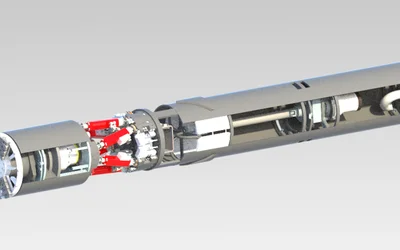
Using 3D-printed and CNC-machined parts from MakerVerse, the team built a powerful 3,000 kg machine. See how "Groundhog Beta" won awards at a competition organized by Elon Musk's The Boring Company.

4 minutes read
Caracol has introduced Wire Arc Additive Manufacturing to explore how to manufacture advanced applications such as space vehicles, leveraging the benefits of AM and robotics. This project enabled the production of propulsion tanks for CubeSat carrier space vehicles,

This article explores the most suitable 3D printing materials for high-temperature applications and their printing technologies, key features, and common applications.

5 minutes read
The most popular 3D printing filament, PLA is known for many things, like its good printability and ability to withstand warping. When it comes to temperature resistance, however, the material has its limitations. In this article, we're diving into PLA's thermal properties and comparing them to other common filaments.
Slicing software has been around since the very beginning of 3D printing, with digital slicing of STL files being one of the key features of Chuck Hull’s first stereolithography system. However, in the time since, slicing software has evolved beyond its base functions of simply converting 3D object models into machine instructions.

5 minutes read
In this article, we look at the importance of using a 3D printer air filter to remove potentially harmful fumes from the print environment, as well as the different kinds of filter available and how to ensure proper maintenance.
3D printing elephant foot is a common issue that most 3D printer users will have experienced. Typically caused by excessive heat or poor nozzle calibration, the issue can be solved in several ways.
Micro-fabricated nozzle plates are used in various industries, such as inkjet printing, medical devices, and flow control. Manufacturing these nozzle plates requires precision and accuracy to achieve the desired performance. Several production technologies can be used to manufacture micro-fabricated metal nozzle plates, such as 3D printing, Laser Cutting, Micro Milling, Micro Punching, and Electroforming. In this article, we will introduce these production technologies, and illustrate how to find your preferred process for the production of micro-fabricated nozzle plates based on key features such as precision, customization, scalability, and material compatibility.
Which post-processing option is right for your SLS part? This guide explains each option.
3 minutes read
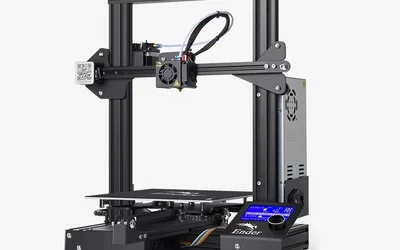
According to manufacturer Creality, the Ender 3 print speed can reach an impressive 180 mm/s. But is it possible to successfully print at this high speed? If so, how?
Navigating design for additive manufacturing advisories in your quote is easier than it seems, and it starts with thinking outside the box