What is 3D printer filament made of? This guide examines polymers, additives, and composites, offering practical tips for digital design and hardware engineers.
Discover how to print with high-performance filaments like PEEK, PEKK, and ULTEM. Learn about their properties, hardware needs, challenges, and best practices for industrial-grade 3D printing.
Explore how 3D-Fuel's Pro PCTG filament advances additive manufacturing, offering higher impact strength, improved environmental resistance, and reliable printability for functional and industrial 3D printing applications.
3devo's next-generation desktop extruder combines industrial precision with lab-scale simplicity enabling more controlled, higher-performance and data-driven 3D printing material workflows.
3D printing applications continued to flourish in more technical industries, and the technology has become an intrinsic part of manufacturing and producing products from hearing aids, dentistry parts or surgical instruments and inhalers.
Explore Voltera's innovative project to create a seven-layer magnesium-zinc battery using printable technology. Developed with Saral Designs and employing the NOVA system, the project focuses on building lightweight, flexible, and environmentally friendly batteries on PET substrates.
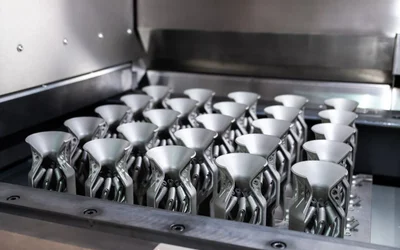
Metal 3D printing requires precise control over a variety of parameters to achieve high-quality parts. Whether you're printing aerospace components, medical devices, or complex machinery, understanding the core settings that influence the outcome is crucial. Lets talk about the most important ones.
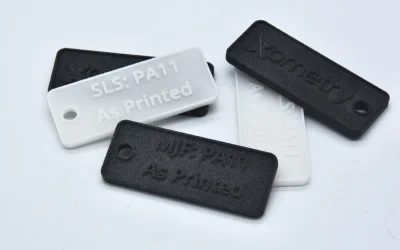
This article compares HP Multi Jet Fusion (MJF) and Selective Laser Sintering (SLS) 3D printing technologies and provides insights on how to choose the optimal process for your specific parts.
Leveraging metal 3D printing and generative design, this drone project showcases the potential for lightweight, complex structures optimized for performance and manufacturability.
RNDR Medical is set to launch a novel single-use scope for endourology, designed for direct visualization and navigation to diagnose and treat urinary tract disorders like kidney stones and urothelial carcinoma, as well as facilitating pyeloscopy procedures.
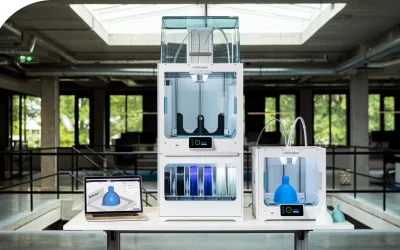

One of the key industries where 3D printing implementation is starting to show its potential is in the packaging industry, while each of the subjects we’ll cover here could easily be expanded into their own individual deep dives, we wanted to provide a holistic view of the main benefits.

As one of the few thermoplastic 3D printing materials derived from natural sources, PLA is often assumed to be the most eco-friendly. But is that true?
Modern desktop 3D printers have surprisingly versatile uses. This is demonstrated by Martin Tobiáš's project – hybrid casting of complex engine parts. He was able to significantly shorten the process from 3D scanning and CAD design to the final casting.
This article outlines the most common file formats in 3D printing: STL, a standard in the industry; OBJ, known for its ability to include color and texture information; AMF, offering enhanced geometry and color representation; and 3MF, supporting multiple colors, materials, and other characteristics

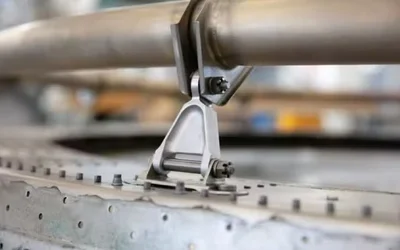
Metal 3D printing has emerged as a game-changing technology, also in the construction of custom fixtures. The perfect example for this is the case study on Hoedtke Metall- und Lasertechnik, which illustrates how metal additive meets the demands of complex projects and delivers significant advantages
The Microfluidics Core Facility at Heidelberg University successfully uses the 3D printing technology of projection micro-stereolithography (PµSL) from BMF. Sophisticated research projects are supported with microparts such as microwells, various microfluidic devices and “organs-on-a-chip”.