Featured

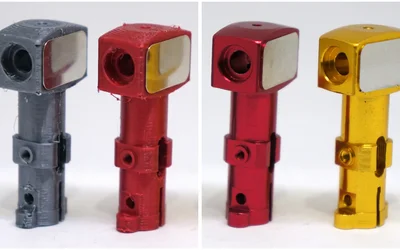
LED applications are a staple of engineering school projects, combining hands-on learning with creativity. Among these, the LED roulette is a favorite, offering both intellectual challenge and engaging interactivity.
This Report shows how tools like artificial intelligence, digital twins, and on-demand manufacturing are no longer emerging concepts, but are already delivering measurable impact across the product lifecycle.
LED applications are a staple of engineering school projects, combining hands-on learning with creativity. Among these, the LED roulette is a favorite, offering both intellectual challenge and engaging interactivity.
This article will explore how 3D printing is being applied across the manufacturing industry, from custom tooling and rapid prototyping to on-demand spare parts production, highlighting real-world examples and key benefits for professionals striving to maintain a competitive edge in their operations
AlSi10Mg (3.2382) is a high-performance material widely used in metal 3D printing for various advanced applications. Let's take an in-depth look at its properties, applications, and mechanical characteristics.
An engineer’s guide to understanding the state of the art in metal 3D Printing
15 minutes read.
22 minutes read.
11 minutes read.
18 minutes read.
12 minutes read.
16 minutes read.


Entertainment
The Next Byte Podcast is hosted by two young engineers - Daniel and Farbod - who select the most interesting tech/engineering cont...
165 Posts
ADDITIV Medical 2026 will bring together more than 500 medical professionals
Choosing between 3D printing and injection molding is one of the key decisions in product development—especially in case of prototyping.
The choice between 3D printing and CNC machining is the most common decision regarding manufacturing methods that must be made before placing the first order for prototypes. The correct answer depends on tolerance requirements, material specifications, component geometry, and schedule.
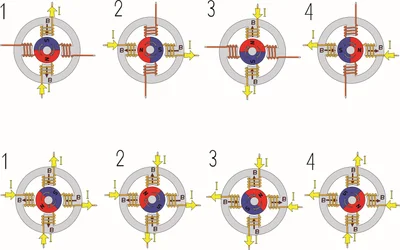
How microstepping works in stepper motors, the incremental torque cost of each resolution, and why finer microsteps do not improve positioning accuracy.
Discover how iAM Marketplace simplifies industrial additive manufacturing by unifying materials, validation services, and multi-brand technologies into one open ecosystem for efficient AM sourcing.
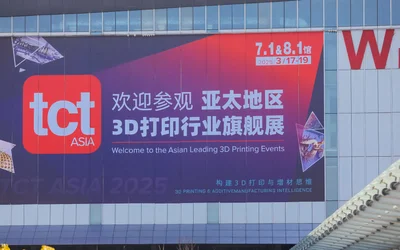
This article discusses what attendees can expect from TCT Asia 2026, including its conference format, focus areas, and the experts contributing to industry-specific discussions.
This article discusses the exhibitors, products, and industrial trends defining additive manufacturing across the Asia-Pacific region at TCT Asia 2026.
This article discusses how the Asia-Pacific region is advancing additive manufacturing and the role of TCT Asia as the leading 3D printing and additive manufacturing event in the Asia-Pacific.
LED applications are a staple of engineering school projects, combining hands-on learning with creativity. Among these, the LED roulette is a favorite, offering both intellectual challenge and engaging interactivity.

6 minutes read
This article will explore how 3D printing is being applied across the manufacturing industry, from custom tooling and rapid prototyping to on-demand spare parts production, highlighting real-world examples and key benefits for professionals striving to maintain a competitive edge in their operations

9 minutes read
AlSi10Mg (3.2382) is a high-performance material widely used in metal 3D printing for various advanced applications. Let's take an in-depth look at its properties, applications, and mechanical characteristics.

2 minutes read
Researchers from the Buchmann Institute for Molecular Life Sciences at Goethe University have used the microArch® S140, a microscale 3D printer from Boston Micro Fabrication, to help fabricate miniaturized vessels called hydrowells for culturing 3D cellular spheroids under microgravity conditions.

3 minutes read
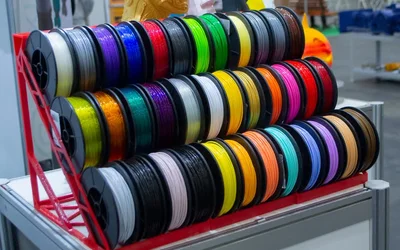
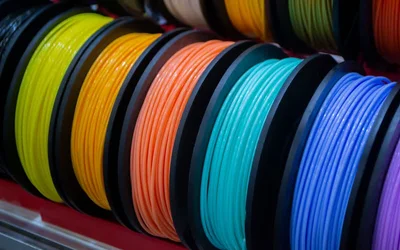
In this guide, we cover all the different types of polymer FDM 3D printing filament, from standard grades like PLA and ABS to advanced high-performance filaments like PEEK and fiber-reinforced materials.
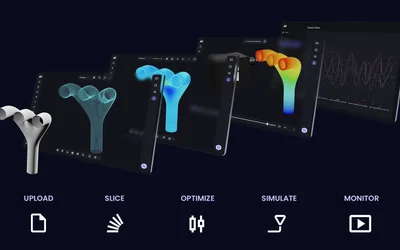
Metal 3D printing offers significant design opportunities with its high geometrical freedom, but it requires careful design for additive manufacturing (DfAM) to address equipment and material constraints, a process supported by DfAM and 3D printing simulation tools in most major CAD software.
From entry-level FDM machines to industrial-grade metal printers, this guide demystifies the many types of 3D printers available to businesses and consumers.
As we approach the second half of the 2020s, many businesses wonder what manufacturing will look like in 2030. They see challenges ahead that include the effects of climate change, ongoing supply chain disruptions and the fluctuating relationship between humans and machines.
The italian company MDE shows how they are using metal 3D printing in their daily business.
In this chapter, we separate metal AM post-processing into four categories: debinding and sintering, CNC machining and milling, heat treatment, and quality assurance.
The most commonly used 3D printing filament, PLA is not known for its flexibility. We explore why that is and list some alternative 3D printing materials can be used when flexibility is needed.
Tips on how to design for Carbon’s additive manufacturing technology, and how Carbon stacks up against stereolithography and Multi Jet Fusion 3D printing.

5 minutes read
One of the most transformative elements in the design process for metal 3D printed parts is the integration of lattice structures as these can drastically improve the efficiency and performance of a component.
3 minutes read
As global supply chains face increasing pressure and manufacturing demands grow more complex, 3D printing is moving to the forefront of additive manufacturing as a cost-efficient, reliable, and flexible tool that is changing how companies view workflow optimization and production uptimes.
3 minutes read
This article explores the thermal properties of TPU, including TPU glass transition temperature, extrusion and bed temperatures, and best practices for successful 3D printing.