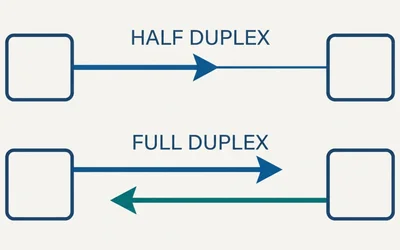
Half-duplex links take turns, while full-duplex links talk in both directions at once. This guide explains how each mode is built on real hardware, from Ethernet and RS-485 to Wi-Fi and 5G, what each costs you in throughput and latency, and how to choose between them.
Technical Guides
Latest Posts
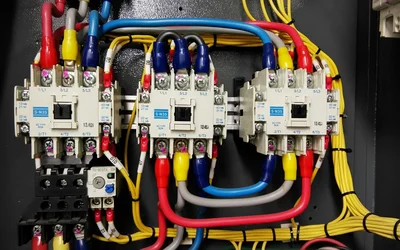
This article is a practical reference for establishing the SCCR rating of an industrial control panel, from the weakest-link method in UL 508A Supplement SB through the marking the inspector will look for.
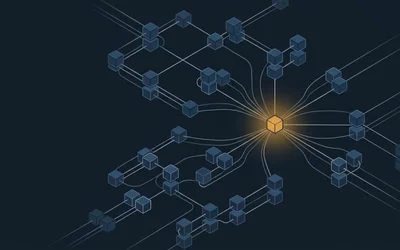
A single point of failure is any part whose failure stops the whole system. Learn how engineers find SPOFs with FMEA and fault trees, quantify them with reliability math, and remove them with N+1, 2N, failover, quorum, and voting designs, and why common cause failures can still defeat redundancy.

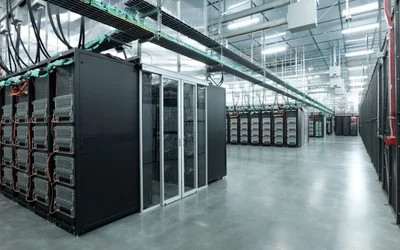
A practical engineering guide to spine-leaf data center fabrics: how every leaf connects to every spine, why the design replaced the three-tier network, how to size oversubscription and port counts, and which routing, cabling, and optics choices follow from it.

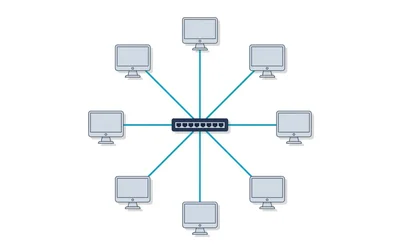
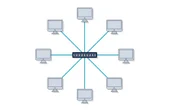
What is star topology? See how a star network works, its advantages and disadvantages, extended and hub-and-spoke variants, and why Wi-Fi is a star.
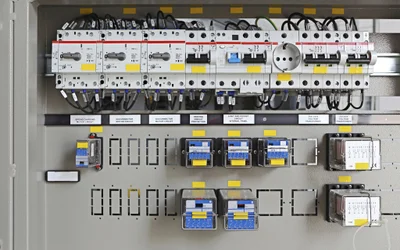
This guide covers what it applies to, how it differs from UL 508, how Supplement SB establishes the short-circuit current rating for a panel, and what it actually takes to label a panel under the UL 508A panel shop program.

Radar finds objects by sending out radio waves and timing the echo that comes back. This guide explains how radar works from first principles, runs the radar equation with real numbers, and compares the frequency bands, radar types and applications you will meet in practice.

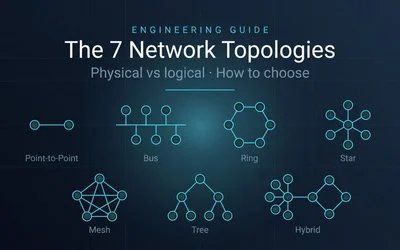
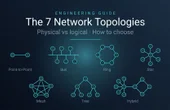
Network topology is the shape of a network: which nodes connect to which, and which paths data can take between them. This guide covers the seven types, how they compare, why the physical and logical views differ, and how to choose one for IoT and industrial systems.
In this article, we'll see how PLC and SCADA systems differ, how they work together, and which protocols, scan times and security controls matter in industrial automation.
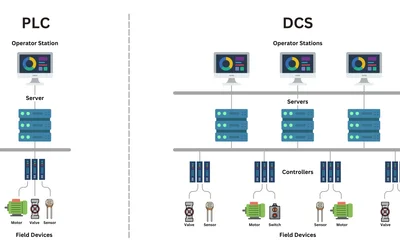
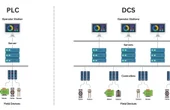
This guide compares PLC vs DCS architecture, scan times, redundancy, scalability, programming, costs, and applications to help you choose the right industrial control system.
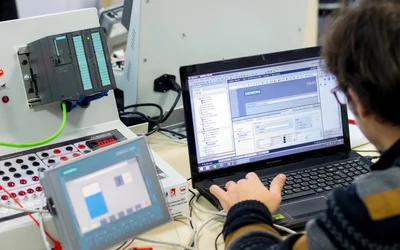
This article is a practical PLC programming guide covering the five IEC 61131-3 languages, the scan cycle that governs how your code actually runs, ladder and structured text examples, and the mistakes that cost engineers the most commissioning time.

STM32 vs ESP32 compared on architecture, Wi-Fi, power, peripherals, toolchains, safety, and longevity. Current 2026 specs from vendor datasheets, plus a decision table.

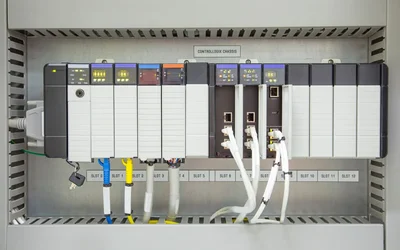
This article explains what is a PLC, what's inside it, how the scan cycle works, which programming languages the current IEC standard defines, and how to choose the right controller for your application.
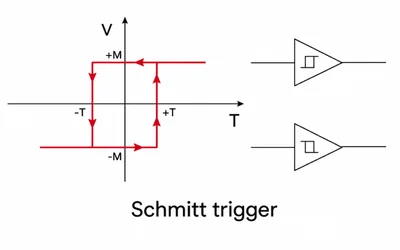
A Schmitt trigger is a circuit that converts slow or noisy inputs into clean digital signals using two switching thresholds. This guide explains hysteresis, op-amp and transistor designs, equations, real 74HC14, CD40106B, and 555 timer examples, and common design mistakes.

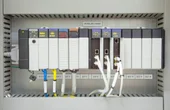
What a programmable automation controller is, how PACs are built and programmed, and how to choose between a PLC and a PAC.


This guide explains industrial automation systems, the automation pyramid, core technologies, types, applications, benefits, and Industry 4.0 trends shaping smart manufacturing in 2026.

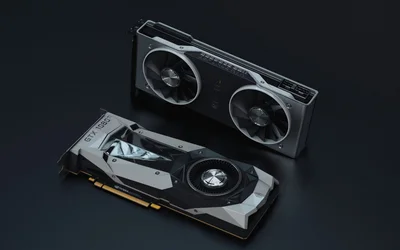
Nvidia’s CUDA cores are specialized processing units within Nvidia graphics cards designed for handling complex parallel computations efficiently, making them pivotal in high-performance computing, gaming, and various graphics rendering applications.
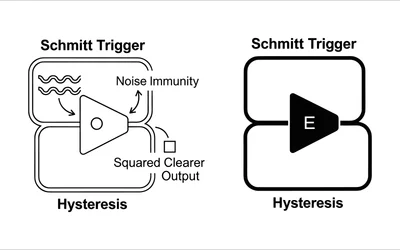
A Schmitt trigger is a comparator circuit with built-in hysteresis that uses two switching thresholds to eliminate noise and ensure stable output transitions. It is widely used for signal conditioning, waveform shaping, and robust digital and analog circuit design.
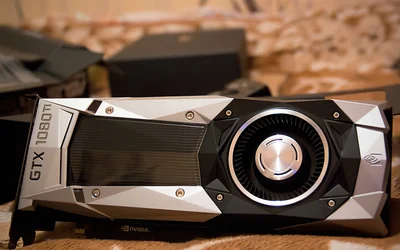
CUDA cores are Nvidia GPUs' core FP32/INT32 processing units, powering parallel computing across HPC, gaming, and graphics rendering tasks.

A voltage reference is a precision circuit that delivers a stable output voltage independent of temperature, power supply, and load variations. This article covers key reference technologies, specifications, selection criteria, PCB design, and applications in ADCs, DACs, and calibration systems.
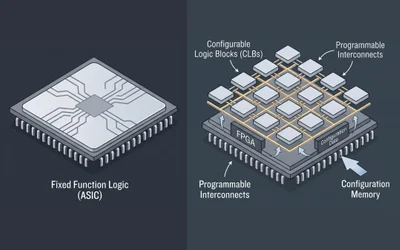
Discover what is an FPGA and how field-programmable gate arrays empower engineers to create custom digital hardware. This guide combines a beginner-friendly definition with architectural insights, process technology, and design methodologies.
This guide explains what is a VFD, further detailing how it works, compares types and vendors, provides application and selection advice, surveys 2026 trends, and responds to common questions.

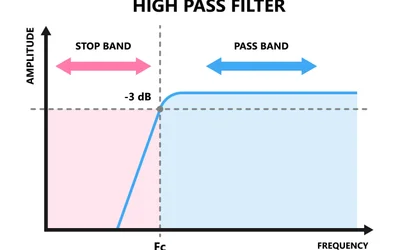
Active high-pass filters remove unwanted low-frequency signals while preserving useful higher frequencies. This article covers first- and second-order filter design, Sallen-Key and multiple-feedback topologies, and practical applications in audio electronics, instrumentation, and signal processing.
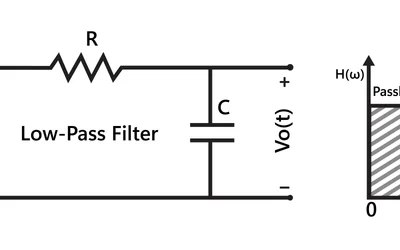
Active low-pass filters use op-amps, resistors, and capacitors to pass low-frequency signals while attenuating higher frequencies. This article covers first-order and second-order filter design, Sallen-Key and MFB topologies, cutoff frequency, Q factor, and applications.
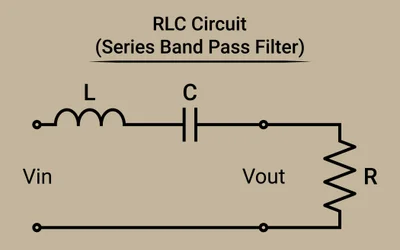
A bandpass filter is a circuit that allows a selected range of frequencies to pass while reducing low and high frequencies. This article covers the design of active bandpass filters using op-amps, resistors, and capacitors, including cutoff and center frequencies,, Sallen-Key and MFB topologies.