Featuredwhitepaper
As robotics shifts from innovation showcases to real-world deployment, motion systems play a vital role in this next stage of robotics.
As robotics shifts from innovation showcases to real-world deployment, motion systems play a vital role in this next stage of robotics.
As robotics shifts from innovation showcases to real-world deployment, motion systems play a vital role in this next stage of robotics.
From LTDC-X3 LiDAR ICs to capacitive and environmental sensors: see how one ScioSense component toolkit supports perception across six robotics segments.
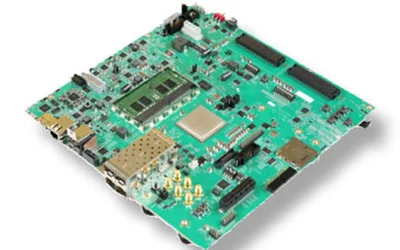
Explore AMD's Zynq UltraScale+ MPSoC and RFSoC for 5G, ADAS, and embedded applications.
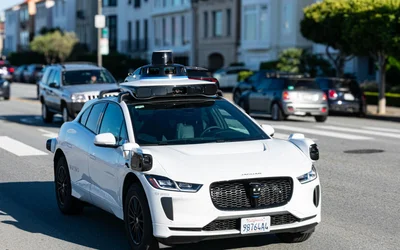
Autonomous Vehicles (AVs) are poised to revolutionize human transportation by making it more safe, comfortable, and reliable. From passenger travel to cargo transportation, AVs equipped with AI and sensors offer tremendous potential.
16 minutes read.
14 minutes read.
18 minutes read.
10 minutes read.
16 minutes read.


Robotics and Drones
We empower R&D by providing the computational power, ROS packages, payloads...
14 Posts

Test and Measurement equipment
Keysight Technologies, Inc. (NYSE: KEYS) is a leading technology company th...
11 Posts

Electro-Mechanical Component Manufacturing
ISL Products is an engineering oriented designer and manufacturer of value-...
9 Posts
Examining the latest developments in self-driving vehicles.
Autonomous Vehicles (AVs) are poised to revolutionize human transportation by making it more safe, comfortable, and reliable. From passenger travel to cargo transportation, AVs equipped with AI and sensors offer tremendous potential.
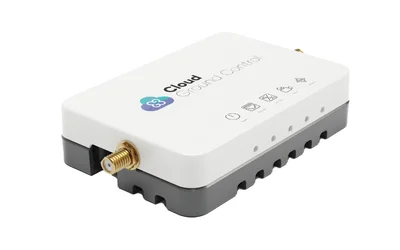
CGConnect, its cellular micro-modem that uses 4G/5G networks to link any drone or robotic vehicle to Cloud Ground Control’s cloud-based drone fleet management platform, enabling live-streaming, command and control from a web browser.
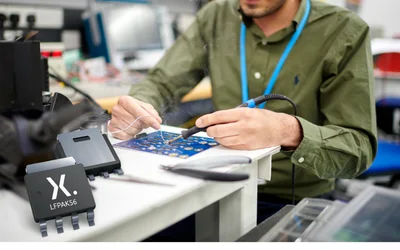
More than 20 years ago, a team set out to solve a problem: How do we reduce power loss and help reduce MOSFET size at the same time? LFPAK was the answer - and it changed everything.
As robotics shifts from innovation showcases to real-world deployment, motion systems play a vital role in this next stage of robotics.
Specialized design and manufacturing of robotic systems for chemical, nuclear, and high-risk industrial applications.
The Companies and Concepts Redefining Tomorrow's Industries
Safe autonomy in various vehicle systems and in uncertain conditions.
As robotics shifts from innovation showcases to real-world deployment, motion systems play a vital role in this next stage of robotics.
From LTDC-X3 LiDAR ICs to capacitive and environmental sensors: see how one ScioSense component toolkit supports perception across six robotics segments.
Explore AMD's Zynq UltraScale+ MPSoC and RFSoC for 5G, ADAS, and embedded applications.
How does connector design influence UAV performance in demanding environments? Harwin explores high-reliability connectors for next-generation UAVs.
Driven by AI, the advent of autonomous mobility has accelerated in recent years. It has advantages that go beyond the asphalt.

4 minutes read
The 80/20 Investment Imbalance Reshaping Semiconductor Supply
The AI-powered tool could inform the design of better sensors and cameras for robots or autonomous vehicles.
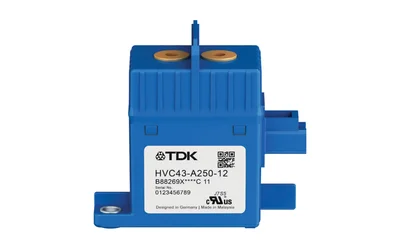
This article outlines the key considerations for HVC design in these applications and emphasizes the importance of robust switching solutions in meeting modern industry standards.
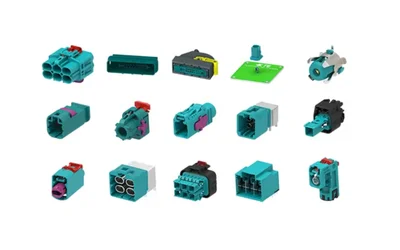
Building the Data Backbone of Vehicles with GEMnet Solutions by TE Connectivity — combining Multi-Gigabit Bandwidth, Robust EMI Shielding, and Automotive-Grade Durability
Specialized design and manufacturing of robotic systems for chemical, nuclear, and high-risk industrial applications.

4 minutes read
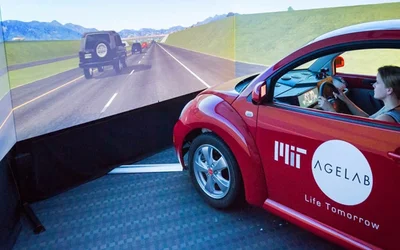
A decade-plus alliance between MIT's AgeLab and Toyota's Collaborative Safety Research Center is recognized as a key contributor to advancements in automotive safety and human-machine interaction.
The Companies and Concepts Redefining Tomorrow's Industries
5 minutes read
Advanced electronic components are enabling autonomous driving. This transformation is only possible with reliable, high-performance solutions tailored for automotive applications.
Powered by Xsens Vision Navigator

4 minutes read
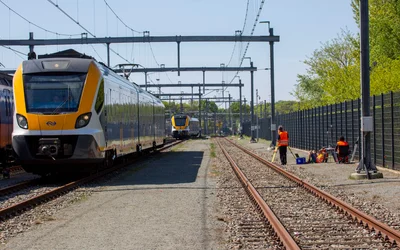
This technology enables the virtual coupling of train units and train formations as part of further automation of rail transport.

4 minutes read