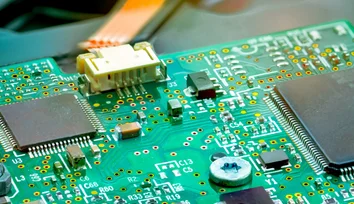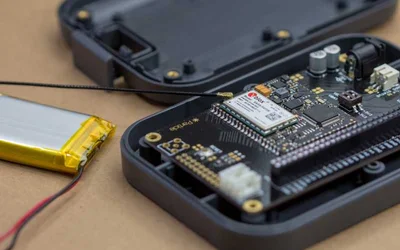
The technologies LTE-M, NB-IoT and LTE Cat 1bis are widely available as of today. 2022 might be the perfect year to kickstart your cellular IoT journey.


Choosing Cellular or WiFi Article #1:Cellular and WiFi connectivity have their own distinct benefits for IoT. Learn about the strengths and weaknesses and application examples of each one.
This article explores TPU vs GPU differences in architecture, performance, energy efficiency, cost, and practical implementation, helping engineers and designers choose the right accelerator for AI workloads today!
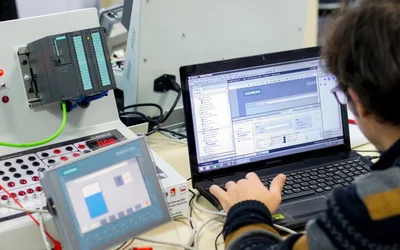
From simple sensor control to connected, intelligent devices, embedded systems often outgrow a single MCU. Pairing an MCU with Linux adds power and flexibility, but also introduces communication challenges, dual development workflows, and increasing software complexity.
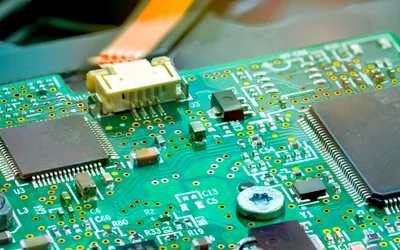
This article explores how automated CI/CD pipelines replace fragile manual build processes with reproducible, auditable workflows that improve compliance, reduce defects, and accelerate development in regulated embedded systems
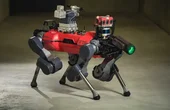
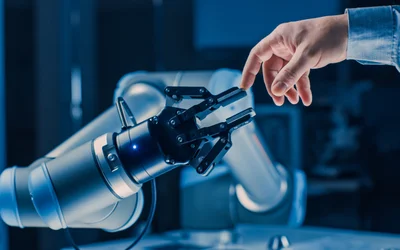
Mario Mauerer, maxon's Global Business Development Manager, Robotics, discusses what it takes for robotic deployments to be successful in complex real-world environments.
Join Prof. Fei Chen as he explores advanced bimanual manipulation and teleoperation techniques shaping the future of intelligent human-like robots in this expert-led robotics session.
The technologies LTE-M, NB-IoT and LTE Cat 1bis are widely available as of today. 2022 might be the perfect year to kickstart your cellular IoT journey.
Choosing Cellular or WiFi Article #1:Cellular and WiFi connectivity have their own distinct benefits for IoT. Learn about the strengths and weaknesses and application examples of each one.
Researchers modeled dynamic facial expressions of pain using a data-driven perception-based psychophysical method with visual-haptic interaction of users.
While the concept of a hugging robot may sound bizarre, the researchers behind the project — now in its third generation — believe that such a device could have a major impact on everything from social telepresence to elder care.
Imagine you could create thousands of options for a single design the push of a button and then you just pick the best option! Generative design makes this possible.
The COVID-19 pandemic has accelerated the need for remote patient monitoring. New technologies that emerge from this need can forever improve healthcare and healthcare systems.
With growing concern over microplastics from ocean waste, autonomous underwater vehicles — AUVs — have been proposed as a tool for cleaning up our seas, but only if they can pick the plastics out from the fish: Enter these tweaked EfficientDets, boosting accuracy for the task.
In this episode, we talk about how robotic technology is being leveraged to create a system capable of handling pizza dough and to offer an autonomous alternative that should address the primary shortcomings of conventional wheelchairs.
Designed using off-the-shelf parts, a low-cost microcontroller, and a 3D-printed chassis, the HeRo 2.0 robot costs just $18 to build — and is at the heart of an effort to open swarm robotics up to a broader audience.