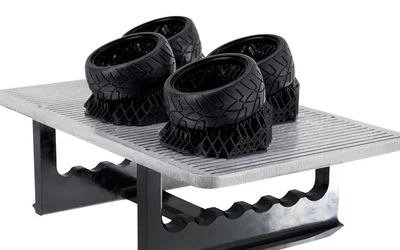

What is 3D printing? This article goes over the basics of 3D printing, otherwise known as additive manufacturing, covering its engineering principles and applications.
What is 3D printer filament made of? This guide examines polymers, additives, and composites, offering practical tips for digital design and hardware engineers.
With SCANOLOGY's KSCAN-X 3D scanner, wind turbine manufacturers can redesign blade core materials faster and more accurately than ever—cutting revision time from days to just 30 minutes.

Smarter technology, stronger performance.
Learn everything you need about the full adder circuit. From binary addition theory to low-power hardware implementations and modern ASIC/FPGA design flows, this technical article equips digital design engineers, hardware engineers with practical insights and current research trends.

Explore how a transistor works from first principles through practical circuit design. This in depth guide explains BJT and FET operation, switching and amplification modes, design calculations, modern market trends, and FAQs, ideal for digital design engineers, hardware engineers, and students.

DEEP Robotics, a global pioneer in the development and industrial application of quadrupedal robots, announced the launch of its X30 quadruped robot, a flagship product designed to meet core industry needs in multiple fields, including inspection, emergency rescue, fire detection, and more.
The shipbuilding industry is a critical component of any country’s infrastructure and economy. However, the process of ship construction, particularly the installation of pipes throughout the hull, is challenging and cumbersome. This is due to the segmented construction method adopted in shipbuilding, which often leads to deviations in the hull production process, making it difficult to accurately arrange and install pipes.
Manufacturing Futures Institute funds a biomanufacturing research project that could revolutionize microchip production for use in medical devices and engineered tissue.
SLS 3D Printing: An Eco-Friendly 3D manufacturing solution that reduces waste and energy use while enabling on-demand production and quick customization
PRISM™ harnesses the principles of behavioural science along with cutting-edge technology to not only give customers the power to save a minimum of 20% on energy bills; but also help adjust the user’s mindset and drive long-term behavioural change around energy consumption.
Known for its continuous 3D structure, the gyroid infill pattern is among the best for its strength-to-density ratio. The infill pattern is also highly rated for print speed. Let’s take a look at why that is.
Caltech researchers have developed a wearable sensor that monitors estradiol by detecting its presence in sweat. The researchers say the sensor may one day make it easier for women to monitor their estradiol levels at home and in real time.
Are you looking to cut costs for your injection molding parts without compromising on quality and functionality? While injection molding process may seem costly compared to CNC machining and 3D printing, there are opportunities to optimize the part and achieve significant cost savings. Here are 6 injection molding design considerations to save you money.
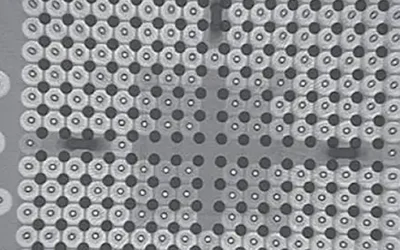
Fine-pitch dense die assembly process with only a single adhesive application without pressure, without underfill, without fine patterning, without complex alignment vs solder ball-to-solder pad, etc? Learn here how magnetically aligned Anisotropic Conductive Epoxy (ACE) enable this
Ålö Agricultural Machinery (Ningbo) Co., Ltd, a wholly owned subsidiary of Ålö, is a leading manufacturer of loaders and implements for agricultural tractors. With production facilities in four countries and customers in over 50, Ålö holds approximately 30% of the world market for tractor loaders exceeding 50 hp. Since 2020, the company has been part of the JOST Group, a renowned manufacturer of safety-critical systems for commercial vehicles.
In this video we look at material properties and considerations when designing your part. Focusing on the four groups that most characteristics fall into: mechanical, physical, thermal and electrical.
A Comprehensive Guide to These Essential Environments for High-Precision Manufacturing and Research, Highlighting the Applications, Maintenance and Cleaning Practices