Featured
A deep dive into the most important network topologies. What are Mesh, Star, Bus, Ring, and Hybrid Topologies?

A deep dive into the most important network topologies. What are Mesh, Star, Bus, Ring, and Hybrid Topologies?
A deep dive into the most important network topologies. What are Mesh, Star, Bus, Ring, and Hybrid Topologies?
Manufacturing will be led into a greener future through the game-changing ability of cloud-based procurement and collaboration tools.
Article #2 of our Connected Transport Series. Sensors activate automatic braking to avoid collisions when objects are too close, and they enable headlights to pan as we turn. But high-speed transfer of data is required to keep the connected advances coming.
Exploring the design, development, connectivity, security, and more aspects of IoT devices
18 minutes read.
21 minutes read.
20 minutes read.
17 minutes read.
25 minutes read.
28 minutes read.


Electronics
Mouser Electronics is a worldwide leading authorized distributor of semiconductors and electronic components.
219 Posts
Semiconductors
Nordic Semiconductor is a fabless semiconductor company specializing in wir...
181 Posts
What a programmable automation controller is, how PACs are built and programmed, and how to choose between a PLC and a PAC.
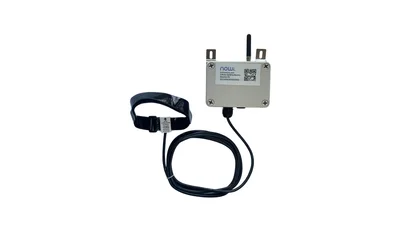
Explore how low-power sensor gateways enable reliable, long-range data collection for remote and distributed industrial IoT assets.
A compact, battery-powered sensing platform that wirelessly brings environmental and equipment-condition data from locations where traditional monitoring is difficult or impossible.
A Cat 1 bis platform that provides engineers with a practical path for long-term Global connectivity.
Real-time water monitoring and leak detection just got streamlined thanks to the nRF9151 – Nordic's low-power cellular IoT solution
A Cat 1 bis platform that provides engineers with a practical path for long-term Global connectivity.
The G+D Single Pane of Glass Delivers Secure, Remote, SGP.32-Driven IoT Management
As AI moves from screens into real environments, reliable and always-on connectivity are becoming a safety and scale requirement.
A deep dive into the most important network topologies. What are Mesh, Star, Bus, Ring, and Hybrid Topologies?
Manufacturing will be led into a greener future through the game-changing ability of cloud-based procurement and collaboration tools.

5 minutes read
Article #2 of our Connected Transport Series. Sensors activate automatic braking to avoid collisions when objects are too close, and they enable headlights to pan as we turn. But high-speed transfer of data is required to keep the connected advances coming.
An overview of the architecture of IIoT and how it is developing to drive the scalability of Industry 4.0.
Digital components and circuits must be able to withstand a certain amount of noise and jitter in clock and data signals to ensure the reliable operation of your device. If they do not, the result could be communication errors or system failures.

4 minutes read
At the core of the digital transformation strategy of GF is the Hycleen Automation System, a sanitary automation system for large drinking water installations. In this article, we cover how the system was retrofitted in just 4 months using the akenza platforms, and the results obtained.

5 minutes read
New frequency- and protocol-agnostic technology consisting of proprietary software, hardware, and antennas make it easier for developers to incorporate RF-based location finding into their latest products.

3 minutes read
Bluetooth Direction Finding feature brings the possibility of absolute positioning of products and things in three-dimensional space to the world of low-power wireless connectivity.
5 minutes read
Single processor solutions will inevitably have to trade-off the processor's computational power against its efficiency. When that trade-off becomes too great, developers look towards dual-core solutions.
3 minutes read
Traditional water coolers using large plastic water containers are found everywhere, from offices to dentists to hairdressing salons. But they’re notoriously prone to relying on fixed vehicle delivery schedules that don’t match actual customer demand leading to routine over– and under-stocking.
3 minutes read
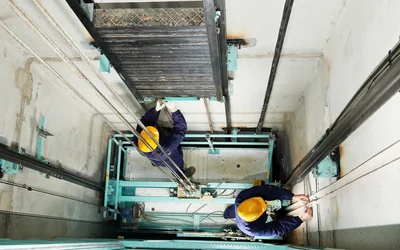
Wireless technologies will help make critical equipment like elevators and transit systems more reliable as they endure increased strain post-COVID-19.
3 minutes read
Managing a portfolio of devices across different connectivity platforms creates unnecessary complexity and administration effort. Akenza developed a self-service IoT platform, that offers features such as: Connectivity-as-a-Service, No-Code Data Flow, and Advanced User Managament and more!
Intrinsic ID and the Rise of Hardware-Based Security

This article offers an insight into the current situation, trends and current application examples of smart lighting solutions and what role it plays in indoor- and outdoor IoT applications, offering optimization and efficiency in every aspect, well-being, energy, habits and space.
6 minutes read
The first car my family had during my childhood was a 1967 Hillman Hunter built by the Hillman Motor Car Company in Coventry, England. In case you are a bit shocked about the year…...where I grew up, we got cars that had already been out for a while. I am old but not THAT old.
4 minutes read