Autosen Minion: A Customisable and Self-Sufficient IIoT Sensing Platform
A compact, battery-powered sensing platform that wirelessly brings environmental and equipment-condition data from locations where traditional monitoring is difficult or impossible.

13 Aug, 2026. 10 minutes read
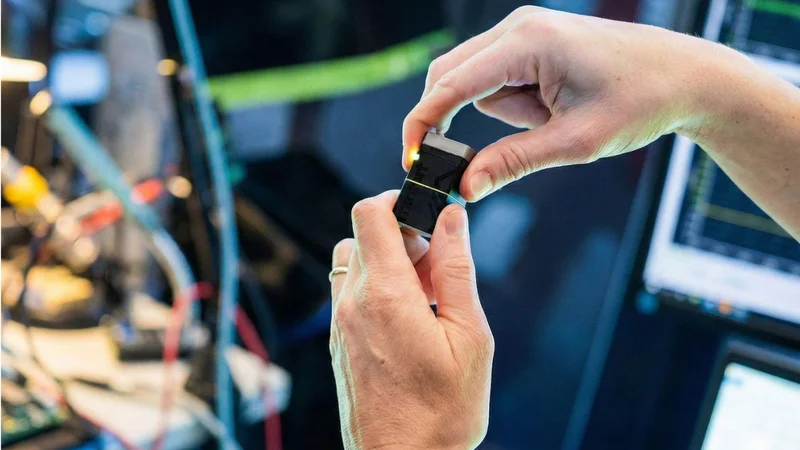
Many critical sites where data should be collected remain unmonitored in the industry. These sites often sit beyond the reach of wired sensors, as they are difficult to access, lack power sources, or may be deliberately isolated from the IT infrastructure in small-scale or distributed systems. This obstacle prevents businesses from detecting the early signs of failure, like temperature shifts, abnormal vibrations, or environmental changes, which, when left unnoticed, may cause downtime or turn into safety hazards.
The autosen minion offers a practical solution to this challenge by combining a sensing unit, mobile gateway, and powerful battery in a super-compact form factor to enable monitoring in hard-to-reach locations. Once configured, the minion wirelessly transmits data over mobile networks to provide businesses complete visibility into the monitored site. This article discusses the challenges of continuous monitoring in difficult-to-reach places and explains how autosen minion can be a potential solution for such applications.
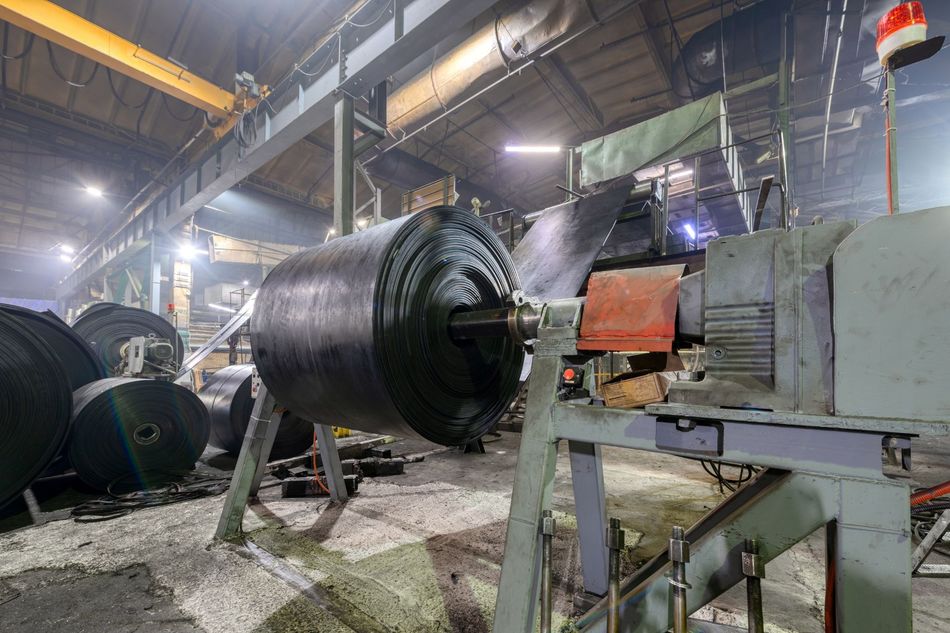
Challenges in Industrial and Infrastructure Monitoring
Despite constant progress in the fields of sensing, IoT, and AI, many industrial environments still operate with limited real-time visibility. Several locations, such as rotating machines, valves, tanks, or enclosed sites, remain difficult to monitor continuously. Some practical barriers contributing to this include:
Distributed Systems: When assets or equipment are dispersed across multiple locations in the field, they make up a distributed system. Since manually inspecting these sites is too time-consuming, they often stay unmonitored.
Power Supply Limitations and Installation Complexity: Traditional wired industrial sensors need power lines and control systems to function. Sometimes, the locations that require monitoring do not have access to a mains power supply. Running power lines and communication lines is cost-prohibitive or simply not feasible, especially for a single measurement point or temporary setups.
Complex Wireless Setup: Setting up wireless connectivity for sensors is no straightforward task either. While it sounds simple, it involves selecting a modem/acquiring SIM cards, managing data plans, and ensuring wireless coverage across the deployment area, adding a significant amount of effort. For small projects, this overhead makes no sense and outweighs the perceived benefits.
Integration Challenges: Even if the sensors are installed and the connectivity is established, it still needs to be figured out how the system would be integrated with the existing setup. Getting the installed node to send data to a cloud application, SCADA system, or enterprise software requires additional middleware and gateways, all adding up to a significant engineering effort from the user side.
It’s not that the organisations don’t value the data, but since the path to obtaining it is so fragmented and resource-intensive, they simply have no choice but to leave the area unmonitored and face the consequences. What the industry needs is a compact, pre-integrated sensing solution that handles sensing, power, and connectivity to enable out-of-the-box deployment with minimal engineering efforts
autosen minion: Compact, Autonomous, and Ready to Connect
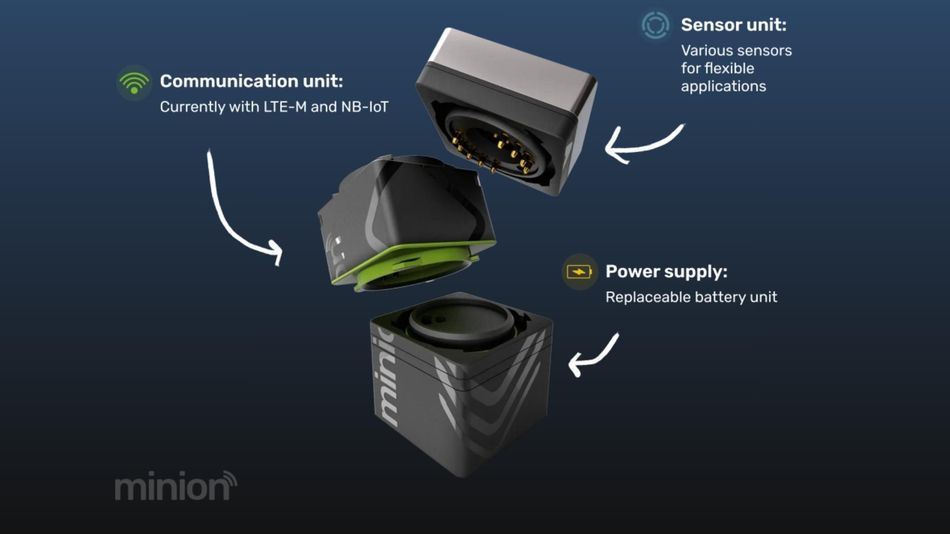
The autosen minion is a complete self-sufficient IoT sensing solution that enables monitoring in areas where traditional sensing systems cannot reach. It packs sensing, power, and networking subsystems into a unit that is compact enough to fit into tight and confined spaces.
The plug-and-play device requires no wiring or control and can transmit data to the cloud via low-power mobile networks. It includes three subsystems.
ME001 Minion Battery S
ME001 is a 3 V LiPo-based battery unit with a capacity of 900 mAh. autosen is soon introducing an energy module with an M12 connector that will allow users to choose the power supply best suited to their specific application. The currently available model powers the sensing and communication subsystems for up to two years, depending on the sampling intervals and network stability. Battery replacement during maintenance doesn’t require any tools and can be done in a matter of just a few seconds. Battery status is easily monitored in the cloud.
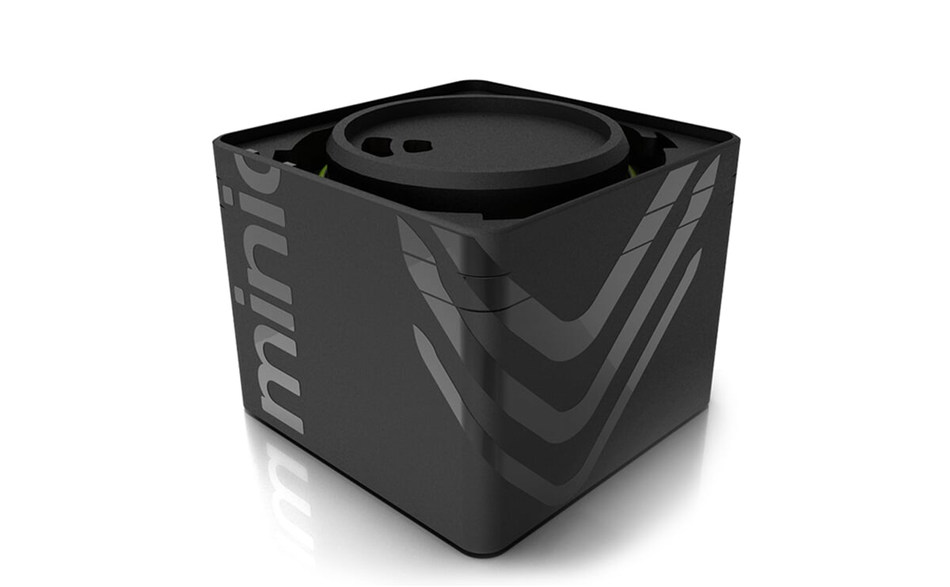
The ease of battery replacement makes large-scale deployments simple to manage. The tiny battery eliminates the need to install external power lines and regular recharging, making the autosen minion truly autonomous.
Overview of Sensor Minions
The autosen minion can be configured to support several interchangeable sensing units. This feature allows users to select the sensor type that suits their application the best. Each unit adds a sensing capability to the minion. An analogue adapter is also available to let users interface with sensors of their own.
Table 1: autosen minion IoT sensor catalog
Sensor minion | Description |
Vibration sensor MV001 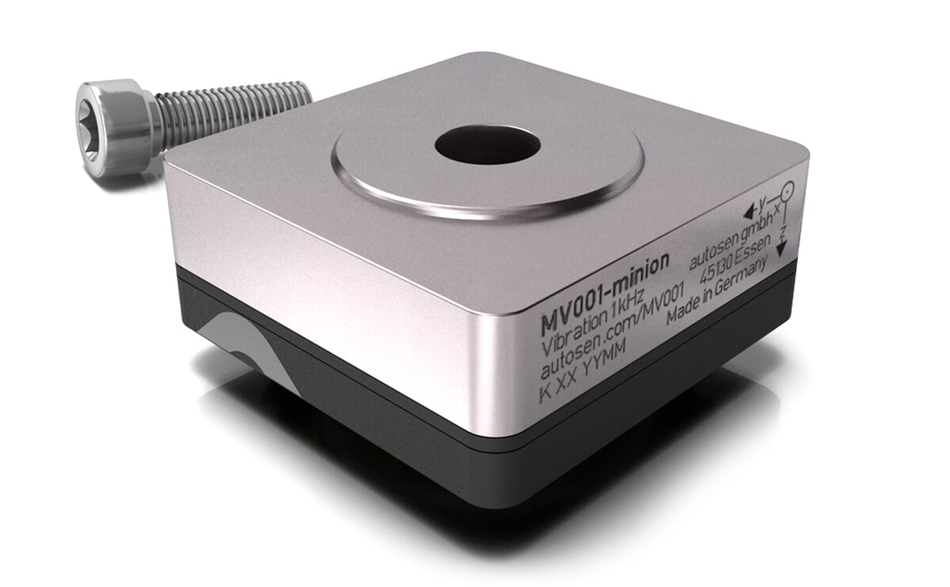 | The sensor measures vibrations and temperature on rotating machines such as pumps, fans, or motors to detect imbalance, misalignment, and early signs of wear or failure. It can measure vibrations up to 1 kHz. Also suitable for impact, shock, and position detection in non-rotating systems. |
Temperature & humidity sensor MH001 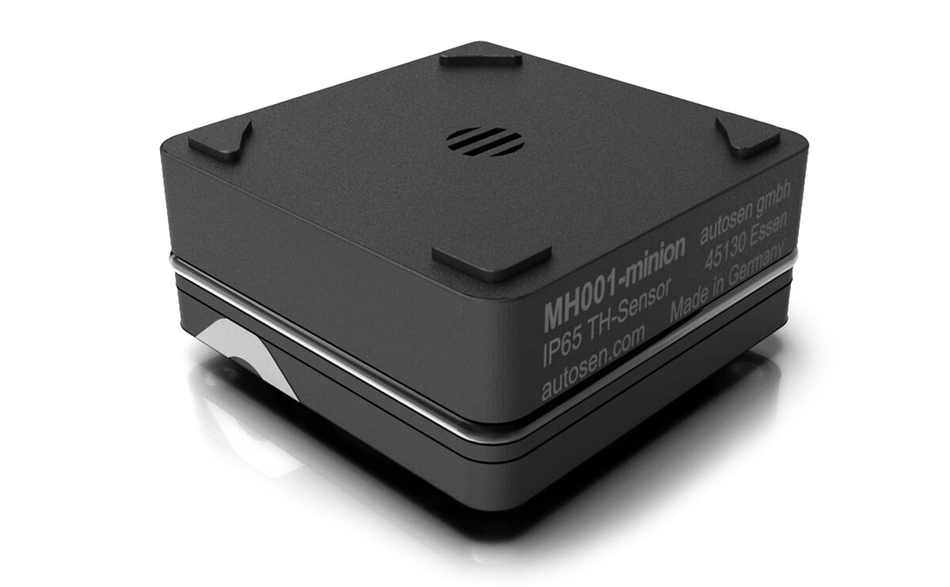 | The sensor monitors ambient temperatures ranging from -20°C to +80°C and humidity levels from 0 to 100% RH, respectively. Applications can include climate-controlled storage, greenhouses, cold chains, and process environments where stable environmental conditions need to be maintained and monitored. |
Radar distance sensor MF001 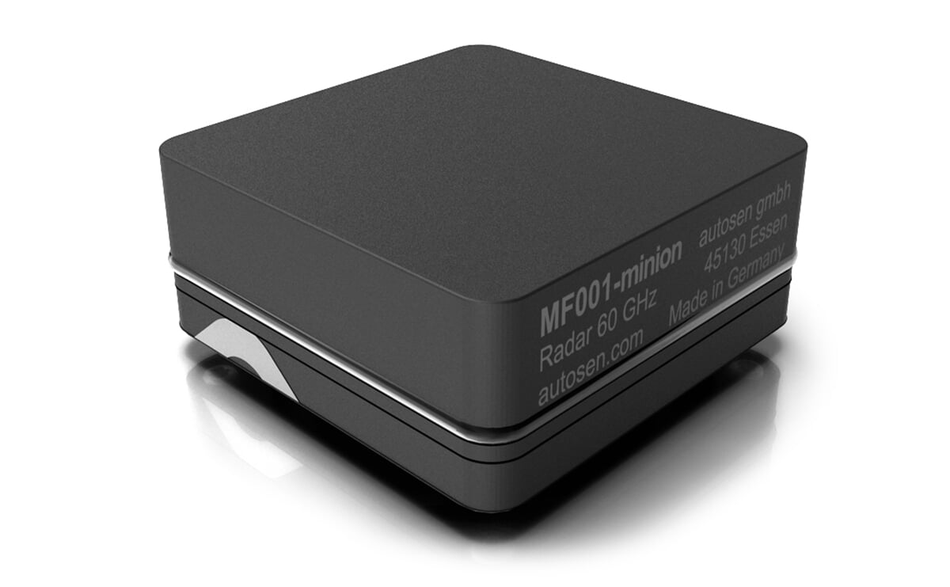 | An industrial level and distance measurement sensor with a range of up to 2 metres and ±6 mm accuracy. Comes with an IP65/IP67-rated housing that protects it from dust, water jets, and temporary immersion in water. It operates in the temperature range of -25°C to 65°C. Applications include contactless level monitoring, distance measurement, and object detection. |
Analogue adapter MD001 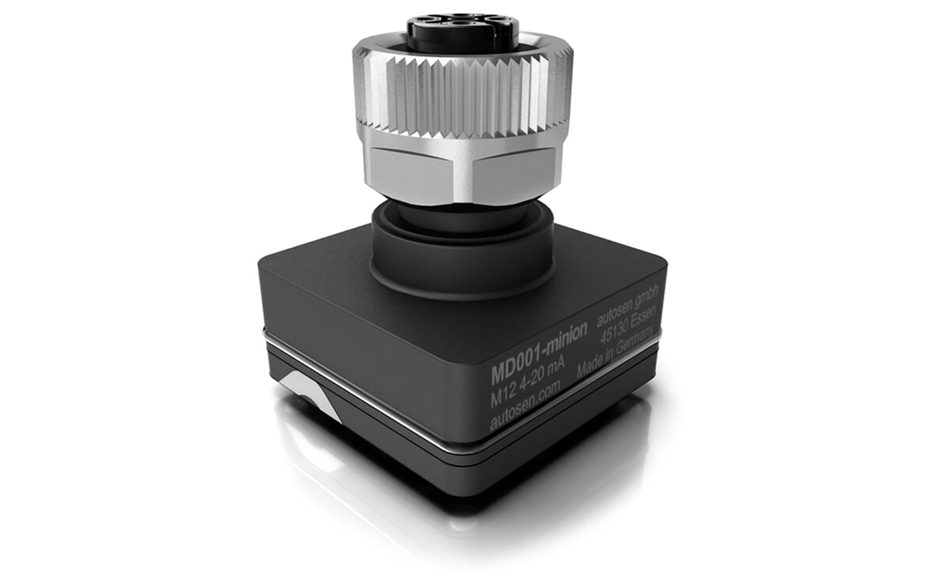 | Used to digitise legacy 4-20 mA sensor outputs to enable collection and transmission of data from any traditional sensor. It includes three analogue inputs for interfacing with sensors. |
MN001 Minion Mobile Communications Gateway
The MN001 is a mobile radio gateway that acts as the communication backbone to connect sensor data from the field to the cloud. It uses LTE-M or NB-IoT to enable long-range data transmission suitable for remote locations where networking infrastructure is poor. The gateway comes with a built-in iSIM that is configured out-of-the-box to automatically provision, removing the need for the user to purchase and install a physical SIM card. The connectivity is handled via autosen’s service to let the device come online without the user having to select a mobile operator or data plan.
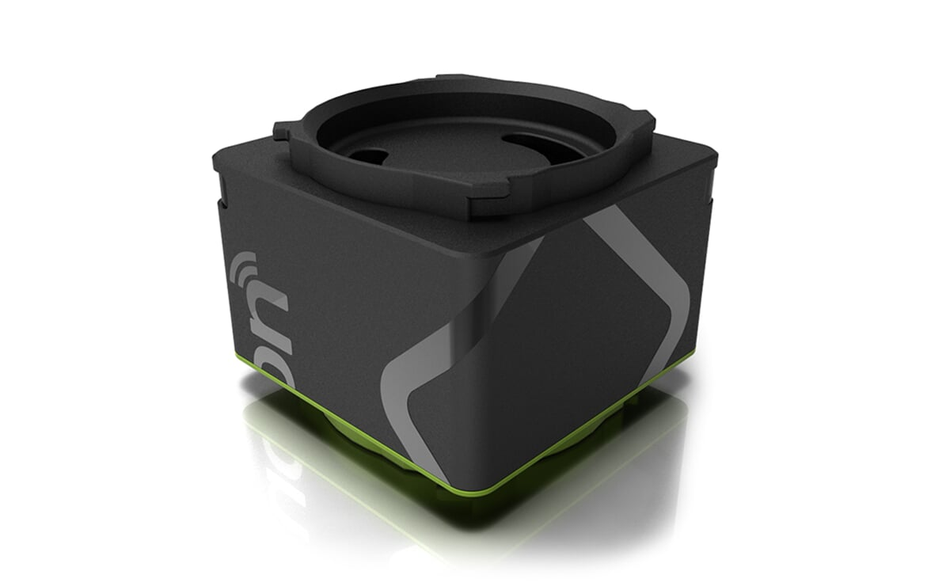
The gateway comes with Bluetooth/NFC for fast commissioning, support, firmware updates, and direct data reads. Data transmitted through the gateway is encrypted before reaching autosen.cloud for maximum privacy and data security.
autosen.cloud Connectivity
Data collected from the autosen minion is directly sent to autosen.cloud, which is a secure cloud platform based on the Cumulocity Cloud Platform, a recognised leader in the Gartner® Magic Quadrant™ for Global Industrial IoT Platforms 2025.[1] The platform is hosted in Frankfurt, Germany, and acts as the primary interface for data acquisition, monitoring, analysis, and integration for minion deployments. When a minion is connected and activated, the cloud platform automatically recognises the connected sensor type and prepares a ready-to-use dashboard displaying real-time values, historical data, sensor status, and much more, without any manual setup. Users can create a rule to trigger notifications via email/SMS when certain patterns are observed in the collected data.
The data available in the autosen.cloud dashboard can be exported in CSV or XLSX formats or integrated into third-party systems through REST or MQTT interfaces. The cloud platform also lets users create logic flows, perform calculations, or even implement custom workflows without coding. For customised cloud architectures, autosen provides cloud connectors to enable data delivery across other cloud platforms like AWS, Azure, or private environments. OEMs can adapt the cloud interface to give it their own visual identity.
The device and the cloud platform form a complete measurement-to-insight solution, ready for deployment with minimal setup.
Case Study: Condition Monitoring for Industrial Fans
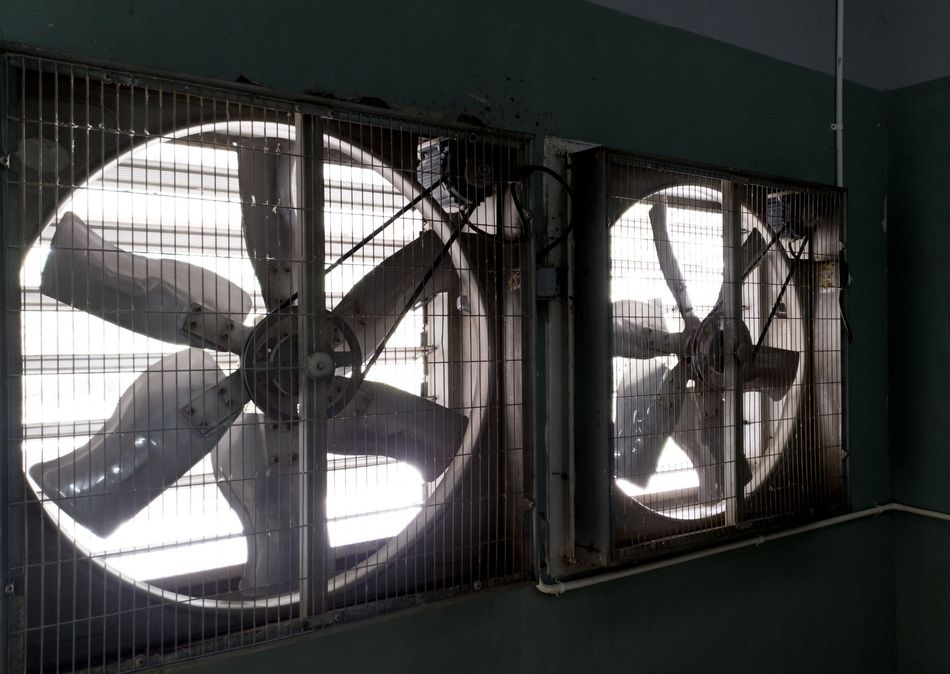
Industrial process fans and heating, ventilation, and air conditioning (HVAC) systems play a critical role in maintaining process stability in demanding industrial environments, such as heat treatment systems, industrial furnaces, and chemical processes. In these applications, fans are not only responsible for moving air or process gases but also often influence temperature distribution, process stability and product quality.
Any unexpected failure or disruption can therefore bring production to a halt, cause significant downtime costs and lead to consequential damage within the process system. In the worst case, it may also negatively affect the batch currently being processed, up to complete scrap. For this reason, early detection of mechanical changes such as increasing vibration, bearing wear, imbalance, or misalignment is highly valuable.
However, implementing continuous monitoring in such applications is often difficult, as fans may be installed in hard-to-reach areas; power supply and cabling can be limited; and integrating an additional IoT monitoring structure into a complex and security-sensitive customer network is often not practical or not acceptable.
Meierling Ventilatoren, a manufacturer of industrial fans for chemical and heat treatment processes, faced a similar challenge. The company decided to deploy autosen minion as part of its product offering to enable condition-based maintenance for its end customers. As the fans operate in harsh environments with high temperatures, vapours, and continuous loads, early fault detection is particularly important.
Meierling had been looking for a compact and autonomous monitoring solution for this purpose and had already developed its own approaches before starting to work with autosen at an early stage of the minion development. As an early application partner, Meierling worked closely with the autosen team to configure a suitable minion setup for industrial fan monitoring and placed an order for the following components:
minion vibration sensor MV001
minion mobile communications gateway MN001
minion battery S ME001
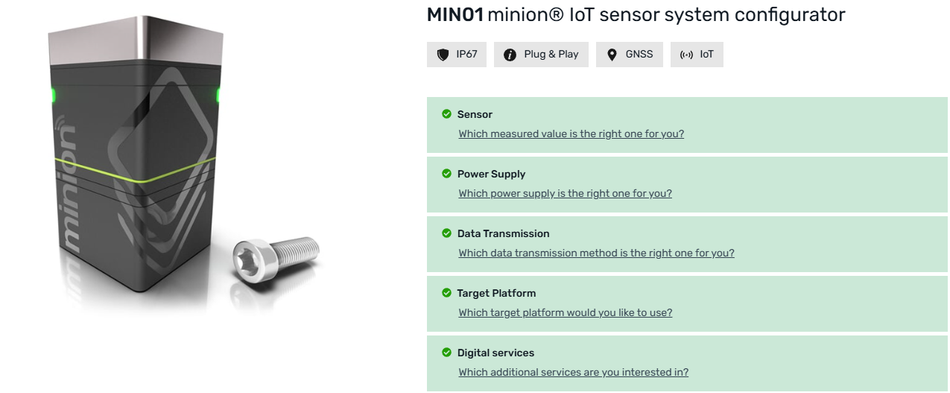
The products were shipped on the same day and reached the customer the very next day. autosen delivers products in a day in Germany, typically within 1-3 days across Europe, and within 2-5 days worldwide via UPS.
The initial setup was quick; the Meierling Ventilatoren team mounted one sensor on each fan unit, and the devices began collecting vibration and temperature data. The data was transmitted securely in an encrypted format via the LTE-M protocol to autosen.cloud, without requiring any connection to the end customer’s IT or production network.
The cloud dashboard displayed measurements in real time. The customer used historical trends and data from multiple fans to establish a baseline behaviour. With support from the autosen team, the Meierling Ventilatoren team configured the alert thresholds to detect any deviation from the baseline behaviour. Issues like imbalance, misalignment, and increased vibration could then trigger an automatic notification to the end customer’s mobile devices.
In practical applications, the system has already helped to detect abnormal vibration patterns in monitored fan units at an early stage, indicating mechanical changes or progressive wear.
As the minion delivered the warning early, the maintenance team performed an inspection and scheduled a controlled shutdown. During the shutdown, the underlying mechanical issue could be identified and addressed before it developed into a critical failure. This early intervention helped the end customer avoid unplanned downtime, reduce repair costs, and prevent operational disruptions.
The data accumulated from the minions provided an insight into how different fans aged under varying loads and environmental conditions. Meierling Ventilatoren uses these insights to support condition-based maintenance concepts, targeted service interventions, and more predictable planning instead of purely time-based maintenance schedules. In the future, this data-driven approach may also support new service models, including extended warranty concepts or tailored service contracts.
The end customer benefited from the predictable maintenance and longer service life of the product and was therefore willing to accept a higher initial purchase price for the fan system.
This case highlights how autosen minion enabled Meierling Ventilatoren to integrate sensing and analytics without relying on the end customer’s IT infrastructure. By bypassing the customer network and avoiding access to production-relevant data, minion removed a major barrier between equipment suppliers and asset owners, allowing suppliers to deliver additional digital services while maintaining high customer acceptance and satisfaction.
Where Minion Fits: Verticals & Use Cases
Many industries face similar challenges when it comes to condition monitoring. Because the autosen minion delivers the same simple deployment experience regardless of the task, it serves as a very accessible tool for collecting data across a wide range of applications and industries.
Manufacturing and Machinery
In manufacturing, the autosen minion enables condition-based maintenance for fans, pumps, motors, and other equipment, as showcased in the case study earlier. By detecting vibration and temperature abnormalities, the minion warns users about changes in the machine's behaviour before there is a critical failure in the system.
Infrastructure and Construction
Minions customised with radar/distance or vibration sensors can monitor moving mechanical elements, cables, or various other structures in the infrastructure and construction industry. Some sample applications include monitoring shocks in structures, monitoring hinge points on gates, or even checking concrete filling in formwork.
One of the customers of autosen connected their own specialised sensor to minion for tension measurement in cables. For applications where more precision is needed, customers can connect their own sensors and get the product ready without developing a complete wireless system from scratch.
Energy and Power
Whether it is monitoring water levels, checking unauthorised access, temperature or oil level monitoring in transformers, checking the position of valves, monitoring humidity inside enclosures, or conditions of mobile battery storage units, minion offers a comprehensive one-size-fits-all approach towards diverse monitoring needs.
Logistics and Mobile Assets
In logistics operations, minions may be attached to high-value and sensitive assets. Users can know if the assets have reached their destination. They can also monitor temperature, humidity, and vibrations to check if they have been carried safely.
Agriculture and Environmental Control
Greenhouses, storage rooms, and agricultural environments demand a strict control of temperature and humidity. With minion, users can ensure compliance with the requirements and set up a system that protects the products.
Conclusion
The autosen minion is an example of the fact that continuous condition monitoring doesn’t have to be complex, infrastructure-heavy, or limited to locations where power and networking facilities are readily available. By combining sensing, connectivity, power, and cloud access, autosen removes the barriers that have slowed IIoT adoption in the past.
Whether it is a rotating machine, remote infrastructure, distributed system, or harsh environment, minion provides a reliable path for data collection and transfer to the cloud with minimal engineering efforts. As a result, businesses gain an edge through early fault detection, better operational visibility, and more efficient maintenance planning.
To learn more or configure a minion system for your application, visit autosen.com/minion, write to info@autosen.com, or request a free demo today.
You can also learn more by stopping by the autosen minion exhibit at all about automation, August 26-27, 2026, in Zurich.
References
- Kim S, Pattanayak S, et al. Magic Quadrant for Global Industrial IoT Platforms. Stamford (CT): Gartner; 2025 Sep 8. Report No.: G00816612. Available from: https://www.cumulocity.com/press-releases/cumulocity-named-a-leader-in-the-gartner-magic-quadrant-for-global-industrial-iot-platforms-2025/