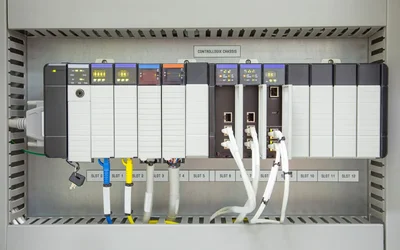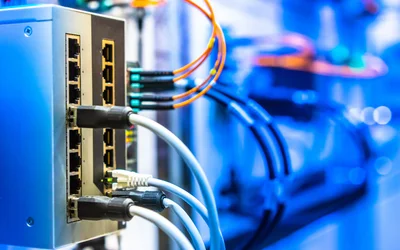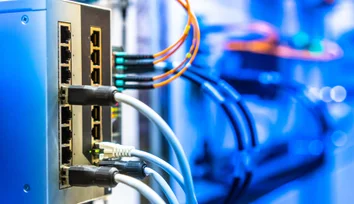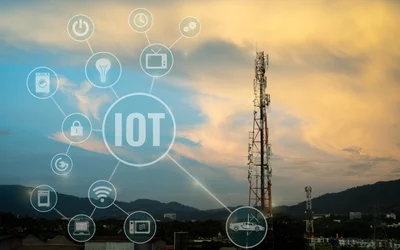
Enterprise IoT is another direction of IoT industry development, which businesses are actively adopting. Embedded technologies for large organizations bring new challenges in terms of connectivity, network stability, and data security.

Ultra-Wideband (UWB) has moved from niche industrial RTLS to mainstream, with easier deployment via enterprise access points and standards. Discover how UWB is transforming asset tracking, logistics, and manufacturing with cost-effective, sub-meter accuracy.
Explore the top 5 use cases of Software-Defined Connectivity (SDC) and learn how SDC reduces costs, improves compliance, and accelerates IoT innovation.
Today almost 30 percent of embedded projects have over 100,000 lines of code, and this increasing complexity is now the number one driver of project delays, and the reason 60 percent of an embedded development project's cost is software.
Integrating Non-Terrestrial Networks (NTN) with cellular IoT delivers seamless global connectivity, powered by the nRF9151 module for hybrid GEO, LEO, and terrestrial communication.
While we live in an increasingly tech-focused world, we still face many of the same dangers and threats to our personal safety that we did centuries ago. How can we turn our technology to help mitigate those dangers?
For the length of human history, technology has played an important role in preventing theft. Before car keys, Henry Ford had to chain his car to a lamppost to avoid anyone with the strength to turn a physical crank from stealing it.
The collaborative nature of open source projects brings together people across the world to work towards improving and monitoring our natural resources.
If devices lasted longer and were easier to fix, they could provide many years of good service before recycling. That saves precious materials and the energy needed to manufacture new products.
Computer vision brings an 80% reduction in illegal dumping. IoT surveillance company iDefigo partners with Matroid to apply AI-based computer vision for illegal trash dumping detection.
Into the future, more transport companies may start to integrate wastewater monitoring systems to manage these key facilities effectively. But this opportunity isn’t only limited to transport – any water monitoring capabilities can help reduce waste, and save energy, time and resources.
Building automation solutions can help reduce a building’s carbon footprint, optimize energy consumption, improve maintenance scheduling, make better use of available space, and reduce waste and operating costs.
Increasing the range of a wireless product is an advantage for virtually every application. Consider, say, a large warehouse with a Bluetooth mesh network to track the location of valuable items.
This article describes the TAeTTOOz printable battery technology developed by Evonik and acquired by InnovationLab for upscaling and mass production. In this article, you can learn about the operating principles, the key working characteristics, the material set, production techniques, and emerging applications of this technology