Featured
A guide to resources related to the Nordic Semiconductor nRF9160 Development Kit and Soracom connectivity to help you launch your Connect For Good Low Power Wireless Sustainability Challenge submission.
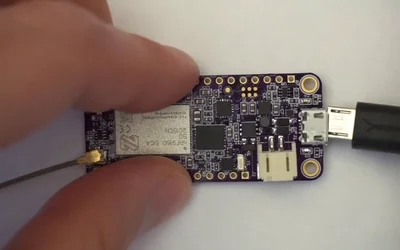
A guide to resources related to the Nordic Semiconductor nRF9160 Development Kit and Soracom connectivity to help you launch your Connect For Good Low Power Wireless Sustainability Challenge submission.
A guide to resources related to the Nordic Semiconductor nRF9160 Development Kit and Soracom connectivity to help you launch your Connect For Good Low Power Wireless Sustainability Challenge submission.
The Modbus TCP/IP protocol was introduced by Modicon (now Schneider Electric) in 1999. Developed as an extension of the Modbus serial protocol to enable communication over TCP/IP networks, its purpose was to leverage the widespread adoption of Ethernet in industrial environments. The robustness, simplicity, and wide compatibility have made Modbus TCP/IP the go-to choice for countless industrial applications in the current scenario.
Ring topology is one of the early implementations in the world of computer networking. Its simplicity in transmission, fair access control for modes, sequential data management, and other concepts continue to influence the evolution and designs of modern computer science.
Exploring the design, development, connectivity, security, and more aspects of IoT devices
18 minutes read.
21 minutes read.
20 minutes read.
17 minutes read.
25 minutes read.
28 minutes read.

Electronics
Mouser Electronics is a worldwide leading authorized distributor of semiconductors and electronic components.
219 Posts
Semiconductors
Nordic Semiconductor is a fabless semiconductor company specializing in wir...
181 Posts
What a programmable automation controller is, how PACs are built and programmed, and how to choose between a PLC and a PAC.
Explore how low-power sensor gateways enable reliable, long-range data collection for remote and distributed industrial IoT assets.
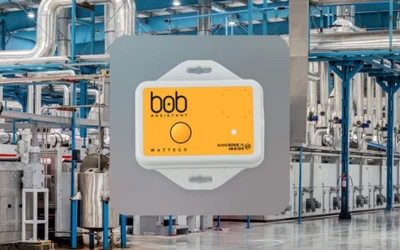
A compact, battery-powered sensing platform that wirelessly brings environmental and equipment-condition data from locations where traditional monitoring is difficult or impossible.
A Cat 1 bis platform that provides engineers with a practical path for long-term Global connectivity.
Real-time water monitoring and leak detection just got streamlined thanks to the nRF9151 – Nordic's low-power cellular IoT solution
A Cat 1 bis platform that provides engineers with a practical path for long-term Global connectivity.
The G+D Single Pane of Glass Delivers Secure, Remote, SGP.32-Driven IoT Management
As AI moves from screens into real environments, reliable and always-on connectivity are becoming a safety and scale requirement.
A guide to resources related to the Nordic Semiconductor nRF9160 Development Kit and Soracom connectivity to help you launch your Connect For Good Low Power Wireless Sustainability Challenge submission.
The Modbus TCP/IP protocol was introduced by Modicon (now Schneider Electric) in 1999. Developed as an extension of the Modbus serial protocol to enable communication over TCP/IP networks, its purpose was to leverage the widespread adoption of Ethernet in industrial environments. The robustness, simplicity, and wide compatibility have made Modbus TCP/IP the go-to choice for countless industrial applications in the current scenario.
Ring topology is one of the early implementations in the world of computer networking. Its simplicity in transmission, fair access control for modes, sequential data management, and other concepts continue to influence the evolution and designs of modern computer science.
Discover the intricacies of cybersecurity operations as we delve into the intricacies of Red Team vs. Blue Team, a comprehensive understanding of their roles, methodologies, and practical applications in the field of cybersecurity.
Batteries are essential for billions of IoT products worldwide, and demand looks set to grow. The global Li-ion battery market was estimated to be worth over $40 billion in 2020 and is expected to increase to more than ten times this amount by 2030 according to analyst Statista.

4 minutes read
Automated Guided Vehicles (AGV) Have Evolved into Smart Autonomous Mobile Robots (AMR) and Are Improving the Efficiency of Operations in Factories

5 minutes read
Mesh topology is the most used network topology, as all computer networks are connected. Each computer sends signals and relays the data from other computer networks. The dedicated link transmits information from one node to another and connects all the nodes.
When deciding if cellular connectivity or LoRaWAN is right for your IoT project, it helps to start with the use case and work backward to the tech. This guide will give you what you need to know to do just that.

9 minutes read
Today, billions of people benefit from GNSS daily, whether navigating at sea, surveying, mapping, farming, guiding heavy machinery or performing thousands of other tasks. GNSS is also now providing a foundation for many IoT applications in the logistics and transportation sectors.
4 minutes read
A washable wearable biometric device using printed electronics technology provides real-time data for telemedicine. Integrated into a sleeve, the sensors monitor muscle activity. The data, transmitted to an online platform, facilitates remote health monitoring.

5 minutes read
Automating the food supply is key to securing future food supply chains.
Machine reliability is managed by understanding machine data in a process known as predictive maintenance. In this article, we look at how the BoB Assistant proactively monitors an air circulation vent with the help of the akenza platform.

3 minutes read
Spectra is the IoT conference for Particle’s connected ecosystems. From enterprise customers, partners, and advocates, to builders, developers, and users, Spectra is your opportunity to learn and discuss IoT market trends, industry opportunities, and challenges.
Ski navigation devices using Bluetooth LE wireless connectivity to relay data to smartphone apps to provide turn-by-turn audio navigation, start-and-end point navigation, and tailored routes based on ability are becoming increasingly available.
4 minutes read
Single Board Computers are radically improving indoor agriculture by optimizing environmental conditions, enabling IoT applications, and integrating AI for sustainable, efficient farming.