Featured
DECT NR+ (NR+) is a wireless connectivity standard and the world's first operator-free 5G technology specifically engineered from the ground up to address the previously unmet needs of the industrial IoT.
DECT NR+ (NR+) is a wireless connectivity standard and the world's first operator-free 5G technology specifically engineered from the ground up to address the previously unmet needs of the industrial IoT.
DECT NR+ (NR+) is a wireless connectivity standard and the world's first operator-free 5G technology specifically engineered from the ground up to address the previously unmet needs of the industrial IoT.
The Internet of Things (IoT) is revolutionizing industries through connectivity and automation, but underestimated battery life costs can significantly inflate the total cost of ownership (TCO) over time.
Efficient antenna technology is critical for IoT, smart metering, and industrial connectivity. This article explores how omnidirectional antennas are now in demand to simplify designs and enhance performance.
Exploring the design, development, connectivity, security, and more aspects of IoT devices
18 minutes read.
21 minutes read.
20 minutes read.
17 minutes read.
25 minutes read.
28 minutes read.

Electronics
Mouser Electronics is a worldwide leading authorized distributor of semiconductors and electronic components.
219 Posts
Semiconductors
Nordic Semiconductor is a fabless semiconductor company specializing in wir...
181 Posts
What a programmable automation controller is, how PACs are built and programmed, and how to choose between a PLC and a PAC.
Explore how low-power sensor gateways enable reliable, long-range data collection for remote and distributed industrial IoT assets.
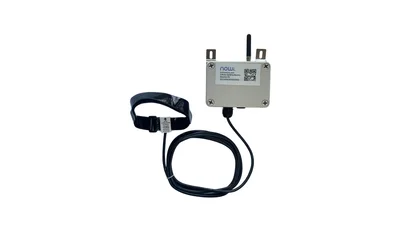
A compact, battery-powered sensing platform that wirelessly brings environmental and equipment-condition data from locations where traditional monitoring is difficult or impossible.
A Cat 1 bis platform that provides engineers with a practical path for long-term Global connectivity.
Real-time water monitoring and leak detection just got streamlined thanks to the nRF9151 – Nordic's low-power cellular IoT solution
A Cat 1 bis platform that provides engineers with a practical path for long-term Global connectivity.
The G+D Single Pane of Glass Delivers Secure, Remote, SGP.32-Driven IoT Management
As AI moves from screens into real environments, reliable and always-on connectivity are becoming a safety and scale requirement.
DECT NR+ (NR+) is a wireless connectivity standard and the world's first operator-free 5G technology specifically engineered from the ground up to address the previously unmet needs of the industrial IoT.

3 minutes read
The Internet of Things (IoT) is revolutionizing industries through connectivity and automation, but underestimated battery life costs can significantly inflate the total cost of ownership (TCO) over time.

4 minutes read
Efficient antenna technology is critical for IoT, smart metering, and industrial connectivity. This article explores how omnidirectional antennas are now in demand to simplify designs and enhance performance.
This article delves into the essentials of ICS, exploring the key types of industrial control systems, cutting-edge innovations, real-world applications and their critical analysis.
Many IoT devices are battery-powered and one of the most important operating parameters is how long those batteries last in normal service. Maximizing battery life improves the user experience, lowers maintenance costs, and reduces wastage.
4 minutes read
Key Considerations for Selecting Satellite Sensors: Types, Performance, Environment, and Integration
The Internet of Things (IoT) is revolutionizing how businesses operate, connecting billions of devices for smarter, faster decisions. However, scaling IoT solutions demands more than plugging devices into a network; it requires mastering IoT connectivity architectures. Let’s unleash its potential.
In order to promote the development of the global embodied AI industry, the Unitree G1 robot operation data set is open sourced, adapted to a variety of open source solutions, and continuously updated.

Edge AI Technology Report: Generative AI Edition Chapter 2. Generative AI and edge computing are transforming industries by enabling low-latency, real-time AI on edge devices, allowing efficient, private, and personalized applications without reliance on data centers.
Small and medium-sized enterprises (SMEs) hold a greater share of business in the manufacturing industry than most people realise. However, they may find it harder to keep up with the technological developments of Industry 4.0.
This article explores the principles behind optical encoders, their types, and their advantages, highlighting how they enhance performance, ensure accuracy, and meet demanding standards in complex control environments.
Industry 5.0 envisions a future where machines adapt to workers’ needs, integrating seamlessly into human workflows. In this new era, digital manufacturing systems will focus on sustainability and social impact alongside efficiency and cost-effectiveness.
Making your prototype from the same materials using the same manufacturing processes and facilities as your final product ensures accurate testing and better final results. This article also outlines other best practices.

7 minutes read
In a world where software drives innovation, why are we still fixated on hardware in IoT?

4 minutes read
Industrial process automation is changing manufacturing by using technology to reduce the need for human involvement. From robots assembling products to smart systems managing inventory, factories are being transformed. This article will explore the successful elements behind industrial automation.