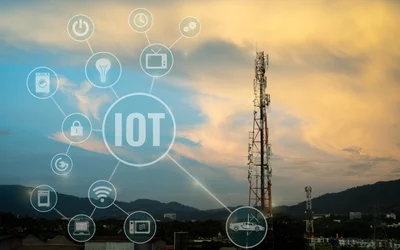
Enterprise IoT is another direction of IoT industry development, which businesses are actively adopting. Embedded technologies for large organizations bring new challenges in terms of connectivity, network stability, and data security.
Ultra-Wideband (UWB) has moved from niche industrial RTLS to mainstream, with easier deployment via enterprise access points and standards. Discover how UWB is transforming asset tracking, logistics, and manufacturing with cost-effective, sub-meter accuracy.
Explore the top 5 use cases of Software-Defined Connectivity (SDC) and learn how SDC reduces costs, improves compliance, and accelerates IoT innovation.
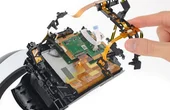
Today almost 30 percent of embedded projects have over 100,000 lines of code, and this increasing complexity is now the number one driver of project delays, and the reason 60 percent of an embedded development project's cost is software.
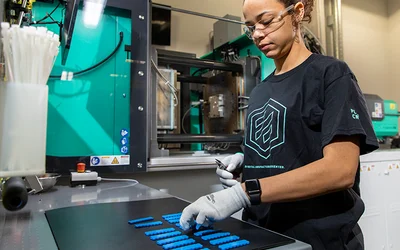
Integrating Non-Terrestrial Networks (NTN) with cellular IoT delivers seamless global connectivity, powered by the nRF9151 module for hybrid GEO, LEO, and terrestrial communication.
The coming years will see a surge in Edge AI advancements, driven by real-time, efficient, and privacy-focused AI applications, alongside innovations in Wi-Fi and IoT, marking a promising future shaped by researchers, industry leaders, and open-source contributions.
Discover how the AI-powered Tiny Code Reader by Useful Sensors revolutionises data input and verification tasks, offering unparalleled efficiency and accuracy. Explore the benefits for businesses and developers in integrating this cutting-edge technology into their operations.
The global transition to electrified personal transport is gaining momentum, with consumer electric vehicles (EVs) leading the way. According to the International Energy Agency (IEA), EV sales exceeded 10 million units in 2022.
Choosing the appropriate battery for IoT devices is critical to ensure optimal performance and longevity. There are several factors to consider when selecting a battery that aligns with the specific requirements of the application, allowing for reliable and long-lasting power supply.
In the ever-evolving landscape of agriculture, the integration of technology has proven to be a game-changer. One of the most transformative advancements in recent years is the widespread adoption of the Internet of Things (IoT).
A smart factory is a factory that achieves operational process improvements, higher quality, and lower costs based on digital data by connecting processes from design to development, manufacturing, and maintenance in a network.
In the future, the IoT will become ubiquitous with billions or even trillions of ‘things’ connected to the Cloud. These things aren’t just the PCs, servers, smart TVs, and smartphones traditionally associated with the Internet, they’re also small sensors and actuators
The Internet of Things, with its vision of linking all aspects to a global network, is currently in the process of radically reshaping our everyday experiences across various domains.
LPWA is an abbreviation for Low-Power Wide-Area. It is also referred to as Low-Power Wide-Area Network (LPWAN). LPWA is wireless communication technology that features low power consumption and wide-area and long-distance communication.