CES 2026: How Physical AI Is Redefining Mobile and Why eSIM Matters
As AI moves from screens into real environments, reliable and always-on connectivity are becoming essential for operations and achieving scale.

16 Feb, 2026. 5 minutes read
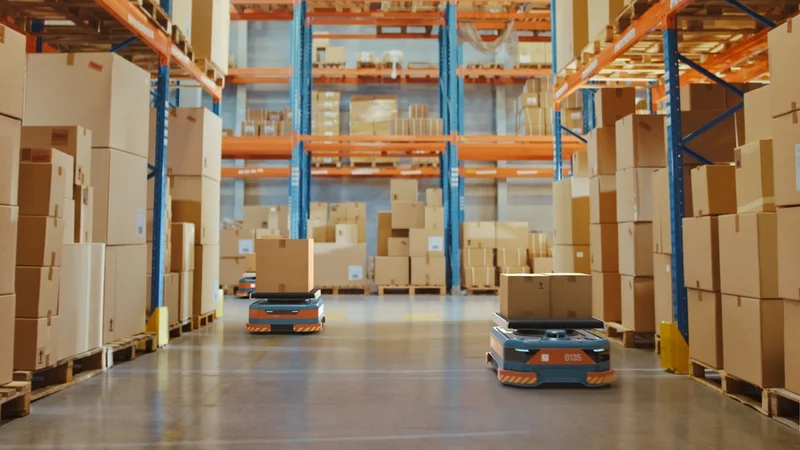
CES 2026 highlighted a shift in the perception of mobile. It is no longer just a smartphone in your pocket; mobile now represents an ecosystem of connected devices that includes robots, wearables, extended reality, and vehicles that operate in real-world scenarios.
One of the most visible examples of this shift was NVIDIA’s announcement of the Isaac GR00T platform for humanoid robots.1 Additionally, companies such as Hyundai and Boston Dynamics demonstrated the updated Atlas humanoid, with plans to deploy it in manufacturing plants by 2028.2 Similarly, LG showcased the CLOiD robot, a seven-axis arm device designed for household chores.3 Further, there were connected AR glasses with AI, Samsung AI Food Manager and AI Wine manager, dual-layer AI matter for better sleep 4 - all of which were akin to ‘edge or IoT’ products previously. The trend highlights how AI is pairing digital intelligence with physical action.5
Understanding Physical AI and its Requirements
To operate effectively in dynamic environments, these systems rely on physical AI. It generally involves the combination of AI models with sensors and actuators that enable robots or vehicles to act upon real-world environments.6 For instance, in autonomous vehicles, physical AI uses cameras, lidar sensors, and AI mapping to adapt to traffic and weather for navigation.
For contextual awareness, which includes location, motion, and environmental conditions, AI systems require a continuous stream of sensor data. This contextual awareness must be maintained in real time to ensure safe and predictable behaviour.
To put this in perspective, a single autonomous mobile robot (AMR) or vehicle can generate upwards of 4 terabytes of data per day when high-resolution cameras, lidar, and telemetry are combined.7 In the absence of reliable connectivity, AI models end up operating on outdated data, which may lead to performance issues and safety risks.
Always-On Connectivity is Not Optional
The stakes are significantly higher when AI systems are physical. For instance, in a purely digital setting, a GPT model with outdated data might lead to errors in your article or presentation. In contrast, when AI is controlling a vehicle or robotic arm, lost connectivity can lead to delayed data, equipment damage or production downtime.
This is why physical AI systems cannot rely on best effort connectivity. In real world deployments, even brief connection losses can compromise situational awareness, delay critical updates, and create blind spots across deployed IoT device fleets, making always on cellular connectivity essential for continuous monitoring, timely updates, and effective incident response.
The 2024 Autopilot-related incidents involving Tesla serve as a reminder of how delayed sensor fusion can escalate into real-world risks.8

The Role of Edge AI
The industry standard for safe latency is under 10 milliseconds9, while a typical cloud round trip could average 60–100 ms. Edge AI addresses this gap by processing data locally, enabling immediate response and a more fluid, responsive user experience.
Edge AI is making intelligence more responsive by moving it closer to the user. It enables devices to process some data locally without constantly sending it to a remote cloud server. This improves privacy by design while allowing systems to adapt to individual users and environments for greater personalisation
For instance, at CES 2026 ARM-powered wearables demonstrated real-time health monitoring, reducing cloud dependency.10
That said, the connection to the cloud is still critical. It is just that its role has evolved. For example, if a person steps in front of an industrial robot, the edge AI will stop the robot immediately for the safety of the person. The connected cloud server, on the other hand, will process the incident data across the fleet and train the models to better recognize and avoid similar situations in the future.
The cloud becomes the layer for fleet level visibility and model training. Critical reactions happen at the edge, while insights learned across deployments continuously improve system performance over time.
How eSIM moves control to the OEMs
With fleets of physical AI devices on the rise, secure management of connectivity becomes more critical than ever. In traditional SIM models, control mostly lies with network operators. IoT devices are often locked to a single carrier or a single region. This is not an ideal situation for OEMs deploying robots or vehicles across multiple countries.
The eSIM technology changes this dynamic by moving control from network operators to device makers. Earlier, changing a network operator for a fleet of vehicles or robots used to be a time intensive task, as it involved downtime to physically swap SIMs. With integrated eSIM solutions, OEMs can switch operators with minimal friction.
Clearing the Confusion Around eSIM
In the connected IoT device, there is often confusion regarding eSIM. It is not a carrier plan in itself. eSIM, as its name suggests, is a digital SIM that replaces the traditional removable SIM card with a programmable version. The difference is not what network you use, but how connectivity is managed across devices over their entire lifecycle. Industrial robots and eSIM-enabled devices remain operational for decades.
Over the period of time, changes in factors such as network, pricing, and performance may prompt OEMs to switch network operators. eSIM makes this transition easy by allowing users to securely download and activate network operator profiles. This capability also enables IFPP (in-factory profile provisioning) based on the region and requirements.11 OEMs get the option of securely injecting mobile network profiles at the manufacturing stage. They can ship their products to different destinations network settings pre-configured for optimum coverage. As a result, manufacturers can reduce logistical complexity with one global SKU.
Achieving Interoperability and scale
Unlike the consumer eSIM standard SGP.22 that relies on complex SMS-based triggers, the latest SGP.32 standard is purpose-built for IoT. It offers eIM (eSIM IoT Remote Manager), which allows for zero-touch provisioning of thousands of devices at once. It also supports iFPP (In-Factory Profile Provisioning), enabling profiles to be flashed during manufacturing.
Since SGP.32 is a standard from the GSMA (Global System for Mobile Communications Association), chipmakers and network providers are all building interoperable and compatible solutions.12 This reduces the risk for OEMs of investing in a proprietary technology that might disappear down the line.
“SGP.32 stands on three pillars: security, simplicity, and interoperability. The standard itself, through rigorous specification and testing requirements, and the newly defined eSIM remote IoT Manager and eUICC have security built in through end-to-end protection. Simplicity is achieved by absorbing complexity into the eIM while keeping device integration straightforward, and so that it can address the widest range of AI-capable devices. But interoperability, perhaps the most transformative promise of SGP.32, is up to the entire IoT ecosystem.” – Said Gharout, Head of Standards at Kigen and Chair of GSMA eSIM working group that defined the SGP.32 IoT eSIM standard.
Conclusion
If you’re building physical AI, connectivity cannot be an afterthought. Treating it as a secondary concern leads to products constrained by single operators, limited regional flexibility and rising operational cost over time. New eSIM standards, such as GSMA SGP.32, shift connectivity upstream in the product lifecycle, enabling it to be designed in from the outset rather than bolted on after deployment.
By defining connectivity strategy early, teams can manage network profiles over the air, select local operators as devices move across regions, and support global deployment without increasing total cost of ownership. For physical AI systems that depend on continuous monitoring, updates, and safety controls, this approach delivers long-term resilience and control. With SGP.32 enabled tooling and in factory profile provisioning, connectivity is aligned with product vision from day one.
To dive deeper into how OEMs can build resilient, scalable connectivity strategies for physical AI, explore the ABI Research report, developed in collaboration with Kigen.
References
4. https://www.telecoms.com/ai/ces-2026-roundup-the-tech-the-gadgets-and-the-odd-stuff
5. https://www.forbes.com/sites/ronschmelzer/2026/01/10/physical-ai-made-waves-at-ces-2026-what-is-it/
6. https://www.ibm.com/think/topics/physical-ai
8. https://www.usatoday.com/story/money/legal/2025/06/24/tesla-lawsuit-autopilot-crash/84336338007/
10. https://www.arm.com/markets/consumer-technologies/wearables
11. https://kigen.com/resources/white-papers/ifpp/
12. https://www.gsma.com/solutions-and-impact/technologies/esim/gsma_resources/sgp-32