Featured
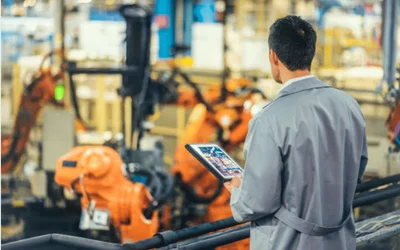
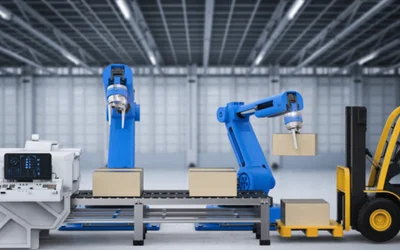
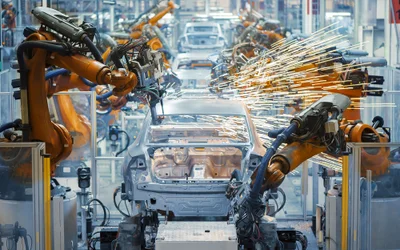
Lights-out manufacturing refers to the manufacturing methodology where factories are fully-automated. While true lights-out factories are still rare today, manufacturers can look to companies like FANUC, in Japan, for inspiration.
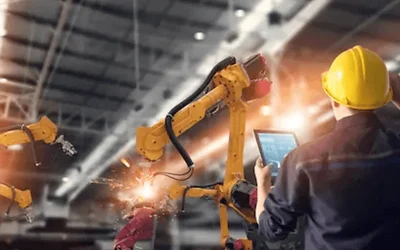
Lights-out manufacturing refers to the manufacturing methodology where factories are fully-automated. While true lights-out factories are still rare today, manufacturers can look to companies like FANUC, in Japan, for inspiration.
Lights-out manufacturing refers to the manufacturing methodology where factories are fully-automated. While true lights-out factories are still rare today, manufacturers can look to companies like FANUC, in Japan, for inspiration.
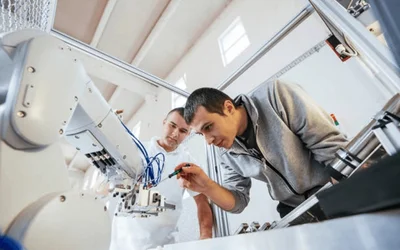
Many manufacturers are struggling to find skilled labor for their manufacturing plants? According to the Society of Manufacturing Engineers, 89% of manufacturers are having difficulty finding skilled workers in the United States today.
The switch to automation does require an investment in new technology, and it’s important to evaluate the status of your business before you embark on an investment that may fundamentally change the way your factory operates.
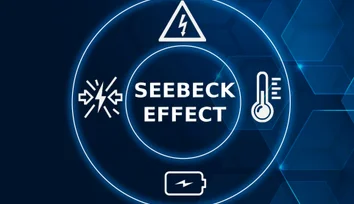
The Seebeck effect converts a temperature difference across a conductor or junction of two materials into a voltage. This article reviews the physics, Seebeck coefficients, thermoelectric materials, figure of merit, thermocouples, and generator design.

Semiconductors
Nordic Semiconductor is a fabless semiconductor company specializing in wireless technology that powers the IoT.
181 Posts

Robotics & Automation
READY Robotics is a robotics software company that vastly simplifies robot ...
24 Posts

Automation Machinery Manufacturing
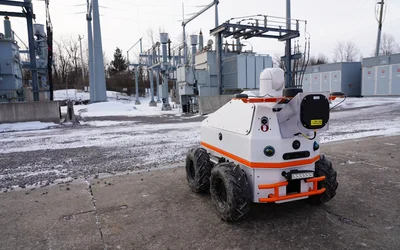
DEEPRobotics Technology Co., Ltd; leading the quadruped robots industrial a...
6 Posts
ZenCell by PriscoZen leverages the Arduino® UNO™ Q dual architecture to replace two boards with one.
Perceived Barriers and Strategic Solutions for Implementation
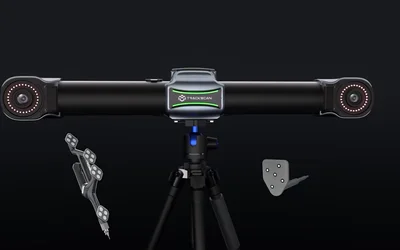
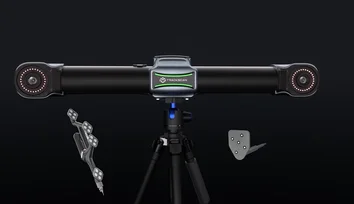
SCANOLOGY's 6D Pose Tracking System transforms industrial robots into high-precision experts, enabling rapid calibration, real-time pose compensation, and accurate positioning—boosting efficiency, product quality, and reliability in advanced manufacturing environments.
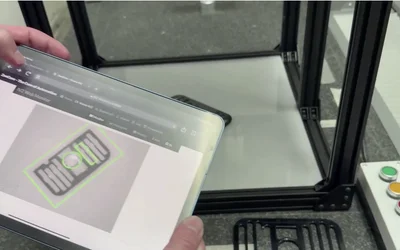
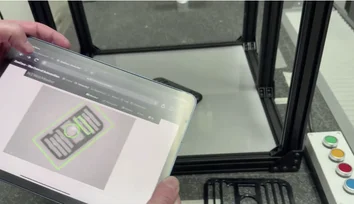
Scanology AM-DESK and Elite Robots deliver a plug-and-play automated 3D inspection solution, combining precision, flexibility, and speed to transform quality control for modern manufacturing and empower truly smart, data-driven factories.
The Seebeck effect converts a temperature difference across a conductor or junction of two materials into a voltage. This article reviews the physics, Seebeck coefficients, thermoelectric materials, figure of merit, thermocouples, and generator design.
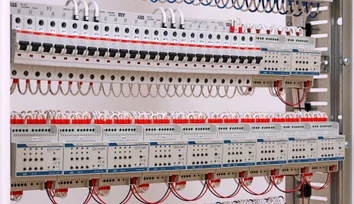
Today's world is dominated by technology that uses either digital or analogue I/O modules to convert physical signals into digital format and vice versa. I/O modules, or input/output modules, are a mechanism by which information is communicated in electronic systems.
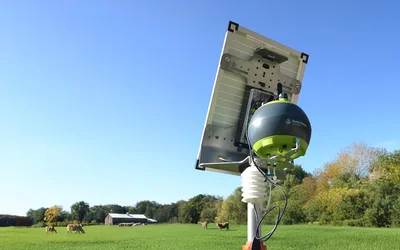
IAQ monitoring includes tracking PM, VOCs, NOx, CO₂, RH/T, and more. Sensirion's SEN6x, available through Mouser Electronics, integrates these sensing needs into a single module, reducing system complexity while enabling scalable, compliance-ready solutions.
Learn how compact methane sensors use TDLAS, 1.6 µm detection, and InGaAs photodiodes to deliver stable, repeatable sub-ppm CH₄ measurements in industrial environments.
Lights-out manufacturing refers to the manufacturing methodology where factories are fully-automated. While true lights-out factories are still rare today, manufacturers can look to companies like FANUC, in Japan, for inspiration.

3 minutes read
Many manufacturers are struggling to find skilled labor for their manufacturing plants? According to the Society of Manufacturing Engineers, 89% of manufacturers are having difficulty finding skilled workers in the United States today.
4 minutes read
The switch to automation does require an investment in new technology, and it’s important to evaluate the status of your business before you embark on an investment that may fundamentally change the way your factory operates.
5 minutes read
More manufacturers than ever before are turning to automation to remain competitive in the global marketplace. Small businesses and large companies alike are now increasingly relying on robotic automation to free human laborers of repetitive tasks and boost productivity.
5 minutes read
The fourth industrial revolution has the potential to fundamentally transform the way humans and machines work today. Will it lead to an improvement in the quality of life? Or will it be a cause of widespread job losses and unrest?
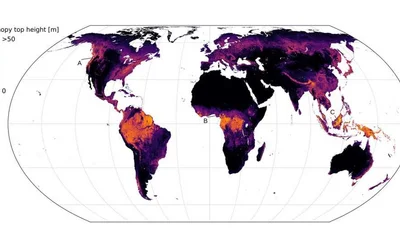
Using an artificial neural network, researchers at ETH Zurich have created the first high-resolution global vegetation height map for 2020 from satellite images.

5 minutes read
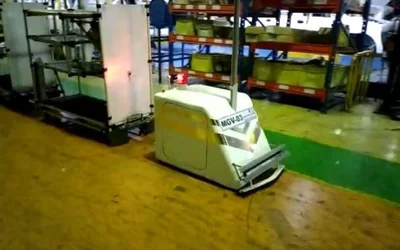
The MGV (Mechanical Guidance Vehicle) device is a self-controlling device without a driver. The guidance system of this device is mechanical, without a driver. Rough surfaces, which are one of the limitations of the AGV (Automated Guided Vehicle) device, do not exist for this device.
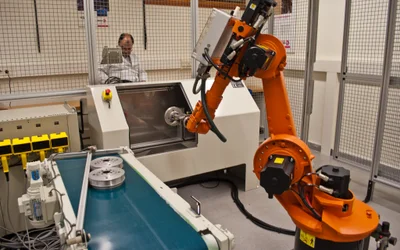
Parts presentation isn’t always the easiest automation problem to solve but it can be one of the most important in determining the level of automation you can add to a production line.
4 minutes read
based on Xsens MTi-3

4 minutes read
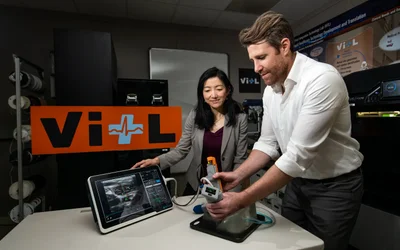
In this episode, we talk about how a group at MIT has developed an easy-to-use handheld device to treat internal bleeding and a joint effort between MIT and Imperial College London which resulted in a marine mammal call sensor that can leverage machine learning models locally

Designed to bring machine learning to the Earth's last great frontier, a prototype smart sensor platform users on-device inference to classify marine mammal calls — powering itself exclusively from the sounds it captures.
In this episode, we talk about how UAVs are being deployed to control destructive pigeon populations and to study bottlenose dolphin populations.
Article #6 of Connectivity and Sensing in Harsh Environments series: Heat shrink accessories offer a convenient way to protect elements of electrical power systems in harsh environments.
Article #5 of Connectivity and Sensing in Harsh Environments Series: Protecting sensors without affecting their performance is a challenge when designing sensors for harsh and corrosive environments.
Article #4 of Connectivity and Sensing in Harsh Environments Series: Cars, Construction Equipment, Trucks, Buses, Airplanes, Trains, and other vehicles require connectors that withstand vibrations, shocks, humidity, dust, and other unfavorable conditions to perform reliably.