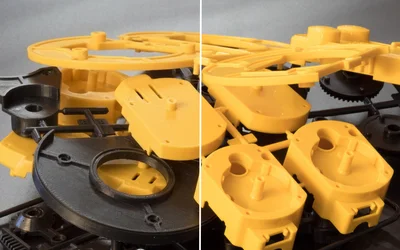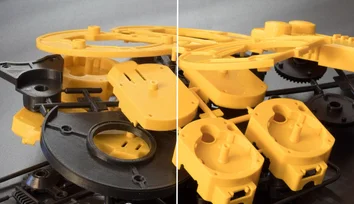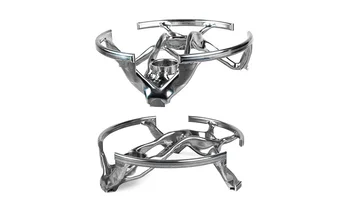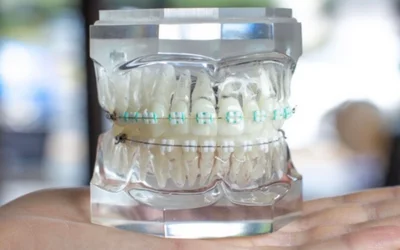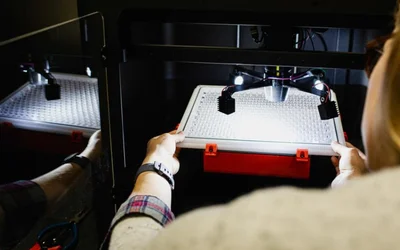
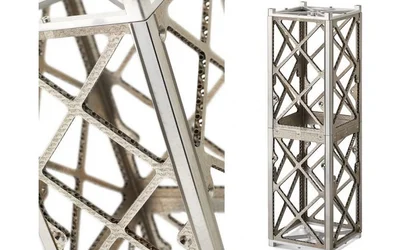
At first glance the parts that SLS and MJF produce may seem similar, but a closer look reveals there are some key differences that may sway you to using one over the other.
A revolutionary new training aid that aims to reduce injury and improve performance for boxers during bag and pad work is being exported all over the world, including to the training camp of US superstar boxer Gervonta ‘Tank’ Davis, protégé of the legend that is Floyd Mayweather.
"MechStyle" allows users to personalize 3D models, while ensuring they're physically viable after fabrication, producing unique personal items and assistive technology.

A new method could enable users to design portable medical devices, like a splint, that can be rapidly converted from flat panels to a 3D object without any tools.
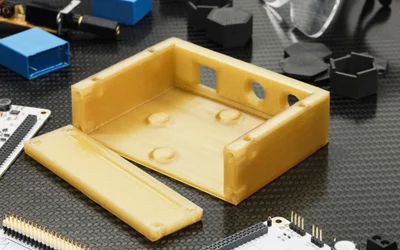
A deep dive into the physics, properties, and practical applications of 3D printing filaments, from everyday polylactic acid to performance composites.
Discover how to print with high-performance filaments like PEEK, PEKK, and ULTEM. Learn about their properties, hardware needs, challenges, and best practices for industrial-grade 3D printing.
Explore how 3D-Fuel's Pro PCTG filament advances additive manufacturing, offering higher impact strength, improved environmental resistance, and reliable printability for functional and industrial 3D printing applications.
3devo's next-generation desktop extruder combines industrial precision with lab-scale simplicity enabling more controlled, higher-performance and data-driven 3D printing material workflows.
At first glance the parts that SLS and MJF produce may seem similar, but a closer look reveals there are some key differences that may sway you to using one over the other.
A revolutionary new training aid that aims to reduce injury and improve performance for boxers during bag and pad work is being exported all over the world, including to the training camp of US superstar boxer Gervonta ‘Tank’ Davis, protégé of the legend that is Floyd Mayweather.
When talking about industries that use 3D printing you probably don't expect to hear fashion and jewellery. These industries are increasingly turning to 3D printing due to its ability to produce fine details, iterate designs quickly and display quality finishes.
Determined to build the world’s most powerful two-stroke engine, Protolabs is giving this self-proclaimed “normal guy with an obsession with two-stroke engines” a helping hand.
The founding mission of polySpectra is straightforward: to create engineering-grade materials for additive manufacturing that help designers, inventors, and engineers make their ideas real.
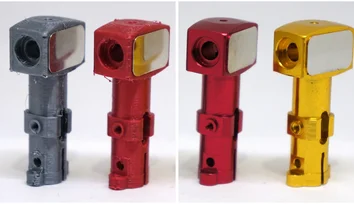
Thorlabs reduced the time to market for its new motorised polarisation controller by several months using Protolabs design analysis, prototyping and on demand manufacturing for its outsourced parts.
As much as we’d like to think that our first ideas are always the best, that isn’t always the case. Making changes to your design is an incredibly important concept and one that is sometimes easy for us all to forget.
The tools created from the collaboration between Stratasys and nTopology enable manufacturers to generate and 3D print custom fixtures with just a couple of clicks.
In this episode, we talk about a research from Penn State that has proven the concept of printing tissue during surgery, a joint effort between MIT & Harvard to develop a hair brushing robot, and a breakthrough in anode free and sodium based batteries coming out of Washington University in St. Louis
Andy Gleadall, Lecturer at Loughborough University develops FullControl GCode Designer in the hope to empower people to do the impossible with scripts and slicers.
This article shares an example of using nTopology to optimize a part and export it as a CAD body, then using Abaqus to calculate the stress intensity factor of cracks that develop perpendicular to the highest tensile principal stress.
PETG vs PLA is a question asked by many newcomers to FFF 3D printing, with both materials offering important benefits. Choosing between them often comes down to the requirements of the project.
In 3D printing, a material’s flexibility refers to how much it will bend when load or force is applied – as well as its ability to return to its original shape after bending. Flexibility is often defined as the flexural modulus (MPa).