Featuredcase study
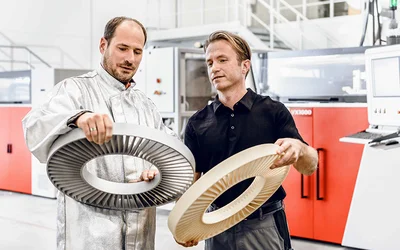
The direct, additive production of metals is gaining more and more market share but with binder jetting 3D printing process, foundries can stay competitive
This Report shows how tools like artificial intelligence, digital twins, and on-demand manufacturing are no longer emerging concepts, but are already delivering measurable impact across the product lifecycle.
The direct, additive production of metals is gaining more and more market share but with binder jetting 3D printing process, foundries can stay competitive
Additive manufacturing, CNC machining, and other technologies are rapidly evolving. Now, massive parts measuring more than 10 meters are becoming commonplace.
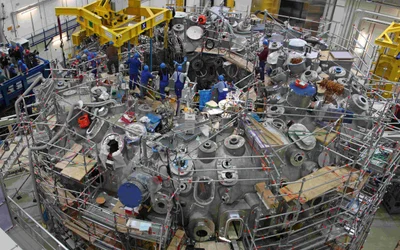
FACTUREE supplies components for fusion research facility at the Max Planck Institute for Plasma Physics
An engineer’s guide to understanding the state of the art in metal 3D Printing
15 minutes read.
22 minutes read.
11 minutes read.
18 minutes read.
12 minutes read.
16 minutes read.


Entertainment
The Next Byte Podcast is hosted by two young engineers - Daniel and Farbod - who select the most interesting tech/engineering cont...
165 Posts
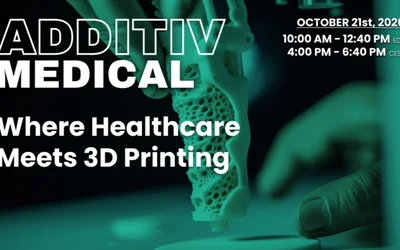
ADDITIV Medical 2026 will bring together more than 500 medical professionals
Choosing between 3D printing and injection molding is one of the key decisions in product development—especially in case of prototyping.
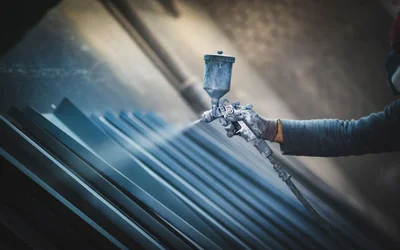
Explore how the right finishes and coatings can improve aerospace parts by boosting durability, extending service life, enhancing environmental resistance, and delivering the performance and appearance required for demanding applications.
The choice between 3D printing and CNC machining is the most common decision regarding manufacturing methods that must be made before placing the first order for prototypes. The correct answer depends on tolerance requirements, material specifications, component geometry, and schedule.
Discover how iAM Marketplace simplifies industrial additive manufacturing by unifying materials, validation services, and multi-brand technologies into one open ecosystem for efficient AM sourcing.
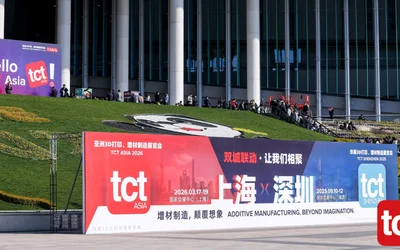
This article discusses what attendees can expect from TCT Asia 2026, including its conference format, focus areas, and the experts contributing to industry-specific discussions.
This article discusses the exhibitors, products, and industrial trends defining additive manufacturing across the Asia-Pacific region at TCT Asia 2026.
This article discusses how the Asia-Pacific region is advancing additive manufacturing and the role of TCT Asia as the leading 3D printing and additive manufacturing event in the Asia-Pacific.
The direct, additive production of metals is gaining more and more market share but with binder jetting 3D printing process, foundries can stay competitive

6 minutes read
Additive manufacturing, CNC machining, and other technologies are rapidly evolving. Now, massive parts measuring more than 10 meters are becoming commonplace.

2 minutes read
FACTUREE supplies components for fusion research facility at the Max Planck Institute for Plasma Physics

2 minutes read
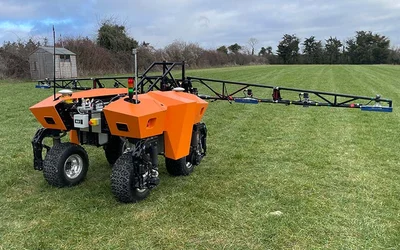
Protolabs climbs aboard the fourth agri-revolution by 3D printing two different parts for Small Robot Company's latest agri-robot, the Tom V4.

7 minutes read
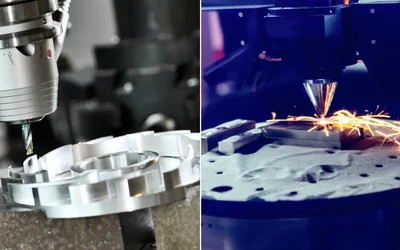
CNC machining or 3D printing? Learn which manufacturing method is best for your project.
4 minutes read
Here’s what to do if you notice clicking noises, under-extrusion, or other print quality issues caused by extruder skipping on the Ender 3 by Creality.
Binder jetting is accurate, fast, and more affordable than powder bed fusion processes like DMLS. Here we examine the process, its advantages and disadvantages, and its most promising applications.
Hygroscopic materials, like Nylon, absorb moisture, impacting print quality. Despite manufacturers' claims of low moisture content, over 55% of neat Nylon filaments are too wet out of the package. Drying these materials is crucial, but often the provided instructions are insufficient.

3 minutes read
One of the perceived drawbacks of some 3D printing processes is that they produce parts that look and feel a bit rough. Vapour smoothing is a great way to remove these rough surface features on certain 3D-printed parts.
4 minutes read
Explained: 3D Printing with Flame Retardant Polymers
3 minutes read
This article explores the post-processing operations available for SLS and MJF printed parts, their application, and their pros and cons

3 minutes read
Additive electronics is intrinsically more sustainable than subtractive processes. Yet the current materials are often based on metallic inks and plastic substrates. This is a particular issue in medical wearables with disposable devices. Hence the need to develop sustainable material options

4 minutes read
From current standards to overcoming obstacles, this article offers a comprehensive understanding of the vital concept and its role in achieving desired quality and aesthetics in various industries.
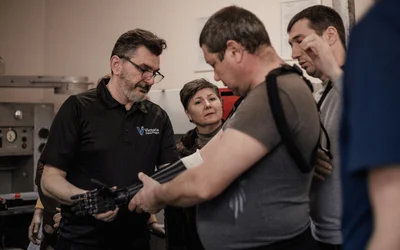
With amputees in war-torn Ukraine nearing half million, the Canadian non-profit organization Victoria Hand Project (VHP) is combining innovative materials from BASF Forward AM with UltiMaker 3D Printers’ robust construction to provide high-performance prosthetics to those in urgent need.

4 minutes read
Freudenberg Performance Materials, a leading global developer and manufacturer of innovative technical textiles, explores new paths with its procurement of components. In this endeavor, the company has chosen FACTUREE – The Online Manufacturer as its supplier for various parts.
2 minutes read