Featured
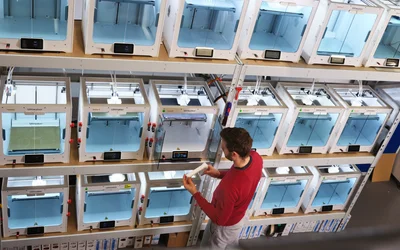
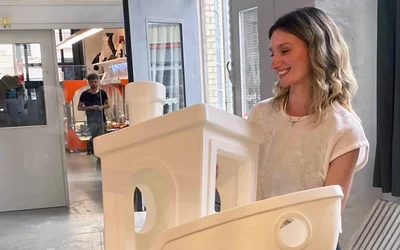
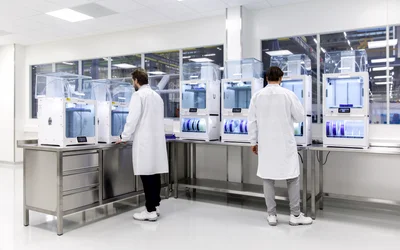
3D Point, a 3D printing service bureau based right outside of Berlin, Germany, is fast becoming the go-to for many companies needing to produce parts in large volumes.
This Report shows how tools like artificial intelligence, digital twins, and on-demand manufacturing are no longer emerging concepts, but are already delivering measurable impact across the product lifecycle.
3D Point, a 3D printing service bureau based right outside of Berlin, Germany, is fast becoming the go-to for many companies needing to produce parts in large volumes.
This article will give you a fundamental grasp of the vacuum casting process, the suitable materials and its advantages and applications.
A comprehensive introduction to 3D printing with wear-resistant plastics, exploring their origin, benefits, and the technologies available to print with them.
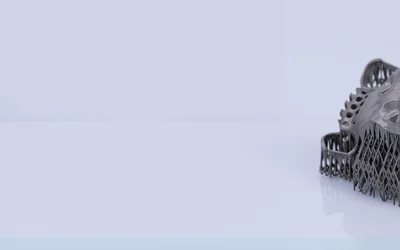
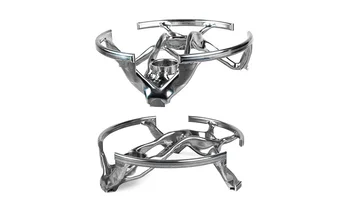
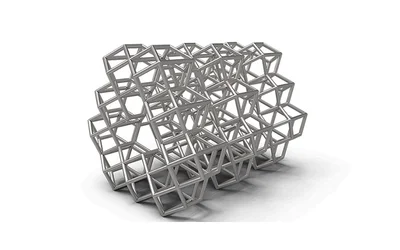
An engineer’s guide to understanding the state of the art in metal 3D Printing
15 minutes read.
22 minutes read.
11 minutes read.
18 minutes read.
12 minutes read.
16 minutes read.


Entertainment
The Next Byte Podcast is hosted by two young engineers - Daniel and Farbod - who select the most interesting tech/engineering cont...
165 Posts
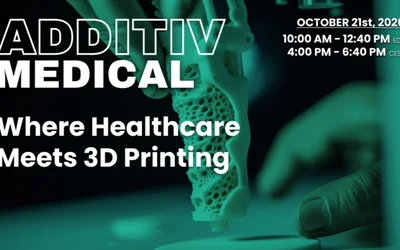
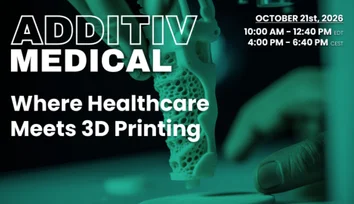
ADDITIV Medical 2026 will bring together more than 500 medical professionals
Choosing between 3D printing and injection molding is one of the key decisions in product development—especially in case of prototyping.
Explore how the right finishes and coatings can improve aerospace parts by boosting durability, extending service life, enhancing environmental resistance, and delivering the performance and appearance required for demanding applications.
The choice between 3D printing and CNC machining is the most common decision regarding manufacturing methods that must be made before placing the first order for prototypes. The correct answer depends on tolerance requirements, material specifications, component geometry, and schedule.
Discover how iAM Marketplace simplifies industrial additive manufacturing by unifying materials, validation services, and multi-brand technologies into one open ecosystem for efficient AM sourcing.
This article discusses what attendees can expect from TCT Asia 2026, including its conference format, focus areas, and the experts contributing to industry-specific discussions.
This article discusses the exhibitors, products, and industrial trends defining additive manufacturing across the Asia-Pacific region at TCT Asia 2026.
This article discusses how the Asia-Pacific region is advancing additive manufacturing and the role of TCT Asia as the leading 3D printing and additive manufacturing event in the Asia-Pacific.
3D Point, a 3D printing service bureau based right outside of Berlin, Germany, is fast becoming the go-to for many companies needing to produce parts in large volumes.

4 minutes read
This article will give you a fundamental grasp of the vacuum casting process, the suitable materials and its advantages and applications.

6 minutes read
A comprehensive introduction to 3D printing with wear-resistant plastics, exploring their origin, benefits, and the technologies available to print with them.
Either when you are buying a printer or using a platform, strong customer service is integral to the broader success of your 3D printing project.
Kodak has a long history of manufacturing quality film products – starting with silver halide imaging films for consumers. Learn how Kodak is continuing that history, manufacturing a variety of industrial film products in many industries – from automotive to batteries to healthcare.

5 minutes read
BigRep’s large-format 3D printers and 3D printing filaments are suited to high-performance engineering applications. To meet the diverse range of needs of these applications, BigRep’s filament range spans several materials with vastly different uses.
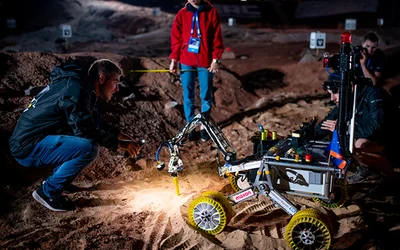
Students from the University of Applied Sciences Northwestern Switzerland (FHNW) build a functional Mars rover using SLS 3D printed parts and take 6th place at the European Mars Rover Challenge (ERC) in Poland.

3 minutes read
Is the Vacuum Casting process about to become obsolete? This is not an abrupt question. Vacuum casting is a widely used and cost-effective manufacturing solution for prototyping and low-volume production.

4 minutes read
In this episode, we discuss a novel approach from ETH Zurich to remove a design bottleneck from solar reactors that enables power generation output that is 2X the current state of the art!

14 minutes read
#4 UltiMaker Manufacturing Insights Series. 3D printing is enabling rapid prototyping and more efficient manufacturing across the transport sector.
Introducing the first article in a new series, making clear the impact of additive manufacturing on the manufacturing industry, transport, packaging, and STEAM.
Learn how metal additive creates complex, durable, lightweight metal parts with this design tip.

9 minutes read
BigRep has a diverse material portfolio, comprising filaments optimized for its large-format 3D printers. The filaments are engineered to meet a variety of needs, whether you’re looking for a low-cost prototyping material like PLA, or an engineering-grade thermoplastic that can withstand more rugged use like HI-TEMP CF. In this article, we’re taking a closer look at one of BigRep’s most popular materials, Pro HT.
Katharine Flores will collaborate on an NSF-funded project to build simulation-informed models that predict material properties in 3D printed metallic glasses

In this article we’re covering all you need to know about BigRep PLA, an easy-to-use filament that has been engineered to address the specific conditions and challenges of large-scale 3D printing. We’ll be looking at the material’s benefits, material properties, best practices, application areas, and more.