Featured
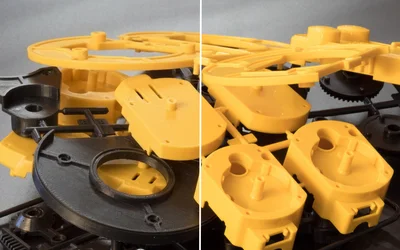
Create unique, complex geometries with overmoulds by leveraging PolyJet 3D printing
This Report shows how tools like artificial intelligence, digital twins, and on-demand manufacturing are no longer emerging concepts, but are already delivering measurable impact across the product lifecycle.
Create unique, complex geometries with overmoulds by leveraging PolyJet 3D printing
Radio Frequency Identification (commonly known as RFID) is a technology that leverages wireless communication over radio waves to both transfer data and locate objects.
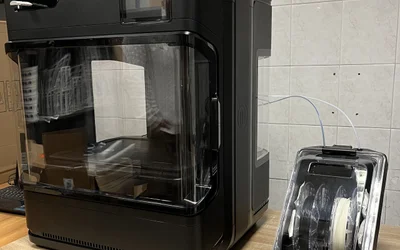
Panelli’s technical department employs 3D printing to prototype its pump components and ensure that all parts are up to specifications. The team currently uses a simple industrial 3D printer and needed to add another one to support its growing design and production needs.
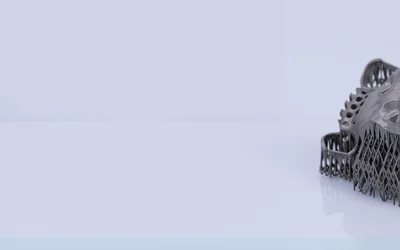
An engineer’s guide to understanding the state of the art in metal 3D Printing
15 minutes read.
22 minutes read.
11 minutes read.
18 minutes read.
12 minutes read.
16 minutes read.


Entertainment
The Next Byte Podcast is hosted by two young engineers - Daniel and Farbod - who select the most interesting tech/engineering cont...
165 Posts
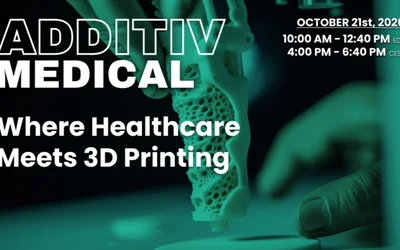
ADDITIV Medical 2026 will bring together more than 500 medical professionals
Choosing between 3D printing and injection molding is one of the key decisions in product development—especially in case of prototyping.
Explore how the right finishes and coatings can improve aerospace parts by boosting durability, extending service life, enhancing environmental resistance, and delivering the performance and appearance required for demanding applications.
The choice between 3D printing and CNC machining is the most common decision regarding manufacturing methods that must be made before placing the first order for prototypes. The correct answer depends on tolerance requirements, material specifications, component geometry, and schedule.
Discover how iAM Marketplace simplifies industrial additive manufacturing by unifying materials, validation services, and multi-brand technologies into one open ecosystem for efficient AM sourcing.
This article discusses what attendees can expect from TCT Asia 2026, including its conference format, focus areas, and the experts contributing to industry-specific discussions.
This article discusses the exhibitors, products, and industrial trends defining additive manufacturing across the Asia-Pacific region at TCT Asia 2026.
This article discusses how the Asia-Pacific region is advancing additive manufacturing and the role of TCT Asia as the leading 3D printing and additive manufacturing event in the Asia-Pacific.
Create unique, complex geometries with overmoulds by leveraging PolyJet 3D printing

4 minutes read
Radio Frequency Identification (commonly known as RFID) is a technology that leverages wireless communication over radio waves to both transfer data and locate objects.

4 minutes read
Panelli’s technical department employs 3D printing to prototype its pump components and ensure that all parts are up to specifications. The team currently uses a simple industrial 3D printer and needed to add another one to support its growing design and production needs.

3 minutes read
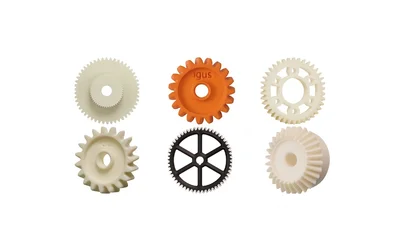
Article #2 of The Engineer’s Guide to 3D Printing with Wear-Resistant Plastic Materials.
The Formula Student Team FST Lisboa from Portugal makes use of various 3D printing technologies to build next-generation electric and autonomous driving race cars. For their current prototypes, Sintratec has sponsored multiple laser sintered components to the students.

4 minutes read
3D printing has made huge advances in the last 40 years. Officially known as additive manufacturing (AM), this technology starts out with a digital 3D model – hence its more common name.
In the second article of our FGF series we look at the various manufacturing techniques of FGF printing

5 minutes read
Sintratec, a Swiss startup specializing in Selective Laser Sintering (SLS) 3D printers, is in the process of testing their new machine, the Sintratec S2.
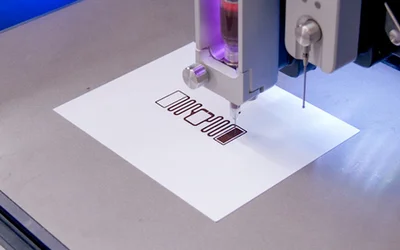
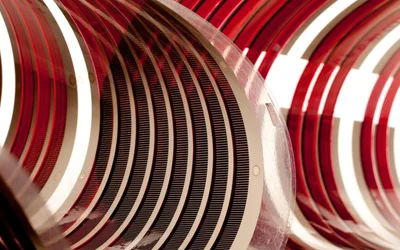
Organic Photovoltaics (OPV are a 3rd Gen PV technology with unique attribute. The key to their success is in Roll-to-Roll (R2R) processing. Here you will learn about the advantages and challenges of R2R manufacturing in OPVs and printed electronics

2 minutes read
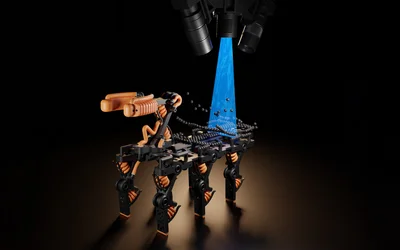
Computer vision enables contact-free 3D printing, letting engineers print with high-performance materials they couldn’t use before.
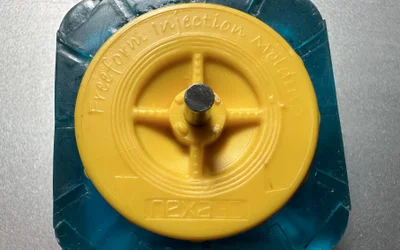
We invite you to explore the convergence of traditional injection molding with the cutting-edge realm of Freeform Injection Molding (FIM) using Nexa3D printers, which promises to revolutionize your production capabilities.
3D Promakim’s Journey with Drywise and how they save €12,000 per year

3 minutes read
Over the years, additive manufacturing has revolutionized the manufacturing industry and one technique that has gained significant traction is Fused Granulate Fabrication. With its unique approach and advantages, FGF has the potential to reshape the way functional and aesthetic parts are produced.
4 minutes read
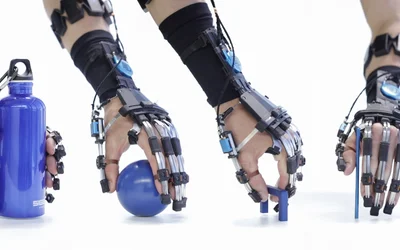
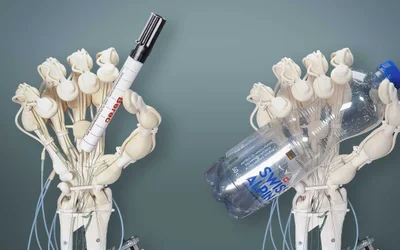
For the first time, researchers have succeeded in printing a robotic hand with bones, ligaments and tendons made of different polymers using a new laser scanning technique.

3 minutes read
Article #1 of The Engineer’s Guide to 3D Printing with Wear-Resistant Plastic Materials.